All-white bathrooms dominated design for two decades, but the pendulum has swung hard the other way. A well-planned colorful bathroom feels playful, personal, and far more expensive than the same square footage in plain white. The trick is using color intentionally rather than drowning the room in five competing hues. This guide walks through palette building, tile choices, fixture coordination, and the pitfalls that turn bold design ideas into regrets within a year.
- Start With a Palette, Not a Pinterest Board
- Paint Choices That Hold Up to Humidity
- Tile as the Main Color Statement
- Vanity and Cabinetry as Color Drivers
- Fixture Finishes That Complement Color
- Wallpaper for Zero-Commitment Color
- Lighting That Makes Color Work
- Accessories That Refresh Without Remodeling
Start With a Palette, Not a Pinterest Board
Every successful colorful bathroom starts with a three-color palette: a dominant color that covers 60 percent of the visible surfaces, a secondary color at 30 percent, and an accent at 10 percent. For example: sage green walls (60), cream tile (30), and brass fixtures (10). Pick the dominant color first, then layer in the others.
Avoid mixing undertones. Warm colors like mustard, terracotta, and rust pair well with each other but clash with cool blues and greens. Cool colors like navy, teal, and blush pink sit together nicely. The quickest way to make a bathroom feel chaotic is to split undertones without a unifying neutral.
Paint Choices That Hold Up to Humidity
Bathroom paint needs two qualities standard living-room paint does not: mildew resistance and a satin or semi-gloss sheen. Flat finishes absorb moisture and fail within a year. Look for bathroom-specific formulations like Sherwin-Williams Emerald Urethane Enamel, Benjamin Moore Aura Bath and Spa, or Behr Marquee Satin.
Deep saturated colors that work well in bathrooms include Hale Navy, Benjamin Moore’s Tarrytown Green, Farrow & Ball’s Setting Plaster, and Sherwin-Williams Peppercorn. These dark hues feel enveloping in a small space rather than claustrophobic, especially when paired with a crisp white ceiling and adequate lighting.
Tile as the Main Color Statement
Tile lasts 30 or more years, so permanent color choices go on tile with careful consideration. A few approaches consistently work well.
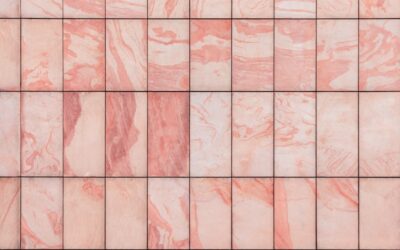
- Colored subway tile: Sage green, pale pink, or soft blue 3×6 subway tile gives a classic feel with a modern twist. About $4-$8 per square foot.
- Patterned cement tile: Encaustic tiles from Cle or Zia add dramatic pattern and color to floors or accent walls. $15-$30 per square foot but a little goes a long way.
- Full-height tile accents: A single wall in deep terracotta or emerald tile, paired with neutral everywhere else, is the easiest way to add color without overwhelming.
- Mosaic shower niches: Budget-friendly way to inject color with just a few square feet of tile.
Vanity and Cabinetry as Color Drivers
Painting or buying a painted vanity is the highest-ROI color move in a bathroom remodel. A muted blue, deep green, or warm rust vanity against neutral walls reads as intentional and elevated. Big-box stores now sell colored vanities from manufacturers like Home Decorators Collection and Allen + Roth in the $400-$900 range.
For existing cabinets, two coats of cabinet enamel in a saturated color transforms the bathroom for $50 in materials. Sand, prime with a bonding primer like Stix, and apply Sherwin-Williams Emerald Urethane or Benjamin Moore Advance. Allow full two-week cure before daily use to prevent fingernail marks.
Fixture Finishes That Complement Color
The metal finish on faucets, towel bars, and light fixtures dictates how color reads in the space. Warm colors look best with brass, champagne bronze, or matte black. Cool colors pair better with brushed nickel, chrome, or polished nickel. Mixing finishes is fine when done deliberately, but keep it to two finishes maximum and repeat each finish at least twice around the room.
Live brass patinas over time and adds character; lacquered brass stays shiny forever. Both look great with colorful tile and paint but give very different long-term feels. Decide early which direction you want because changing your mind means replacing fixtures.
Wallpaper for Zero-Commitment Color
Peel-and-stick wallpaper from brands like Chasing Paper, Tempaper, and Chasing Paper Studio lets renters and commitment-phobes add serious color impact without permanent changes. Install a single accent wall behind the vanity, mirror, or toilet for maximum visual impact. Expect to pay $40-$100 per roll, with coverage of about 28 square feet per roll.
Moisture-resistant wallpaper handles bathrooms surprisingly well, but keep it away from direct shower splash zones. Applying a clear acrylic sealer over removable wallpaper adds humidity protection without ruining the peel-and-stick ability.
Lighting That Makes Color Work
The wrong light temperature kills colorful rooms. Stick with 2700K to 3000K LED bulbs for warm, flattering light. Cool 4000K or 5000K bulbs give colors a clinical, greenish cast that hurts both the aesthetics and skin tones reflected in the mirror.
Layer three types of light in a colorful bathroom: overhead ambient lighting, task lighting at the mirror, and accent lighting in niches or sconces. Install dimmers on every switch so you can drop the brightness for evening bath time and ramp it up for morning grooming. A three-light scheme with dimmers turns the same bathroom into a dramatically different-feeling space throughout the day.
Accessories That Refresh Without Remodeling
Towels, bath mats, shower curtains, and art are the easiest ways to shift color in an existing bathroom. A set of two bath towels, one hand towel, and a bath mat in a new color costs $60-$120 and completely changes the feel. Swap them seasonally if you enjoy the rotation.
A single piece of framed art adds personality a fully tiled bathroom cannot. Moisture-resistant prints from brands like Artfully Walls or Society6 are designed for bathroom humidity and start at $40. Hang 4-6 inches above a towel bar or centered over the toilet for a focal point that elevates the whole design.