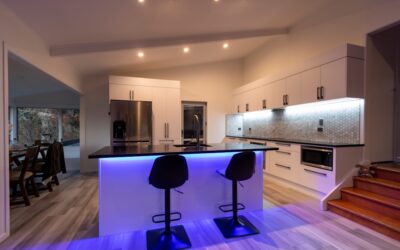
The wood-look vinyl trend dominated the 2010s, but it left a generation of homes looking nearly identical from one open-house to the next. Colorful vinyl flooring is making a comeback — bold checkerboards, bright solids, geometric patterns, and retro herringbone in saturated tones that owe more to mid-century kitchens than modern minimalism. The new generation of colorful LVT, sheet vinyl, and cushioned vinyl is more durable than the linoleum your grandmother had, easier to install, and dramatically more interesting than another beige plank floor. The trick is using bold color in the right rooms and not overwhelming the rest of the space.
- Where Colorful Vinyl Belongs
- Types of Colorful Vinyl Available
- Pros of Colorful Vinyl Flooring
- Cons and Real Tradeoffs
- Color Choices That Age Well
- Best Brands for Colorful Vinyl
- Installation Tips for Patterned Floors
- How to Pair Colorful Floors With the Rest of the Room
- Maintenance Notes
- The Final Take
Where Colorful Vinyl Belongs
Bold flooring choices read best in spaces where people pause briefly rather than spend hours — kitchens, bathrooms, mudrooms, laundry rooms, kids’ bathrooms, and entryways. In bedrooms and living rooms, intense color tends to fight with furniture and dominate the visual field. Pick the room first, then commit fully rather than going halfway.
- Kitchens — black-and-white checkerboard or bright single-color planks reset a tired space dramatically.
- Powder rooms — small footprint absorbs bold color without overwhelming the home.
- Mudrooms and entryways — pattern hides scuffs and salt residue better than solid colors.
- Laundry rooms — small space, often windowless, benefits from cheerful color.
- Kids’ rooms — bright LVT planks resist crayon, slime, and toy crashes that ruin carpet.
- Home offices and craft rooms — saturated solids energize a workspace without committing to permanent paint.
Types of Colorful Vinyl Available
The category covers more product types than most homeowners realize. Each format has different installation methods and price points.
- Sheet vinyl — 6 or 12 ft wide rolls, fewest seams. Best for retro patterns and full-room solids. $1 to $4 per sq ft.
- Luxury vinyl tile (LVT) — 12 inch by 12 inch or 18 inch by 18 inch tiles. Mix-and-match design potential. $2 to $6 per sq ft.
- Luxury vinyl plank (LVP) in solid colors — colored plank format. $3 to $7 per sq ft.
- Cushioned vinyl — softer underfoot with foam backing. Good for kitchens. $1.50 to $3.50 per sq ft.
- Adhesive vinyl tiles — peel-and-stick format. Cheapest entry point. $0.80 to $2 per sq ft.
Pros of Colorful Vinyl Flooring
The reasons colorful vinyl is back come down to a mix of design freedom and practical performance:
- Cheaper than every alternative for bold color — paint, tile, and natural materials all cost more.
- Waterproof or water-resistant in nearly every product class.
- Easy to install. Peel-and-stick and click-lock formats handle DIY.
- Wide variety of finishes — matte, satin, embossed, and high-gloss.
- Pet and kid resistant. Most premium colored LVT shrugs off scratches and accidents.
- Pattern options no other category offers — checkerboard, herringbone, geometric medallions, basketweave.
- Easily replaceable section by section if a tile gets damaged.
Cons and Real Tradeoffs
The downsides are honest and worth weighing:
- Trend risk — bold color choices may date the home in 10 to 15 years if styles shift.
- Resale impact mixed — colorful floors can either charm or alienate buyers depending on the market.
- UV fading is real on bright colors, especially red, blue, and dark green. Look for UV-stable formulations.
- Showcases dust and pet hair more than neutral floors. Black floors are notoriously high-maintenance.
- Limited refinish options — once worn, replacement is the only path.
- Pattern matching at seams takes more skill than a plain wood-look install.
Color Choices That Age Well
Some color choices read fresh decades later, while others scream the year they were installed. Thinking strategically about color tone makes the difference between a timeless statement and a reno-mistake.
- Black-and-white checkerboard — has worked since the 1920s and shows no signs of dating.
- Terracotta and warm earth tones — handle changing decor better than bright primaries.
- Soft sage, dusty rose, and muted mustard — saturated but not loud, age gracefully.
- Deep navy and forest green — work in classic settings without feeling trendy.
- Avoid neon and primary saturation — they look fresh year one and tired by year five.
Best Brands for Colorful Vinyl
The premium colored vinyl category is dominated by a smaller set of brands than mainstream wood-look LVT. Specialty manufacturers know color holds up better than aggressive wood-grain reproduction.
- Karndean Da Vinci and Designflooring — wide color palette, premium UV stability, $5 to $9 per sq ft.
- Forbo Marmoleum Modular — natural linoleum technically, but in bright colors. $4 to $8 per sq ft.
- Mannington Adura Max — colored LVP and patterns at mid-tier pricing.
- Tarkett iD Latitude — commercial-grade color options that work in residential.
- Armstrong Alterna and Premier — accessible bold colors at home-center pricing.
Installation Tips for Patterned Floors
Pattern installations expose any imprecision in subfloor prep, layout, or cutting. The forgiveness of plain plank disappears when you commit to a checkerboard or herringbone.
- Plan layout from the visual center of the room. Find the actual focal point — usually the doorway sight line — and start the pattern there.
- Dry-lay one full row before any adhesive or click-lock starts. Adjust before committing.
- For checkerboard, use a chalk line to mark a reference grid. Follow the lines, not the previous tile.
- Pattern repeats need to align across thresholds and transitions. Plan the cut layout for adjacent rooms together.
- Miter base trim outside corners cleanly so patterned floors do not appear interrupted.
- Allow 48 hours acclimation in the room before install, especially for rigid LVT and SPC formats.
How to Pair Colorful Floors With the Rest of the Room
Bold floors demand restrained surroundings. Use the floor as the visual anchor and let everything else recede.
- Walls — soft white, cream, or muted tones from the same color family as the floor.
- Cabinets — white, off-white, or natural wood. Avoid competing strong colors.
- Counters — neutral quartz or wood. Avoid busy granite that fights the pattern.
- Furniture — solid upholstery, no aggressive prints.
- Window treatments — simple shades or solid drapes; skip patterned curtains in a room with a patterned floor.
- Rugs — typically skip them entirely. The floor is already the rug.
Maintenance Notes
Colorful vinyl flooring cleans like any other vinyl — sweep regularly, damp mop with manufacturer-approved cleaner. Avoid wax buildup and steam mops. Black and dark colors show dust quickly; plan to vacuum more often than you would with a busy wood-look pattern. Place mats at exterior doors to keep grit off the surface.
The Final Take
Colorful vinyl flooring offers a level of design freedom that no other surface category can match at the same price point. Used in the right rooms with appropriate restraint elsewhere, bold flooring delivers personality and timeless character. Pick patterns that have aged well historically, install over a properly prepped subfloor, and you will have a floor that makes the room rather than disappearing into the background.
Prefer to explore on your own?
See how new flooring looks in your actual room in seconds — free, no signup.
Try the free Floor Studio →