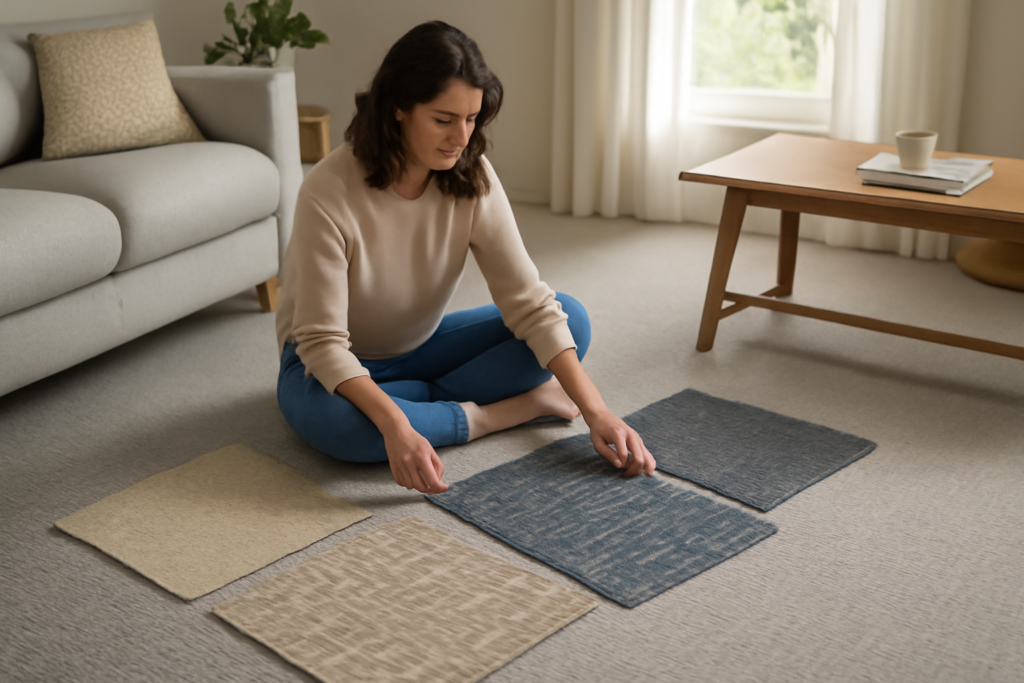
Smart commercial carpet designs do two jobs at once: they hide dirt and wear in spaces that see hundreds of feet a day, and they reinforce a brand or set a mood. That dual purpose is exactly why these designs have crossed over into homes, basements, and home offices where durability matters as much as looks. From modular carpet tiles in bold geometric patterns to subtle tonal loops that disguise traffic lanes, the commercial world offers a playbook worth borrowing. This guide covers the popular design directions, the construction that makes them last, and the costs and practical considerations behind them.
Why Commercial Carpet Is Designed Differently
Commercial carpet is engineered for abuse first and beauty second, which is the opposite priority of most residential plush. Tight, low-pile loop constructions resist crushing under rolling chairs and constant foot traffic, and busy patterns or flecked colors camouflage the dirt and wear that would show instantly on a solid light carpet.
That practicality shapes the aesthetics. Designers lean on multi-tone yarns, directional patterns, and modular layouts not just for style but because they extend the carpet’s good-looking lifespan in punishing environments. Borrow those principles at home and you get a floor that still looks fresh after years of kids and pets.
Popular Commercial Carpet Design Styles
Several design directions dominate offices, hotels, retail, and increasingly residential spaces. Each delivers a distinct feel.
- Geometric and linear patterns: Stripes, grids, and chevrons add energy and guide movement through a space.
- Organic and biophilic motifs: Leaf, water, and stone-inspired patterns bring a calming, nature-driven look popular in wellness-focused interiors.
- Tonal and textured solids: Subtle color variation and cut-and-loop textures add depth while hiding traffic and soil.
- Bold accent and logo designs: Custom inlays and color blocking define zones or reinforce branding.
Carpet Tiles vs. Broadloom
One of the biggest design decisions is format, and it drives both look and maintenance.
Modular Carpet Tiles
Carpet tiles, typically 18 by 18 or 24 by 24 inches, are the design workhorse of commercial spaces. You can mix colors and lay them in monolithic, quarter-turn, ashlar, or brick patterns to create custom effects without a custom price. Best of all, a stained or worn tile can be swapped individually, which makes them ideal for high-traffic and DIY-friendly home installs.
Broadloom Rolls
Broadloom offers seamless coverage and a smoother field for large patterns, with fewer visible seams across an open area. It is harder to repair, since a damaged section means patching or replacing a larger piece, but it can feel more finished in showpiece rooms.
Durability Ratings and Construction
Design means little if the carpet flattens in a year, so construction matters as much as pattern. Look for specs that signal commercial-grade toughness.
- Fiber type: Solution-dyed nylon resists stains and fading and holds up best; polypropylene (olefin) is cheaper but less resilient.
- Pile construction: Tight, low-level loop piles resist crushing better than high cut piles.
- Face weight and density: Higher numbers generally mean more durable carpet.
- Traffic rating: Commercial products carry ratings for moderate, heavy, or severe traffic; match it to your use.
- Backing: Reinforced or cushioned backing improves stability and comfort, especially on carpet tiles.
Using Commercial Designs at Home
The same designs that work in an office translate beautifully to demanding home spaces. Basements, home offices, playrooms, and stairs all benefit from the stain resistance and crush-resistant construction commercial carpet provides.
Carpet tiles in particular suit DIYers: you can peel and stick or use release adhesive over concrete, mix patterns to define zones, and replace a single tile after a spill. A flecked or tonal pattern hides everyday dirt far better than a solid plush, making it a practical pick for busy households who still want a designed look.
What It Costs
Commercial carpet spans a wide range. Modular carpet tiles typically run $2 to $7 per square foot for materials, while broadloom commercial carpet runs $2 to $6 before installation. Labor for glue-down or tile installation adds roughly $1 to $3 per square foot, though carpet tiles are often DIY-friendly and can eliminate that cost.
For a 300-square-foot basement in mid-grade carpet tile installed by a pro, plan on roughly $900 to $2,400. Buy 5 to 10 percent extra so you have spare tiles or yardage for repairs, and keep them from the same dye lot to ensure a match.
Installation and Layout Patterns
How carpet tiles are arranged is itself a design decision. The same tile reads differently depending on the layout, and each pattern has a practical upside.
- Monolithic: All tiles laid in the same direction for a broadloom-like, uniform field.
- Quarter-turn: Each tile rotated 90 degrees from its neighbor, which disguises wear and slight color variation.
- Ashlar (brick): Rows offset like brickwork for a relaxed, linear feel.
- Herringbone: Tiles angled for a dynamic, upscale look in lobbies and feature areas.
Quarter-turn installation is especially forgiving for DIYers, since it hides minor inconsistencies and lets you rotate worn tiles later to even out traffic patterns.
Maintenance and Lifespan
Commercial carpet earns its keep through easy upkeep. Vacuum high-traffic areas frequently to lift grit before it grinds into the fibers, and address spills quickly with a clean cloth and an appropriate spotter. Periodic professional or low-moisture extraction cleaning restores appearance in busy zones.
The modular advantage shines over time: a permanently stained or worn carpet tile can be lifted and swapped for a spare from the same lot, extending the floor’s usable life far beyond broadloom. With routine care and the occasional tile swap, a quality commercial carpet floor can look presentable for 10 to 15 years or more, even under heavy use.
Final Takeaway
Commercial carpet designs win by pairing dirt-hiding patterns and tonal textures with crush-resistant, stain-fighting construction, a combination that suits offices and busy homes alike. Choose carpet tiles for design flexibility and easy repairs, lean on solution-dyed nylon and tight loop piles for durability, and match the traffic rating to your space. Borrow these commercial principles, keep spares from one lot, and you will get a floor that looks designed and stays that way under heavy use.