Smart commercial floor maintenance protects one of the largest physical investments a business makes while keeping the space safe, professional, and welcoming. Commercial floors endure traffic, spills, carts, and chemicals that residential floors never see, so they demand structured care rather than occasional attention. A consistent maintenance program extends floor life by years, prevents costly premature replacement, and reduces slip-and-fall risk. This guide breaks down maintenance routines for the most common commercial floor types, including VCT, epoxy, and polished concrete, plus the scheduling principles that keep any commercial floor looking its best.
Why a Maintenance Program Matters
Commercial floors fail prematurely far more often from neglect than from defects. Grit, foot traffic, and improper cleaning grind down finishes and surfaces over time, and once damage sets in, repair costs climb fast.
A documented program with daily, periodic, and restorative tasks keeps floors in a steady state of care rather than swinging between dirty and deep-cleaned. It also supports safety compliance and presents a professional image to customers and staff. The goal is to maintain, not just react to, the condition of the floor.
The Three Levels of Floor Care
Effective maintenance happens on three tiers. Skipping any one shortens floor life.
- Daily maintenance: Sweeping, dust mopping, spot cleaning, and damp mopping to remove grit and spills before they cause wear.
- Periodic maintenance: Scrubbing, buffing, burnishing, or recoating on a regular schedule to restore appearance.
- Restorative maintenance: Stripping and refinishing, deep polishing, or major repair done occasionally to renew the floor.
Matting at entrances is the cheapest and most effective single step, since most damaging grit and moisture are tracked in at the door. Walk-off mats can capture a large share of it before it reaches the floor.
VCT (Vinyl Composition Tile)
VCT is common in schools, retail, and healthcare because it is durable and economical, but it depends on a floor finish to protect it and look good. The finish, not the tile, is what wears.
Daily care means dust mopping to remove grit and damp mopping with a neutral cleaner. Periodically, scrub and apply fresh coats of floor finish, then buff or burnish to restore gloss. When the finish builds up or yellows, strip it down to the tile and reapply several coats of finish. Keeping the finish maintained is the entire game with VCT, since worn finish exposes the tile to abrasion and staining.
Epoxy Floors
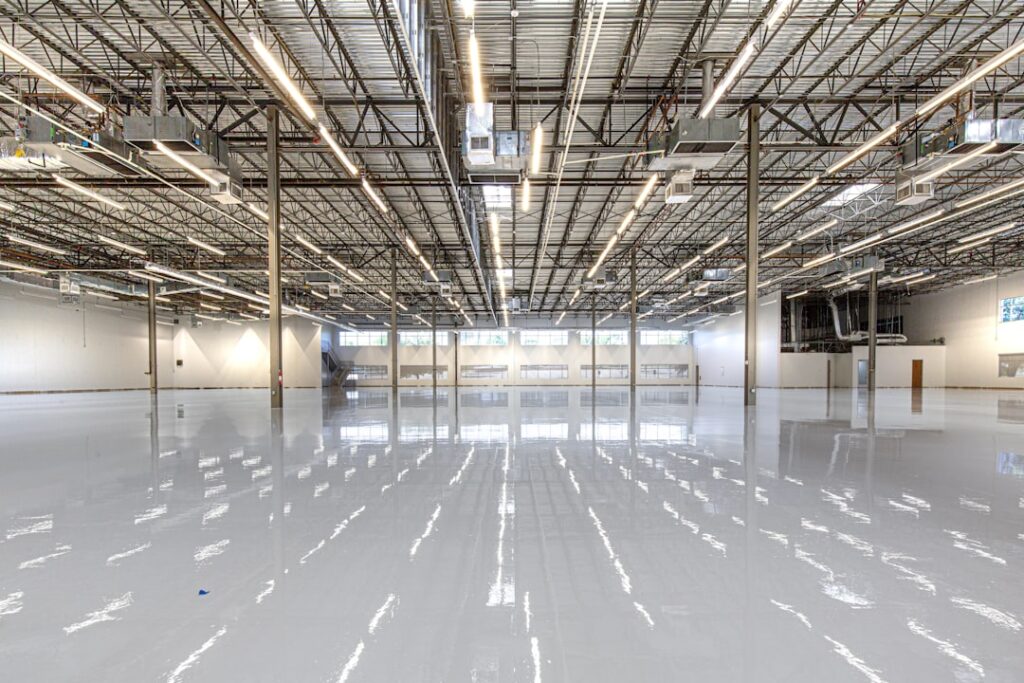
Epoxy coatings are popular in warehouses, garages, and food-processing areas for their seamless, chemical-resistant surface. They are tough but not maintenance-free.
Sweep or dust mop daily to remove abrasive grit that can dull the surface, and clean with a pH-neutral cleaner using an auto-scrubber or mop. Avoid harsh acidic cleaners that can degrade the coating. Address spills promptly, and place mats in high-abrasion areas. Over time, high-traffic lanes may need a recoat, and a properly maintained epoxy floor can go many years before requiring it. Inspect periodically for chips or wear and repair them before moisture gets under the coating.
Polished Concrete
Polished concrete has become a favorite for its durability, low maintenance, and modern look in retail and commercial spaces. Its shine comes from mechanical polishing and a densifier, not a topical wax, which simplifies upkeep.
Daily maintenance is mostly dust mopping and damp mopping with a neutral, concrete-safe cleaner; avoid acidic products that etch the surface. Periodic auto-scrubbing keeps it clean, and occasional re-burnishing or re-polishing restores gloss in worn areas. Reapplying a guard or densifier on schedule maintains stain resistance. Because there is no finish to strip, polished concrete is one of the lowest-maintenance hard floors available, but it still needs consistent neutral cleaning to stay bright.
Building a Maintenance Schedule
A schedule turns good intentions into results. Tailor frequencies to your traffic, but the structure stays the same across floor types.
Assign daily sweeping or dust mopping and spot cleaning, with damp mopping as needed. Set periodic tasks like scrubbing, buffing, or recoating on a calendar based on traffic, weekly to monthly in busy areas. Schedule restorative work, such as stripping and refinishing VCT or re-polishing concrete, at longer intervals. Document the program, train staff on correct products and dilution, and keep the right equipment, like auto-scrubbers and burnishers, in good working order. Using the wrong cleaner is a leading cause of premature finish failure, so match products to the floor type.
Carpet in Commercial Settings
Many commercial spaces still use carpet, especially offices, hotels, and conference areas, and it has its own maintenance demands. Commercial carpet, often in modular tiles or low-pile broadloom, traps soil and shows traffic lanes if neglected.
Daily vacuuming with a commercial machine removes the grit that grinds down fibers, and prompt spot cleaning prevents stains from setting. Periodic interim cleaning, such as encapsulation or bonnet cleaning, keeps the appearance up between deep cleans, while occasional hot-water extraction deep-cleans the carpet thoroughly. Carpet tiles offer a maintenance advantage, since a stained or worn tile can be swapped out individually rather than replacing a whole section. As with hard floors, entrance matting that captures soil before it reaches the carpet is the most cost-effective protection you can provide.
Safety and Compliance Considerations
In commercial settings, floor maintenance is closely tied to safety and liability. Slip-and-fall incidents are a leading source of injury claims, and wet, over-waxed, or poorly maintained floors increase the risk.
Use wet-floor signage during and after mopping, choose finishes and cleaners that maintain appropriate slip resistance, and address spills immediately. Keep documentation of your cleaning schedule and procedures, which supports both quality control and liability protection. Train staff on correct dilution ratios and equipment use, since overuse of finish or the wrong product can create hazards. A floor that is both clean and safe protects your customers, your employees, and your business, making safety an inseparable part of any good maintenance program.
Final Thoughts
Commercial floor maintenance is about consistency, not heroics. Capture grit at the door with quality matting, handle daily cleaning faithfully, and stay on top of periodic and restorative care suited to your specific floor, whether that is finish-dependent VCT, tough epoxy, or low-maintenance polished concrete. A structured program keeps floors safe, professional, and lasting years longer than neglected ones, making it one of the best returns on maintenance spending a business can find.
Prefer to explore on your own?
See how new flooring looks in your actual room in seconds — free, no signup.
Try the free Floor Studio →