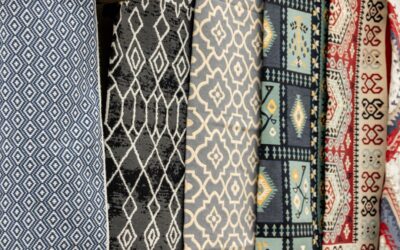
Walk into any busy office, school hallway, or hotel lobby and you are almost certainly standing on a carpet built to survive thousands of footsteps a day. That toughness is exactly why so many homeowners now ask about commercial grade carpet for residential use. It promises to outlast the soft, plush styles sold for living rooms, and it often costs less per square foot. But durability comes with trade-offs in comfort and appearance that are worth understanding before you order a roll.
As a flooring contractor, I have installed contract carpet in homes with active kids, large dogs, and home-based businesses where the front room doubles as a workspace. In the right rooms it is a smart, money-saving choice. In the wrong ones, it can feel hard and utilitarian underfoot. Here is how to decide.
What “Commercial Grade” Actually Means
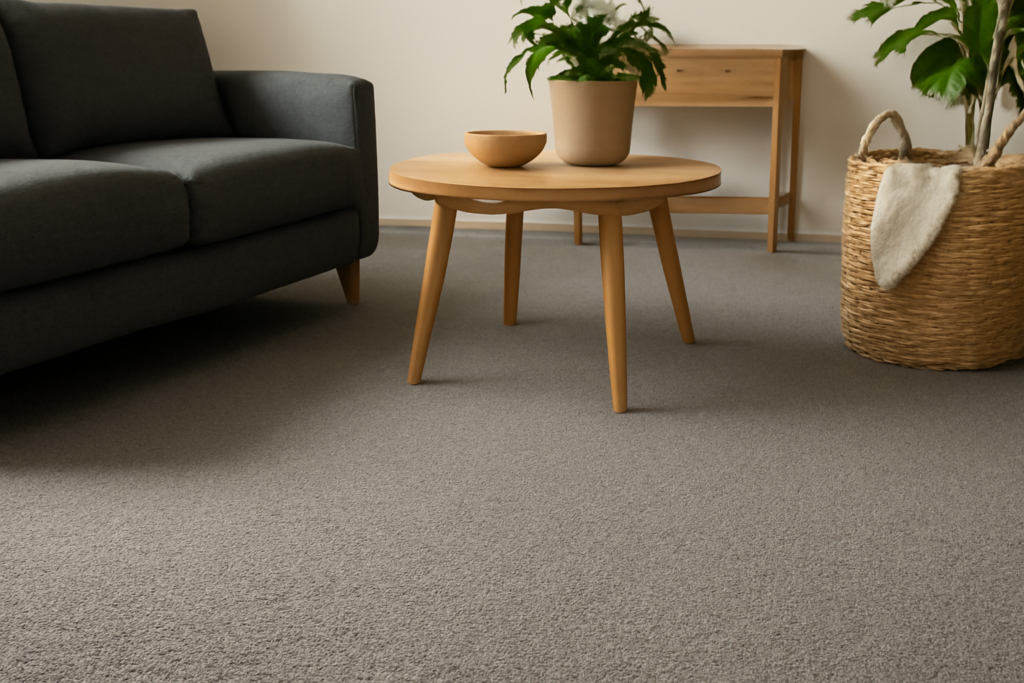
Commercial carpet is engineered to a higher abrasion and crush standard than most residential goods. It typically uses a low, dense, tightly twisted pile—often a level loop or cut-and-loop construction—rather than the tall, soft cut pile common in bedrooms. The fibers sit close together over a stiff backing, so foot traffic cannot mat them down as quickly.
Manufacturers rate contract carpet on a scale that predicts how it holds up. Look for a heavy-traffic or “severe” rating, a face weight in the 20–32 ounce range, and a published warranty for commercial settings. Compared with a plush 50-ounce residential carpet, the commercial product feels firmer but resists the traffic lanes and crushing that make a hallway look worn after two years.
The Fibers You Will See
Three fibers dominate the contract market, and each behaves differently in a house:
- Solution-dyed nylon is the premium choice. The color runs through the entire fiber, so it resists bleach, sunlight fading, and most stains. It is the most resilient and the best pick for stairs and hallways.
- Olefin (polypropylene) is inexpensive and moisture-resistant, which makes it popular for basements. It crushes more easily and is sensitive to oil-based stains, so reserve it for lower-traffic rooms.
- PET polyester offers good stain resistance and a slightly softer hand at a budget price, bridging the gap between contract toughness and home comfort.
If you want commercial durability without a completely industrial feel, a solution-dyed nylon cut-and-loop in a mid face weight is the sweet spot.
Carpet Tiles vs. Broadloom
Commercial carpet comes in two formats, and the format matters as much as the fiber. Broadloom is the familiar 12-foot-wide roll. Carpet tiles—usually 18-inch or 24-inch squares—are the format that has won over a lot of homeowners.
Tiles install with a peel-and-stick backing or releasable adhesive, so a confident DIYer can lay a room in an afternoon. The real advantage shows up later: if a dog has an accident or a single tile gets stained, you lift and replace that one square instead of recarpeting the room. Buy 5–10 percent extra at install and store the spares. For basements, playrooms, and home gyms, tiles are hard to beat.
Cost: Where the Savings Come From
Material pricing for commercial grade carpet for residential use generally runs $2 to $5 per square foot, with carpet tiles often landing between $2 and $4. That is frequently cheaper than mid-range plush residential carpet, which climbs to $4–$7 once you add a thick pad.
The bigger savings are downstream. Commercial carpet is usually glued directly to the subfloor with little or no separate cushion, which trims installation cost and labor. Installed, expect roughly $3 to $7 per square foot all-in, versus $5 to $11 for premium residential carpet with an upgraded pad. Over a 400-square-foot basement, that difference can be $800 or more—and the floor will likely look presentable years longer.
The Comfort Trade-Off
This is the honest downside. Glued-down commercial carpet with a low pile feels firm—closer to a tight area rug than a cloud. There is little of the cushioned “give” people love in a bedroom. It is also less effective at muffling sound between floors because the dense, thin profile absorbs less than a plush pile over an 8-pound pad.
You can soften the experience. Some commercial tiles include an attached cushion backing that adds noticeable comfort, and a few broadloom lines tolerate a thin (about 1/4-inch, 6–8 pound) pad. If a room is mainly for lounging barefoot, weigh that firmness honestly before committing.
Best Rooms for It—and Rooms to Avoid
Commercial carpet earns its keep in high-traffic and high-risk areas: finished basements, stairs, hallways, home offices, mudroom transitions, playrooms, and rec rooms. Anywhere with rolling chairs, pets, or heavy daily foot traffic is an ideal match, since that is exactly the abuse the product was designed for.
I steer homeowners away from it in primary bedrooms and formal living rooms, where softness and a luxurious look matter more than crush resistance. In those spaces, the firm hand and flatter appearance usually disappoint.
Maintenance and Lifespan
Care is straightforward and forgiving. Vacuum once or twice a week—a level loop holds up to a beater bar better than plush does. Blot spills promptly; solution-dyed nylon and olefin both release water-based stains easily, and many tolerate a diluted bleach cleaning solution without losing color. Plan on a professional hot-water extraction every 12 to 18 months in busy areas.
One more maintenance advantage: because the pile is low and dense, dirt stays near the surface instead of sifting deep into a tall plush, so regular vacuuming actually removes more of it. Pair the carpet with a quality entry mat to trap grit before it reaches the fibers, and keep furniture glides under heavy pieces to prevent permanent crush marks. These small habits stretch the carpet’s appearance retention well past what a softer residential style would manage in the same spot.
Treated well, contract carpet commonly lasts 10 to 15 years in a home—often double the life of bargain residential carpet in the same hallway. For homeowners chasing durability and value, that longevity is the whole point. Match the fiber and format to the room, set your expectations on comfort, and commercial grade carpet can be one of the smartest flooring buys in the house.