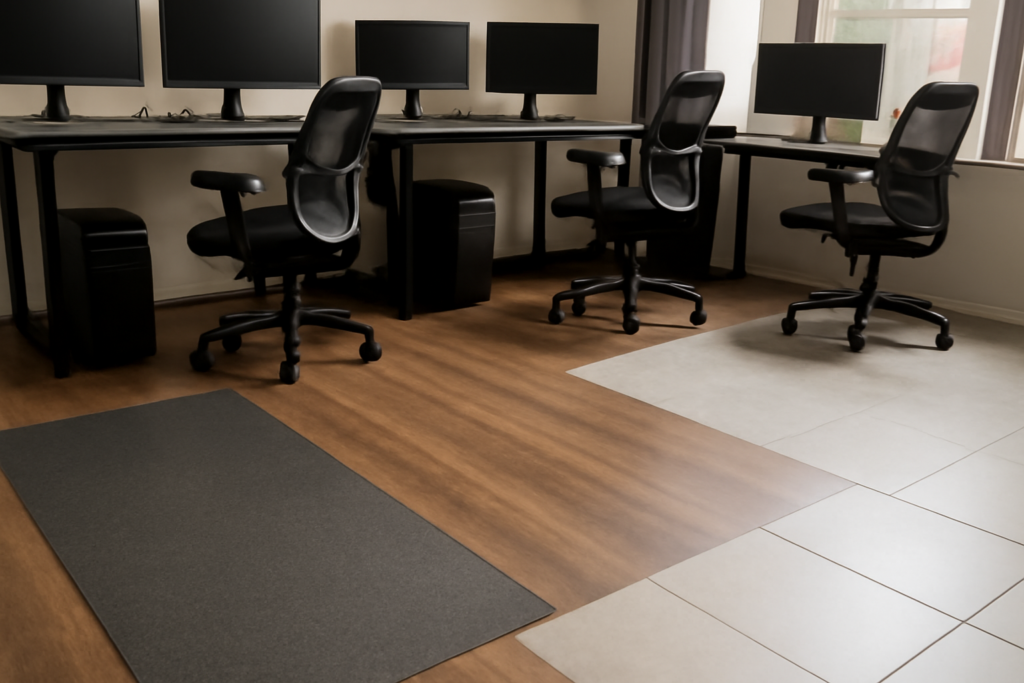
The floor in a server room or data center is not an afterthought; it is a working part of the infrastructure. Computer room flooring has to manage cabling, deliver or accommodate cooling, dissipate static electricity that can fry sensitive electronics, and support heavy equipment, all while staying serviceable. That is a very different job from the floor in your living room. Whether you are outfitting a small server closet or a full data center, understanding the options helps you protect expensive hardware and keep the room running. This guide breaks down the main choices and how to pick the right one.
Why Computer Room Floors Are Specialized
Electronics are vulnerable to electrostatic discharge, the small sparks of static that build up and release as you walk across an ordinary floor. A discharge that you barely feel can corrupt data or damage a circuit board. Computer rooms also generate intense heat from densely packed equipment, run miles of power and data cable, and house racks weighing hundreds of pounds. The flooring must address all of these realities, which is why standard residential or commercial floors are usually inadequate.
Raised Access Flooring
The classic data center solution is a raised access floor: removable panels supported on adjustable pedestals above the structural slab, creating a hidden cavity underneath. That cavity routes power and data cabling and, in many designs, serves as a pressurized plenum delivering cold air up through perforated panels directly to the racks. Any panel lifts out for instant access, making the room highly reconfigurable. It is the gold standard for medium and large data centers but is expensive and raises the finished floor height.
Anti-Static and ESD Flooring
For server closets and smaller rooms that do not need a raised plenum, anti-static or ESD-control flooring is the practical answer. These products are engineered to safely drain static charge to ground rather than letting it build up. Common types include:
- Static-dissipative vinyl tile: Conductive vinyl that controls charge and installs over a slab like ordinary flooring.
- ESD epoxy coatings: A seamless, conductive resin floor poured over concrete, easy to clean.
- Conductive carpet tile: Used where some sound dampening is wanted, with built-in static control.
- Grounded rubber flooring: Durable, comfortable underfoot, with anti-static properties.
All of these must be properly grounded during installation to function, which is the step amateurs most often miss.
Pros of Proper Computer Room Flooring
Specifying the right floor pays off in reliability. ESD control protects hardware from static damage and data loss, the single biggest reason these floors exist. Raised access systems give you clean cable management and efficient under-floor cooling, plus the flexibility to rearrange equipment without demolition. Durable surfaces handle the weight and rolling loads of racks and carts. And easy-clean surfaces help maintain the low-dust environment that sensitive electronics need.
Cons and Trade-Offs
These benefits come at a cost. Raised access flooring is expensive and adds floor height that requires ramps and door adjustments. ESD flooring must be installed and grounded correctly or it simply does not work, so it is not a DIY project. Some conductive products need periodic testing to confirm they still meet resistance specifications. And matching the floor to the room’s real needs takes planning; over-building a small closet with a full raised floor wastes money, while under-building a growing data center creates problems later.
What It Costs
Pricing varies with the system and room size. As general market ranges, installed ESD vinyl or epoxy flooring commonly runs roughly $5 to $15 per square foot, while raised access flooring typically lands from about $10 to $30 or more per square foot once panels, pedestals, airflow components, and engineering are included. The load rating, plenum height, finish, and any grounding and testing requirements all influence the final number. Because these are specialized installations, prices come from qualified commercial contractors.
How to Choose the Right Option
Match the floor to the scale and needs of the room:
- Small server closet: Static-dissipative vinyl or ESD epoxy over the slab is usually sufficient.
- Growing or mid-size data room: Consider a raised access floor for cable management and cooling flexibility.
- Large data center: A full raised access system with engineered airflow is the standard.
- Any setup: Confirm proper grounding and the correct electrical resistance range for ESD control.
Installation and Maintenance
Installation must follow the manufacturer’s grounding specifications precisely; an ESD floor that is not bonded to ground provides no protection. Raised access floors require a clean, level slab and a precisely leveled pedestal grid. For maintenance, keep the floor clean of dust with appropriate methods, avoid wax or coatings that insulate and defeat static control, and periodically test conductive floors to confirm they still meet spec. In raised systems, keep the plenum clean and manage cable additions tidily.
Understanding ESD Ratings
Not all anti-static flooring performs at the same level, and the right rating depends on how sensitive your equipment is. Flooring is classified by its electrical resistance, which determines how readily it drains static charge:
- Conductive flooring: Lowest resistance, draining charge fastest, used in the most static-sensitive environments such as electronics manufacturing and certain server rooms.
- Static-dissipative flooring: Moderate resistance that bleeds off charge more gradually, the common choice for most computer and server rooms.
- Anti-static flooring: The mildest level, which limits static buildup but offers less protection than the other two.
Match the rating to your needs and confirm with the manufacturer’s specifications, because a floor that is too resistive will not protect equipment, while one that is unnecessarily conductive can be more expensive than required.
Planning for Future Growth
One of the most important decisions when outfitting a computer room is planning for expansion. Server rooms rarely shrink; they grow as a business adds capacity, and a floor that suits today’s small setup may be inadequate in a few years. Raised access flooring excels here because adding cabling, relocating racks, and adjusting cooling all happen by lifting panels rather than rebuilding the room. If you expect significant growth, the higher upfront cost of a raised access system can pay off by avoiding a disruptive retrofit later. For rooms likely to stay small, a quality ESD floor over the slab is the smarter spend. Either way, build in some headroom on load rating and cooling capacity so the floor supports your equipment plan not just now, but as it scales.
The Bottom Line
Computer room flooring is specialized infrastructure that must control static, manage heat and cabling, and support heavy loads. For small server closets, properly grounded static-dissipative vinyl or ESD epoxy does the job affordably. For data centers, raised access flooring delivers the cable management, cooling, and flexibility the environment demands. Whatever you choose, correct grounding and professional installation are non-negotiable, because a floor that fails to control static puts every piece of equipment in the room at risk.
Prefer to explore on your own?
See how new flooring looks in your actual room in seconds — free, no signup.
Try the free Floor Studio →