Metallic tones have quietly moved from accent pieces to full-blown flooring statements, and copper is leading the charge. Copper effect vinyl flooring captures the warm, rosy glow of oxidized and polished copper in a durable, affordable luxury vinyl tile, giving you a striking industrial-luxe surface without the cost, weight, or upkeep of real metal. As a flooring pro who has installed plenty of decorative LVT, I can tell you it is one of the more dramatic looks you can lay down, and it works in far more spaces than people expect.
This guide walks through where copper-toned vinyl shines, how the effect is achieved, what to expect from durability and installation, and what it costs. Whether you are styling a boutique, a bar, a feature bathroom, or a bold living room, understanding the material first will help you use it with confidence rather than regret.
What Copper Effect Vinyl Flooring Actually Is
Copper effect vinyl is a luxury vinyl tile or plank whose printed design layer reproduces the appearance of copper — anything from bright polished metal to weathered, patina-streaked verdigris and hammered textures. It is not real metal; it is a photographic decal layer sealed under a clear wear layer, the same construction that gives wood-look and stone-look LVT their realism. The result reads convincingly as metal underfoot while behaving like ordinary vinyl.
The looks vary widely. Some products mimic large sheets of oxidized copper with organic mottling and blue-green patina, others go for a uniform rose-gold sheen, and still others break the surface into small hexagon or subway-style tiles with grout-like joints. Many pair copper tones with concrete, rust, or dark metal accents for a full industrial aesthetic, so the specific product you choose sets the mood as much as the color itself.
Because it is vinyl, the effect is baked into a practical floor. You get the visual drama of metal without cold, hard, slippery real copper sheet — plus the warmth underfoot, water resistance, and quiet acoustics that make vinyl livable in a way actual metal flooring never could be.
Where Copper Tones Work Best
Copper effect flooring earns its keep in spaces that want personality. Commercial and hospitality settings — boutiques, salons, cafes, cocktail bars, and restaurant feature walls-turned-floors — use it to create an upscale, memorable backdrop that photographs beautifully and signals a designed space. In these rooms the metallic glow reinforces a warm, moody, high-end atmosphere.
In the home, copper works as a statement rather than a whole-house floor. A powder room or feature bathroom, an entryway, a bar area, a home gym, or an accent zone in an open-plan loft all take the look well, especially against exposed brick, black fixtures, and industrial lighting. The warm tone of copper is more inviting than cold chrome or steel, which makes it surprisingly cozy for a metallic.
The key is restraint and pairing. Copper reads best surrounded by neutral, matte materials — concrete gray, matte black, warm white, natural wood — that let it be the hero without competing. Flood an entire large room in bright copper and it can overwhelm; use it as a defined zone or in a patinated, muted finish and it feels intentional and sophisticated.
Design Ideas and Pairings
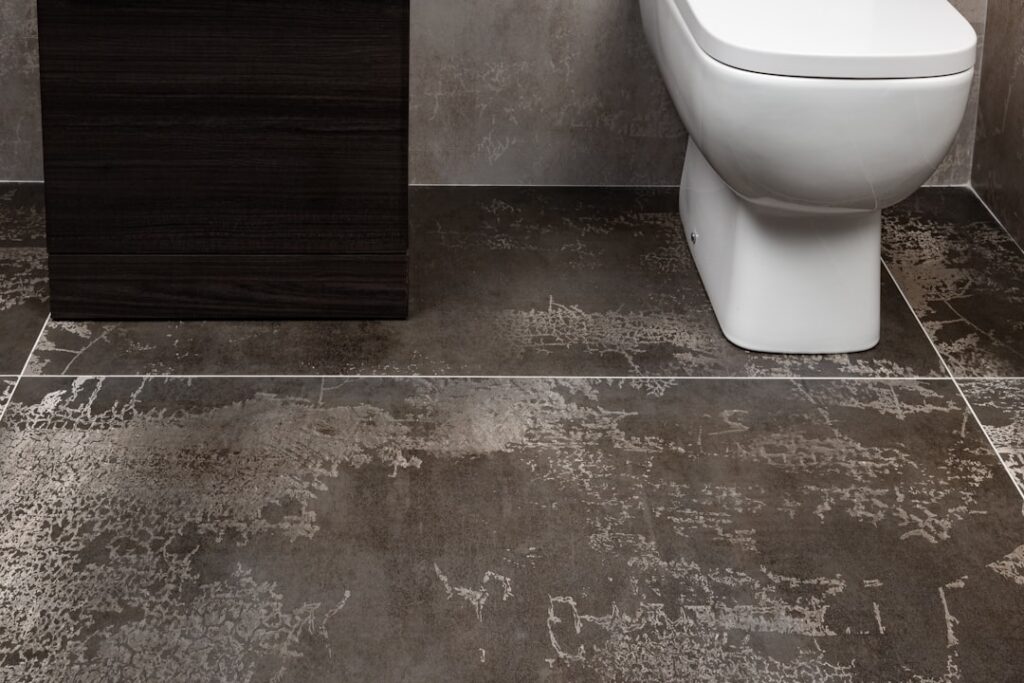
One of my favorite applications is a patina-heavy copper LVT in a small feature bathroom, where the mottled blue-green and rose tones turn the floor into art and the compact size keeps it from tipping into excess. Matte black fixtures and a simple white vanity let the floor carry the whole room. For a bar or restaurant, tighter hexagon copper tiles with a subtle sheen deliver glamour that holds up to heavy foot traffic.
In open industrial spaces, consider zoning: run concrete-look vinyl through the main area and inset a rectangle of copper effect flooring to define a lounge or reception zone. That contrast is more sophisticated than a single metallic sea and lets the copper punctuate rather than dominate. Warm Edison-bulb lighting amplifies the metallic glow, while cool daylight tames it, so think about how the space is lit before you commit.
For pairings, lean into the industrial-luxe palette: exposed brick, blackened steel, reclaimed wood, and plenty of matte texture to offset the sheen. Add warmth with leather and greenery. If your product runs bright and polished, use it sparingly; if it is aged and muted, you have more room to spread it out. The muted, patinated finishes are the more forgiving and timeless choice for most projects.
Durability and Wear
Like all quality luxury vinyl, copper effect LVT is built to take real use. The printed metallic design sits safely beneath a clear wear layer, so unlike genuine copper it will not tarnish, scratch to bare metal, dent, or develop unwanted patina over time. What you install is what you keep, which is a real advantage over actual metal that oxidizes unpredictably.
The wear layer thickness determines how much traffic the floor can handle. For residential accent areas, a wear layer around 12 mils is plenty, while commercial spaces with heavy footfall should look for 20 mils or more to resist scuffing and keep the metallic print pristine for years. Most decorative LVT is also fully waterproof or highly water-resistant, which is why it suits bathrooms, bars, and entryways so well.
One honest caveat: glossy metallic finishes show dust, footprints, and fine scratches in the topcoat more readily than matte wood-look vinyl, simply because the reflective surface catches the light. A satin or textured copper finish hides everyday marks far better than a mirror-bright one, so factor cleaning reality into your finish choice, especially in a busy commercial room.
Installation Basics
Copper effect vinyl installs like any other LVT, in one of three ways. Click-lock floating planks or tiles snap together over a flat underlayment with no adhesive, making them the most DIY-friendly and easy to replace. Glue-down products bond directly to the subfloor for a solid, permanent feel favored in commercial spaces, and loose-lay tiles rely on friction backing and perimeter adhesive for a fast, liftable install.
Whatever the method, subfloor prep is everything. The surface must be clean, dry, and flat — generally within about 3/16 inch over 10 feet — because vinyl telegraphs every bump and ridge underneath, and any imperfection will eventually show through a thin decorative tile. Skim-coat low spots, grind high ones, and vacuum thoroughly before laying a single tile.
Acclimate the material in the room for 48 hours so it adjusts to the temperature and humidity, then dry-lay your pattern first, especially with a distinctive metallic that has directional grain or tile joints. A little planning on layout keeps the copper looking deliberate rather than haphazard, and centering the pattern in the room reads far more professional than starting tight against one wall.
What Copper Effect Vinyl Costs
Decorative metallic LVT generally sits at the mid to upper end of the vinyl range because it is a specialty design. Expect materials in the neighborhood of $3 to $8 per square foot for most residential-grade products, with premium commercial-grade tiles carrying a thicker wear layer running higher. Because copper effect flooring is often used in small accent zones, the total material cost usually stays modest even at a higher per-foot price.
Installation adds roughly $1 to $4 per square foot if you hire a pro, with glue-down commercial installs at the upper end and simple floating click-lock at the lower. A confident DIYer can install a click-lock floating floor in an accent room over a weekend and save that labor entirely, which makes a bold metallic look genuinely attainable on a small budget.
Compared to real copper sheet flooring — which is enormously expensive, heavy, cold, and demands specialist installation and ongoing sealing — the vinyl version delivers the visual impact at a fraction of the cost and none of the maintenance headaches. For nearly every project, that trade is an easy yes.
Is Copper Effect Vinyl Right for You?
Copper effect vinyl flooring is a smart way to bring warmth, drama, and an industrial-luxe edge into a space without the price or upkeep of real metal. It works best as a considered statement — a feature bathroom, a bar, a boutique, a defined zone in an open plan — surrounded by matte neutrals that let its glow do the talking. Choose a muted, patinated finish for longevity and a satin surface for easier cleaning, and it will look intentional for years.
Match the wear layer to your traffic, prep your subfloor properly, and use the color with restraint, and this is one of the more rewarding decorative floors you can install. It gives you the look of an expensive, high-design metallic surface with the everyday practicality of luxury vinyl — waterproof, warm underfoot, and refreshingly affordable. Used thoughtfully, copper effect vinyl turns a plain floor into the most talked-about feature in the room.
Prefer to explore on your own?
See how new flooring looks in your actual room in seconds — free, no signup.
Try the free Floor Studio →