
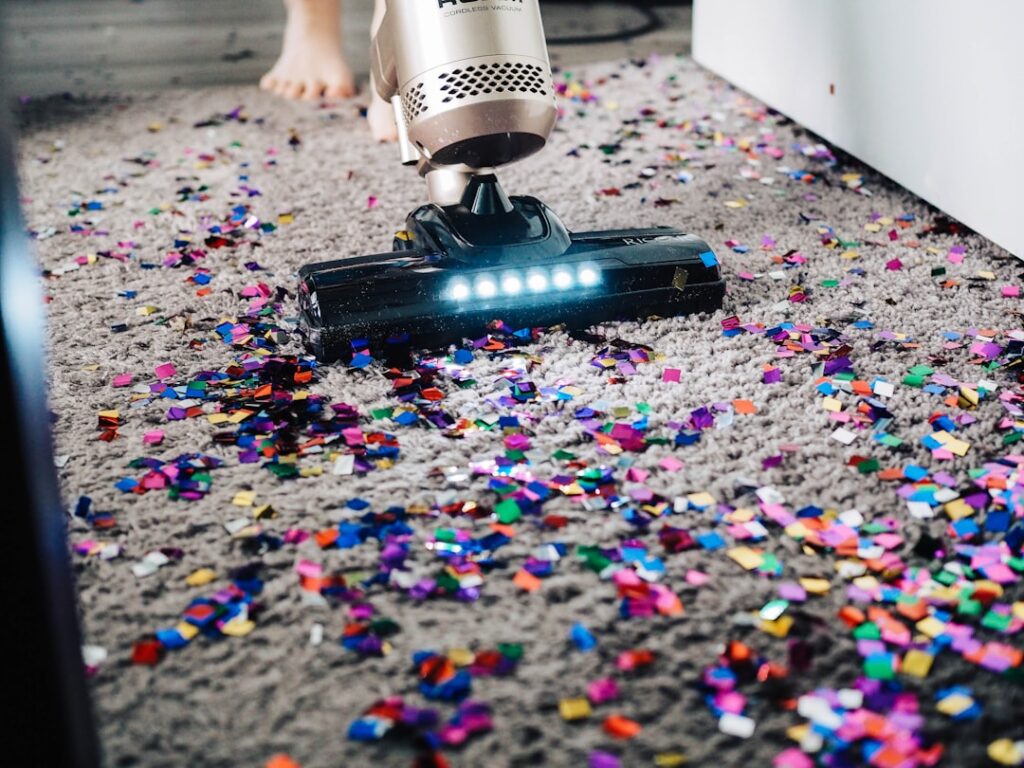
A cordless carpet cleaner gives you the freedom to chase down spills, pet accidents, and traffic stains anywhere in the house without hunting for an outlet or dragging a cord behind you. Powered by a rechargeable battery, these machines combine portability with real cleaning muscle, making them a practical addition to homes with kids, pets, or busy floors.
If you are deciding whether to add one to your cleaning arsenal, this guide explains the types available, the specs that actually matter, how to use the cleaning solutions safely, what to expect on cost, and how to keep the machine working like new.
What a Cordless Carpet Cleaner Does
Unlike a vacuum that only lifts dry debris, a carpet cleaner sprays a water-and-solution mix into the carpet, agitates the fibers, and extracts the dirty liquid back out. Going cordless means you can do that spot cleaning instantly, the moment a glass of juice tips over, instead of setting up a corded machine.
Most cordless models are designed as portable spot and stain cleaners rather than full-room deep cleaners. They excel at fresh spills, pet messes, upholstery, stairs, car interiors, and area rugs, where their grab-and-go convenience shines. For wall-to-wall deep cleaning of a whole house, a corded upright or professional extraction still does the heavy lifting.
Types of Cordless Cleaners
The category breaks into a few formats, each suited to different needs:
- Handheld spot cleaners — Compact, lightweight units for quick stains, upholstery, and car seats.
- Cordless upright cleaners — Larger machines that handle bigger areas while still being maneuverable.
- Multi-surface wet-dry models — Hybrid machines that vacuum and wash sealed floors and area rugs in one pass.
For most homeowners, a handheld spot cleaner covers everyday accidents, while a cordless upright suits those who want to refresh larger zones without a cord. Think about where your messes actually happen before choosing a size.
Specs That Matter
A few specifications separate a genuinely useful machine from a frustrating one. Pay attention to these:
- Runtime — Battery life on a charge, often in the range of 15 to 40 minutes; longer is better for bigger jobs.
- Suction power — Determines how much dirty water it pulls back out, which affects drying time.
- Tank capacity — Separate clean and dirty water tanks; larger tanks mean fewer refills but more weight.
- Weight and ergonomics — Critical for stairs and overhead upholstery work.
- Brush design — Powered or stiff brushes agitate stains more effectively than spray alone.
Strong extraction is arguably the most important spec, because carpet left too wet dries slowly and can develop odor. Look for a model that leaves the area only lightly damp.
Using Cleaning Solutions Safely
The solution you use matters as much as the machine. Always use the cleaning formula recommended by the manufacturer, since the wrong product can foam excessively, damage internal seals, or void the warranty. Many machines call for a specific low-foam carpet shampoo concentrate diluted with warm water.
Follow basic chemical safety. Read the product label, ventilate the room while cleaning, and never mix different cleaning chemicals, which can create dangerous fumes. Test any new solution on a hidden patch of carpet first to check for colorfastness, and keep concentrated solutions away from children and pets. If anyone in the home is sensitive to fragrances or chemicals, look for a fragrance-free or low-VOC formula and rinse the area with plain water afterward where the machine allows.
How to Get the Best Results
Technique improves any machine’s performance. Blot up excess liquid from a fresh spill before cleaning, then vacuum the area to remove loose debris. Apply the solution, let it dwell briefly so it can break down the stain, then make slow passes, alternating wet spray passes with dry suction-only passes to extract as much moisture as possible.
Work from the outside of a stain inward to avoid spreading it, and resist over-wetting, which only lengthens drying time. After cleaning, speed drying with a fan or open windows, and keep traffic off the area until it is fully dry. For stubborn or set-in stains, a second gentle pass beats scrubbing hard, which can damage carpet fibers.
Cost and Maintenance
Cordless carpet cleaners span a broad price range. As a rough estimate, basic handheld spot cleaners sit at the affordable end, while larger cordless uprights and multi-surface wet-dry machines cost considerably more. Factor in ongoing costs for replacement filters, brushes, and cleaning solution, plus eventual battery replacement, since rechargeable batteries lose capacity over years of use.
Maintenance is simple but essential to longevity. Empty and rinse the dirty water tank after every use to prevent odor and mildew, clean the brush and nozzle of trapped hair, and let components air-dry before storing. Run plain warm water through the system periodically to flush residual solution. Store the machine in a dry place and keep the battery charged per the manufacturer’s guidance. Treat it well and a quality cordless cleaner serves reliably for years.
Cordless vs Corded: Which You Need
The choice between cordless and corded comes down to how you clean. Cordless models win on convenience and reach, letting you treat a stain on the stairs, in the car, or upstairs without an outlet or an extension cord. They are the better grab-and-go tool for households that deal with frequent small messes from kids and pets.
Corded machines still hold advantages for big jobs. They deliver constant, uninterrupted power and stronger sustained suction, never run out mid-clean, and usually carry larger tanks for whole-room work. Many homeowners end up owning both: a corded upright for periodic deep cleaning of entire rooms, and a nimble cordless spot cleaner for the daily accidents in between. If you can only choose one, base it on whether your needs lean toward quick spot treatment or full-floor refreshing.
Final Thoughts
A cordless carpet cleaner is one of the most convenient tools you can own for tackling life’s inevitable spills and pet accidents the instant they happen. Match the format to your typical messes, prioritize strong suction and adequate runtime, and always use manufacturer-approved solutions with proper ventilation. Keep the tanks and brushes clean after each job, and your machine will keep carpets and upholstery looking fresh for the long haul.


