The bark of the cork oak regenerates every nine years, the cells trap millions of air pockets per cubic inch, and the resulting material is warm, quiet, and shock-absorbent in a way no other flooring matches. Cork parquet flooring uses small geometric tiles laid in classic parquet patterns: basket weave, herringbone, brick, or pinwheel. The look bridges old-world craftsmanship with a sustainability story that resonates with eco-conscious buyers. Here is the working knowledge you need before specifying it for a real project.
- How Cork Parquet Is Made
- Brands Worth Considering
- Tile Sizes and Pattern Geometry
- Pricing Reality
- Install Methods Compared
- Finishing the Surface
- Where Cork Parquet Shines
- Honest Drawbacks
- Subfloor and Site Conditions
- Maintenance Routine
- Final Buying Checklist
- Environmental Credentials
- Subtle Health Benefits
How Cork Parquet Is Made
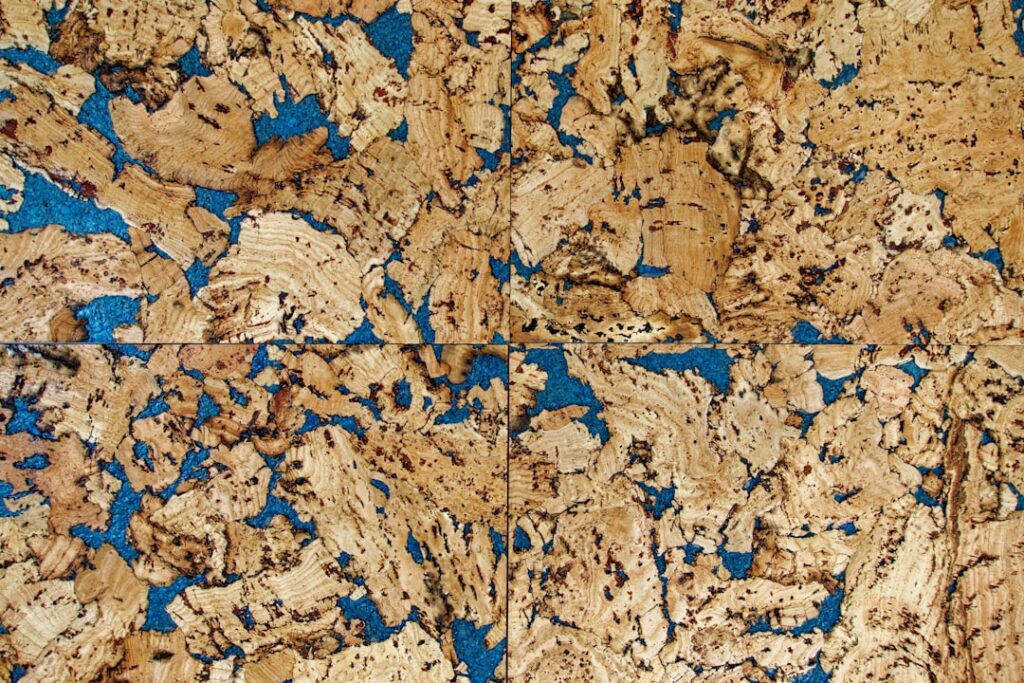
Most cork parquet tiles are agglomerated, meaning ground cork granules are bonded with polyurethane resin under high pressure and sliced into tile stock. Natural-veneer cork tiles use a thin slice of solid cork bark over an agglomerated backer, showing the distinctive bark cell pattern on the surface. Both formats accept stain, sealer, and UV-cured finishes, with color ranges from the natural blonde of fresh bark to the chocolate of fumed treatments.
Brands Worth Considering
Wicanders, Amorim, Globus Cork, US Floors (Natural Cork by COREtec), Granorte, and Torlys all produce cork parquet ranges. Wicanders and Amorim (the same parent company, the world’s largest cork manufacturer) dominate the premium category with documented forest stewardship and consistent material quality. Globus Cork manufactures domestically in Brooklyn with custom color matching, which works well for restoration projects matching existing cork. Expect to pay $7 to $14 per sq ft material for premium ranges.
Tile Sizes and Pattern Geometry
Common cork parquet sizes are 12 by 12 inch squares, 6 by 12 inch rectangles, and 4 by 12 inch planks for herringbone. Thickness ranges from 4 mm to 12 mm. The 4-6 mm range is typical for glue-down installs over plywood or concrete. The 10-12 mm range is reserved for floating click systems and offers more cushion underfoot. Pattern repeats can be tighter or looser depending on tile dimensions; smaller pieces visually expand modest rooms.
Pricing Reality
- Entry agglomerated cork parquet tile: $4 to $6 per sq ft material
- Mid-grade with UV-cured finish: $6 to $9 per sq ft material
- Premium natural-veneer cork parquet: $9 to $15 per sq ft material
- Glue-down installation: $3 to $5 per sq ft labor
- Site-applied polyurethane finish (3 coats): $2 to $4 per sq ft
- Premium hardwax oil finish: $3 to $5 per sq ft
Total installed budgets land at $9 to $20 per sq ft. Click-floating cork at the premium end can reach $22 to $25 per sq ft installed.
Install Methods Compared
Glue-down is the traditional method, using a wet-set contact adhesive like Wakol MS 260 or W.F. Taylor 2061. The tile is pressed into the adhesive bed and rolled with a 100 lb floor roller after install. This method delivers the warmest, quietest result with no underlay needed since cork itself provides the cushion. Click-lock cork (typically 10-12 mm) floats over an underlay, installs faster, and lifts cleanly for replacement but feels slightly less integrated underfoot.
Finishing the Surface
Factory-finished tiles arrive with 5-7 coats of UV-cured aluminum oxide polyurethane and need no further work beyond install. Unfinished cork parquet allows site staining and custom finishes but requires 2-3 days of finishing labor after install. Hardwax oils like Rubio Monocoat or Pallmann Magic Oil penetrate the cork and produce a matte, natural-looking surface that’s easily spot-repaired. Polyurethane forms a hard surface film that wears longer but harder to touch up.
Where Cork Parquet Shines
Kitchens (when sealed properly), libraries, home offices, bedrooms, and music rooms benefit from cork’s acoustic properties. Cork dampens both impact noise (IIC ratings often above 60) and airborne sound (STC contributions of 3-5 points). Walking on cork after standing all day in a kitchen is a noticeably different experience than on tile or hardwood. The thermal insulation R-value of about 1.0 per inch also makes cork warmer underfoot in winter than most alternatives.
Honest Drawbacks
Cork dents under heavy point loads. Furniture without proper protectors leaves visible compression marks within months. Sun exposure ambers the surface; specify UV-rated polyurethane or window film for sun-exposed rooms. Spills must be wiped quickly since prolonged moisture exposure can lift the finish or stain unsealed cork. And while cork is renewable, the polyurethane binders in agglomerated cork are petroleum-based, so the green story is real but not perfect.
Subfloor and Site Conditions
Glue-down cork demands a flat (3/16 inch over 10 feet), dry, and structurally sound subfloor. Concrete subfloors need moisture testing per ASTM F2170 with max RH typically 80 percent for cork systems. Plywood subfloors must be screwed down to eliminate movement that would crack the glue bond. Acclimate tiles 72 hours in the install room at normal HVAC settings before laying.
Maintenance Routine
Sweep or vacuum (without beater bar) several times weekly. Damp-mop with a pH-neutral cleaner like Bona Pro or a cork-specific cleaner; never use ammonia, bleach, or steam mops. Recoat polyurethane every 7 to 12 years depending on traffic. Hardwax oil finishes need a fresh maintenance oil coat every 3 to 5 years. With reasonable care, cork parquet outlasts the next two style cycles in your home.
Final Buying Checklist
- Verify FSC or similar forest stewardship certification
- Confirm finish type (UV-cured polyurethane or hardwax oil)
- Order 12-15 percent waste for parquet pattern cuts
- Acclimate tiles 72 hours before install
- Use manufacturer-specified adhesive only
- Plan a 100 lb roller pass after glue-down install
Environmental Credentials
Cork is one of the more genuinely sustainable flooring options available. The cork oak (Quercus suber) regenerates its bark every nine years across a multi-century lifespan, and harvesting requires no tree felling. Portugal, Spain, and Morocco account for most of the world’s commercial cork production. Certified Amorim and Wicanders cork carries FSC chain-of-custody documentation, verifying responsible forestry. The agglomerated binders are typically polyurethane (petroleum-based), though some manufacturers now offer low-VOC water-based binders for LEED-certified projects. End-of-life cork is biodegradable in the wood-fiber portion; the binder breaks down more slowly.
Subtle Health Benefits
Cork is naturally antimicrobial, hypoallergenic, and dust-mite resistant. The cellular structure doesn’t harbor mold spores under normal indoor humidity, and cork’s natural waxes (suberin) inhibit microbial growth. For households with respiratory sensitivities or pet allergies, cork performs better than carpet and roughly equivalent to sealed hardwood for allergen management. FloorScore-certified cork products test below 0.5 mg/m3 for VOC emissions, well within US Green Building Council thresholds.
Prefer to explore on your own?
See how new flooring looks in your actual room in seconds — free, no signup.
Try the free Floor Studio →