A roof leak is one of those repairs where waiting is the most expensive choice you can make. The cost to fix a roof leak in 2026 runs about $400 to $1,500 for the average repair, but that number swings hard in both directions — a single popped nail and a dab of sealant might be $150, while a leak that has been quietly soaking your decking and rafters for two years can climb past $3,000 once rot and interior damage enter the picture. The core lesson from twenty years of doing this work is simple: the leak itself is cheap to fix; the water damage it causes is not. This guide breaks down real 2026 prices by cause, splits materials from labor, and shows you what drives the number up.
Average Cost Range and What’s Typical
For a straightforward asphalt-shingle roof leak on a single-story home with normal access, most homeowners pay between $400 and $1,000. Minor repairs — resealing a vent boot, replacing a few shingles, patching flashing — cluster at the low end, $150 to $500. Moderate repairs involving a section of flashing, a valley, or a small area of decking land in the $500 to $1,500 range. Major repairs with structural or extensive water damage run $1,500 to $3,500 and up.
The national midpoint for a typical service call and repair sits right around $650 to $900. If a contractor quotes you a flat $95 “roof tune-up” and promises to fix any leak, be skeptical — real repairs cost real money because they require finding the source, which is often the hardest part.
Cost by Cause of the Leak
What is actually leaking determines the price more than anything else. Here are typical 2026 repair ranges by source:
- Popped or missing shingles: $150 to $600, depending on how many and roof access
- Cracked or leaking vent pipe boot: $150 to $500 — one of the most common and cheapest leaks
- Damaged step or valley flashing: $300 to $1,200
- Chimney flashing repair or reflashing: $400 to $1,500
- Skylight leak (reseal or reflash): $400 to $1,000; full skylight replacement $900 to $2,500
- Ice dam damage repair: $500 to $2,000
- Rotted decking replacement (per sheet): $70 to $150 in materials plus labor, often $250 to $700 per affected section
- Structural rafter or truss repair: $1,500 to $5,000+
Flashing failures — around chimneys, walls, valleys, and skylights — are the single most common source of persistent leaks, and they cost more than a simple shingle swap because sealing them correctly takes time and skill.
Materials vs. Labor Breakdown
Roof repair is labor-heavy. On a typical $800 repair, materials might account for only $100 to $250 — a bundle of matching shingles is about $35 to $50, a vent boot $15 to $30, a roll of flashing $20 to $40, and roofing cement, underlayment, and fasteners another $30 to $60. The rest is labor.
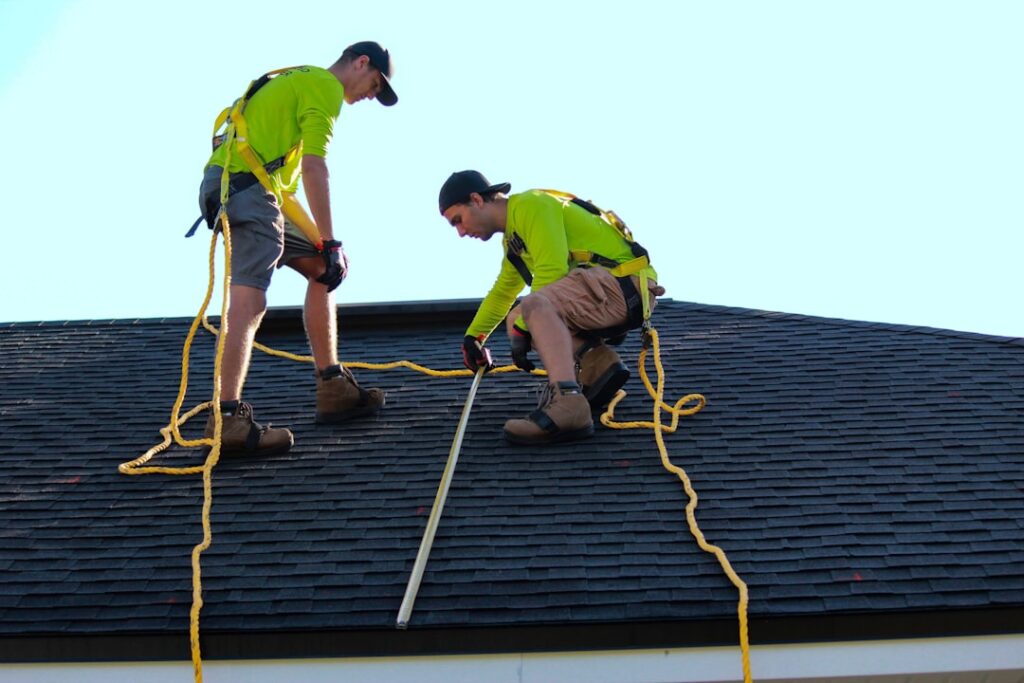
Roofers charge $50 to $80 per hour for a laborer and $75 to $150 per hour for a lead or licensed contractor, and many have a minimum service call of $150 to $350 just to come out and diagnose. Steep or high roofs command a premium because they require safety equipment and slow the work. So when you get a $700 quote for what looks like a small fix, understand that most of it is the skilled time to locate the leak, safely access it, and seal it so it stays sealed — not the fifty dollars of shingles.
Factors That Move the Price
Several variables push a repair toward the high or low end. Roof pitch and height come first: a walkable single-story roof is far cheaper to work on than a steep two- or three-story roof requiring harnesses, roof jacks, or a lift. Roofing material matters too — asphalt shingle is the cheapest to repair, while tile, slate, metal, and cedar shake cost significantly more because the materials are pricey and the labor is specialized. Repairing clay tile or slate can run two to four times an asphalt repair.
Accessibility and the leak’s location factor in — a leak in an open field of shingles is simple, while one buried in a complex valley, behind a chimney, or under solar panels is far more involved. Finally, how long the leak has run is the biggest wildcard, because hidden rot, mold, and soaked insulation multiply the cost once the roofer opens things up.
Don’t Forget the Interior Damage
The repair estimates above cover the roof itself. The water that already came through often needs its own budget. Expect these add-ons where a leak has been active:
- Drywall ceiling patch and repaint: $250 to $800 per room
- Insulation replacement: $1 to $3 per square foot of affected area
- Mold remediation: $500 to $3,000+ depending on extent
- Water-damaged flooring or trim: highly variable, $200 to $2,000+
This is why speed saves money. A $250 vent-boot fix caught early prevents a $2,500 ceiling-and-mold project later. If you see a stain spreading on a ceiling, treat it as urgent, not cosmetic.
How to Find the Source Before You Pay
Half the cost of a roof leak is the detective work, because water rarely enters where it drips. It runs along the underside of the decking, down a rafter, and across the ceiling before it shows up as a stain, so the visible spot inside is often several feet from the actual breach. A good roofer starts in the attic on a bright day, looking for daylight, water stains on the sheathing, or damp insulation, then traces the trail uphill to the entry point.
Common entry points, in rough order of frequency, are flashing around penetrations, cracked vent boots, nail pops, worn valleys, and lifted or missing shingles. A hose test — running water down the roof in sections while someone watches inside — pinpoints a stubborn leak when a visual inspection cannot. This diagnostic time is why a repair invoice is mostly labor, and it is also why you should be wary of a contractor who wants to slap sealant on the first suspicious spot without confirming it is the source. Paying for a proper diagnosis, often $100 to $350, saves you from a repair that does not stop the leak.
Repair vs. Replace: When Patching Stops Paying
At some point a series of repairs costs more than a new roof, and knowing where that line sits saves you from throwing good money after bad. If your roof is under about 15 years old and the leak is isolated to one area, repair is almost always the right call. But if the roof is 20-plus years old, you are getting leaks in multiple spots, the shingles are curling, cupping, or shedding granules into the gutters, and you have already paid for two or three repairs, you are patching a roof that is telling you it is done.
Run the math. A full asphalt-shingle replacement runs roughly $4.50 to $8 per square foot, or $9,000 to $18,000 for a typical 2,000-square-foot roof. If you are spending $800 to $1,500 every year or two on repairs, and the roof is near the end of its 20-to-25-year life, that repair money is better rolled into a replacement that resets the clock and often comes with a workmanship warranty. A reputable roofer will tell you honestly which side of the line you are on; get that assessment before authorizing yet another patch on an old roof.
Emergency, Insurance, and DIY Considerations
Emergency after-hours or storm tarping runs $200 to $600 just to stop active water intrusion until a permanent repair. If a covered event like a windstorm or hail caused the damage, homeowner’s insurance may pay the repair minus your deductible — typically $500 to $2,000 — so document everything with photos and file promptly. Insurers generally will not cover leaks caused by age or deferred maintenance, only sudden accidental damage.
DIY can trim cost on a low-slope, single-story roof — a tube of roofing sealant is $8, a vent boot $20, and a few shingles $40, so a minor fix might cost $75 in materials. But be honest about the risk: falls are the real danger, and a misdiagnosed leak sealed in the wrong spot keeps leaking while you think it is fixed. For anything involving flashing, valleys, height, or an unclear source, paying a pro $400 to $1,000 to find and fix it right is money well spent. Get two or three written estimates, ask each roofer to identify the actual source in writing, and fix it before the cheap leak becomes an expensive one.