
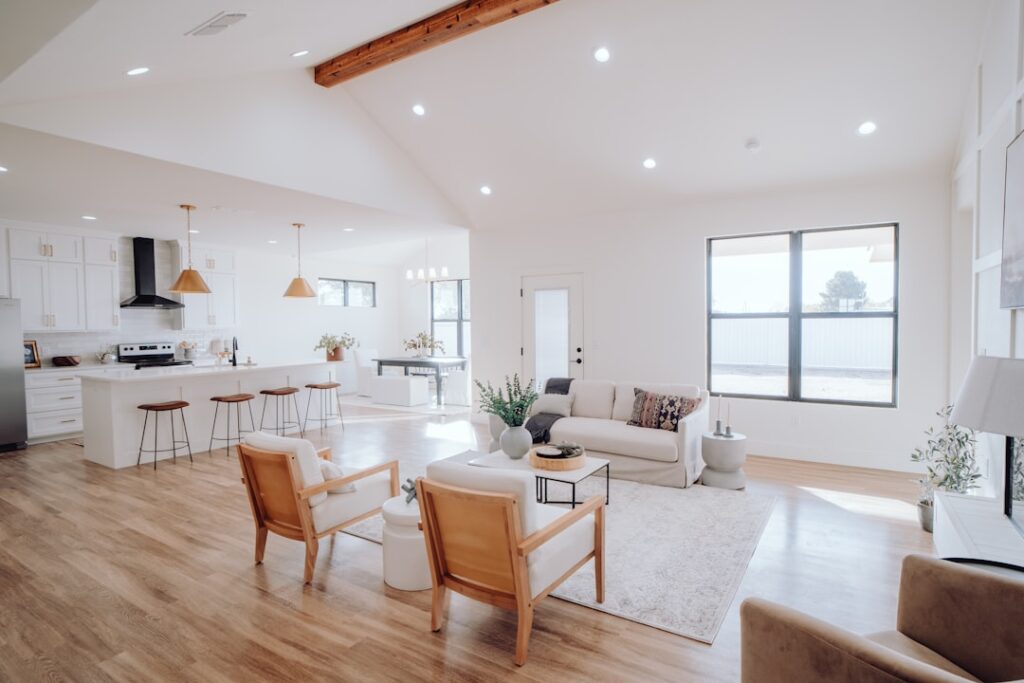
The biggest threat to a floor in Dallas isn’t water, it’s the ground itself. Choosing Dallas flooring that lasts means accounting for the expansive clay soil that swells and shrinks beneath slab foundations, shifting and cracking everything above it. Add triple-digit summers and dry winters, and you have a climate that rewards flexible, dimensionally stable materials. A floor that ignores North Texas soil movement can crack tile and gap wood within a couple of seasons. This guide covers the materials and installation practices that survive Dallas conditions.
The Clay Soil Problem
North Texas sits on expansive clay that expands when wet and contracts when dry, causing slab foundations to heave and settle. That movement telegraphs straight up into rigid flooring, cracking grout lines and snapping tile. Any flooring decision here has to account for the possibility of slab movement.
You can’t fully stop the soil from moving, but consistent watering of the foundation perimeter during droughts reduces extreme shrinkage. For flooring, the strategy is to favor materials that flex with minor slab movement rather than crack against it.
Materials That Handle Movement
Some floors tolerate a shifting slab far better than others. Flexibility and a floating installation method are the keys.
- Luxury vinyl plank — floating click-lock installs ride over minor slab movement and are fully waterproof. $3 to $8 per square foot installed.
- Engineered hardwood — a floating engineered floor flexes with the slab better than glued-down or nailed solid wood. $6 to $12 per square foot.
- Laminate — also floats and absorbs minor movement, though it lacks water resistance. $2 to $6 per square foot.
- Carpet — naturally forgiving of subfloor movement, good for bedrooms.
Floating floors that aren’t bonded to the slab are the smartest hedge against Dallas soil movement because they shift as a unit rather than cracking.
Tile in Dallas: Proceed Carefully
Tile is beautiful and beats the heat, but it’s the most vulnerable to slab movement. A heaving foundation cracks rigid tile and grout, which is why so many Dallas homeowners see cracked tile lines years after install. That doesn’t mean avoiding it entirely.
If you want tile, insist on a crack-isolation membrane such as a decoupling underlayment between the slab and the tile. This layer absorbs minor slab movement and dramatically reduces cracking. Skipping it on a Dallas slab is asking for trouble within a few years.
Beating the Texas Heat
Dallas summers regularly exceed 100°F, and flooring choice affects how cool your home feels. Tile and stone stay naturally cool underfoot, a welcome relief in summer, while carpet and wood feel warmer. Lighter-colored floors also reflect heat and brighten rooms.
For homes with large south- and west-facing windows, UV-stable flooring matters. Direct Texas sun fades cheaper vinyl and some hardwood finishes over time, so look for products with UV-resistant wear layers and consider window treatments to protect the investment.
Installation Practices That Matter
How a floor is installed in Dallas matters as much as what you choose. Floating installations, proper expansion gaps at the walls, and crack-isolation membranes under tile are the practices that separate floors that last from floors that fail.
Slab moisture testing remains important even in dry Dallas, because slabs can hold construction moisture or wick from irrigation. A good installer tests the slab, addresses any unevenness, and leaves the expansion room that lets the floor move with the seasons.
Local Pricing
The competitive Dallas market keeps both labor and material reasonably priced compared to coastal metros. Plan for these installed ranges on a typical residential project.
- Luxury vinyl plank — $3 to $8 per square foot.
- Engineered hardwood — $6 to $12 per square foot.
- Porcelain tile with crack membrane — $9 to $17 per square foot installed.
- Carpet — $3 to $7 per square foot with pad.
Crack-isolation membranes add a few dollars per square foot to tile jobs but are essential insurance on a North Texas slab.
Hiring the Right Installer
Choose a contractor who understands North Texas soil and brings it up unprompted. Ask whether they use crack-isolation membranes under tile, how they handle floating installations, and what expansion gaps they leave. An installer who shrugs off soil movement doesn’t understand the local market.
Confirm Texas licensing, insurance, and recent Dallas-area references. The best installers will recommend the floating, flexible approach for slab homes and explain the tradeoffs honestly rather than pushing whatever has the highest margin.
Choosing by Room in North Texas
Match each floor to how the room is used and how exposed it is to slab movement and heat. Kitchens and bathrooms benefit from waterproof luxury vinyl or carefully isolated tile, while living areas suit floating engineered hardwood that flexes with the slab. Bedrooms are a natural home for carpet, which forgives subfloor movement and adds warmth.
Sun-drenched rooms with big west-facing windows call for UV-stable products and lighter colors that resist fading and reflect heat. Entryways and mudrooms take the brunt of foot traffic and tracked-in debris, so durable, easy-clean surfaces like rigid-core vinyl or sealed tile earn their keep there. Mixing materials room by room is smarter than forcing one floor across a shifting slab.
Maintaining Floors on a Moving Slab
Watering your foundation perimeter during Dallas droughts is one of the most overlooked ways to protect your floors. Keeping the soil moisture more consistent reduces the extreme swelling and shrinking that cracks tile and gaps wood. A soaker hose run on a timer during dry spells is cheap insurance for both the foundation and the floor above it.
Inside, keep up routine care suited to each material: damp-mop vinyl and tile, reseal grout periodically, and use felt pads under furniture on engineered wood. Watch for early warning signs of slab movement, like new hairline cracks in tile grout or fresh gaps between planks, and address foundation issues before they worsen. Catching movement early saves the floor from major damage.
Final Word
Smart Dallas flooring choices revolve around one fact: the clay soil moves, and your floor has to live with it. Favor floating luxury vinyl, engineered hardwood, or laminate that flexes with slab movement, and if you want tile, never skip the crack-isolation membrane. Choose UV-stable, lighter materials to handle the heat, insist on proper expansion gaps, and hire an installer who treats North Texas soil as the central challenge it is.
Prefer to explore on your own?
See how new flooring looks in your actual room in seconds — free, no signup.
Try the free Floor Studio →

