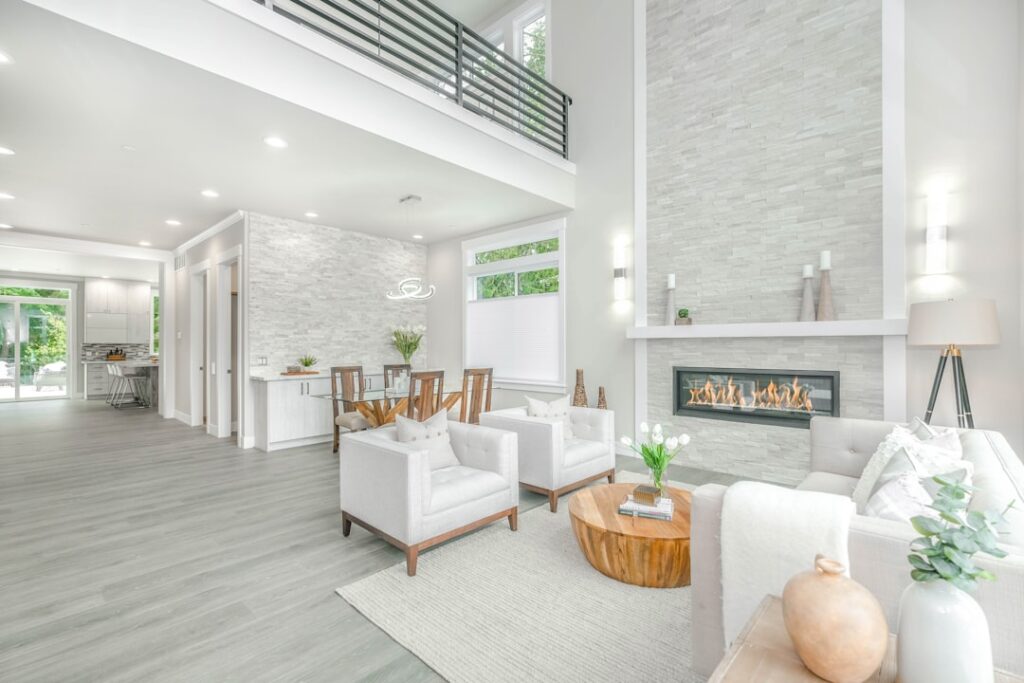
Walk into any hardware store lighting aisle and you will see three rows of bulbs marked “daylight,” all claiming to mimic the sun, and all looking dramatically different once installed. That confusion costs homeowners thousands of returns each year. Understanding daylight color in lighting terms means understanding Kelvin temperature, CRI ratings, and where bright blue-white light actually belongs in a home. Used correctly, daylight bulbs sharpen task areas and lift moods on overcast days. Used poorly, they make a living room feel like a dental clinic.
- What Daylight Color Means on a Bulb Label
- 5000K vs 6500K: The Real Difference
- Where Daylight Color Belongs in the Home
- Where Daylight Color Backfires
- Matching Daylight Bulbs to Wall Color
- Smart Bulb Options for Tuneable Daylight
- Energy and Lifespan Numbers
- Common Mistakes to Avoid
- Quick Buying Checklist
What Daylight Color Means on a Bulb Label
On a Philips, GE, or Cree package, daylight refers to a correlated color temperature between 5000K and 6500K. Anything cooler than 5000K is usually labeled “bright white” or “cool white,” while 4000K sits in the neutral middle. Natural noon sunlight measures around 5500K, which is why true daylight bulbs feel familiar in midday but harsh at 9 p.m.
Kelvin is only half the story. Color Rendering Index, or CRI, measures how accurately a bulb reveals object colors compared to sunlight. A daylight LED with a CRI of 90 or higher will show skin tones, paint chips, and food the way they actually look. Cheap supermarket bulbs often hover near CRI 80 and skew greens and reds.
5000K vs 6500K: The Real Difference
5000K reads as a crisp neutral white with just a touch of blue. It works in garages, laundry rooms, basement workshops, and kitchen task zones. 6500K leans visibly blue, like an overcast winter sky, and is best reserved for highly specialized tasks.
- 5000K: workshops, makeup mirrors, sewing rooms, jewelry repair, art studios
- 5500K: photography softboxes and product staging
- 6500K: clean rooms, surgical suites, retail jewelry display cases
For everyday home rooms, 5000K is almost always the smarter daylight choice. The extra blue at 6500K interferes with melatonin production after sunset and can make wood floors look ashy.
Where Daylight Color Belongs in the Home
Daylight bulbs shine in spaces where you need to see fine detail or fight visual fatigue. Garages benefit enormously, since the cooler tone reveals oil stains, rust, and dropped fasteners. A two-car garage typically needs 6,000 to 8,000 lumens of 5000K light spread across at least four fixtures.
Kitchens are split. Use 5000K under-cabinet task strips for chopping and reading recipes, but stick with 2700K to 3000K in the main pendants over a dining island. Mixing the temperatures gives clarity at the counter while keeping meals appetizing.
Where Daylight Color Backfires
Bedrooms, formal dining rooms, and living rooms should avoid daylight color entirely. The cool tone suppresses melatonin, which is exactly why doctors warn against bright phone screens before bed. A 5000K nightstand lamp can delay sleep onset by 30 to 60 minutes, according to multiple sleep-lab studies.
Bathrooms are trickier. Many homeowners install daylight bulbs over a vanity for makeup accuracy, only to find their reflection looks washed out. A 3500K to 4000K bulb with CRI 95 gives more flattering tones while still showing color shifts in blush or foundation.
Matching Daylight Bulbs to Wall Color
Daylight color exaggerates undertones. Beige paints suddenly read pink or green, and warm gray can shift to lavender. Always test bulbs against your existing paint before committing to a whole room of fixtures.
If your walls lean warm, like Sherwin-Williams Accessible Beige or Benjamin Moore Edgecomb Gray, a 5000K bulb will fight the room. Drop to 4000K. If your walls are cool grays or true whites, daylight bulbs can sharpen the contemporary feel without clashing.
Smart Bulb Options for Tuneable Daylight
Smart bulbs solve the room-by-room dilemma by letting you dial Kelvin on demand. Philips Hue White Ambiance ($25 each), LIFX Color ($45), and Govee Lyra ($30) all tune from roughly 2200K to 6500K through an app or Alexa command.
- Set 5000K daylight during morning workouts to boost alertness
- Drop to 3000K through dinner
- Shift to 2200K amber an hour before bed
Whole-house tunable systems from Lutron Caseta and Leviton Decora Smart run $400 to $1,200 installed, depending on fixture count.
Energy and Lifespan Numbers
A 60-watt-equivalent daylight LED draws 8 to 9 watts and produces 800 lumens. Expect 15,000 to 25,000 hours of life, or 13 to 22 years at 3 hours per day. Costs run $2 to $4 per bulb for store brands, $7 to $12 for high-CRI versions from Soraa, Waveform Lighting, or Yuji.
Watch the lumens per watt ratio. A quality daylight LED hits 95 to 110 lm/W. Anything under 80 lm/W is older technology and worth skipping even at clearance prices.
Common Mistakes to Avoid
Mixing 2700K and 5000K bulbs in the same fixture creates an unsettling green cast where the beams overlap. Always match Kelvin within a single can-light run. Another frequent error is buying daylight color in a dimmable circuit, only to discover the bulb flickers at 30 percent brightness. Verify the bulb is rated for your specific dimmer model before installing more than one.
Quick Buying Checklist
Before checking out, confirm the lumens, the Kelvin rating, the CRI, and the dimming compatibility. For most homes, a 5000K daylight color bulb with 800 lumens and CRI 90 or higher is the right tool for utility spaces. Save the 6500K bulbs for the garage workbench and leave the rest of the house in warmer light where you actually want to relax.