If you have spotted glossy black berries on a shrubby plant at the edge of your yard, take it seriously before anyone touches them. The deadly nightshade berry, from the plant Atropa belladonna, is one of the most poisonous fruits found in temperate climates, and it is dangerously deceptive because the berries look sweet and inviting, especially to children and pets. This guide explains how to identify the plant, why it is so toxic, what to do in a suspected poisoning, and how to remove it from your property safely. Nothing here should be read as medical advice; in any emergency call for professional help immediately.
Why Deadly Nightshade Is So Dangerous
Every part of Atropa belladonna is poisonous, including the leaves, roots, and especially the berries. The plant contains potent tropane alkaloids, primarily atropine, scopolamine, and hyoscyamine, which interfere with the nervous system. As few as two to five berries can be lethal to a child, and even a small amount can cause serious harm to an adult. It is highly toxic to humans, dogs, cats, and livestock alike. Do not eat any part of this plant, and never assume a berry is safe because it looks ripe and appealing.
How to Identify the Plant
Correct identification matters, because several harmless and edible plants can be confused with it, and some non-toxic look-alikes get blamed unfairly. Look for this combination of features:
- Height: a bushy perennial typically 2 to 5 feet tall, sometimes taller.
- Leaves: oval, pointed, dull green, often in unequal pairs along the stem, with an unpleasant smell when crushed.
- Flowers: bell-shaped, drooping, purplish-brown to dull violet, about an inch long.
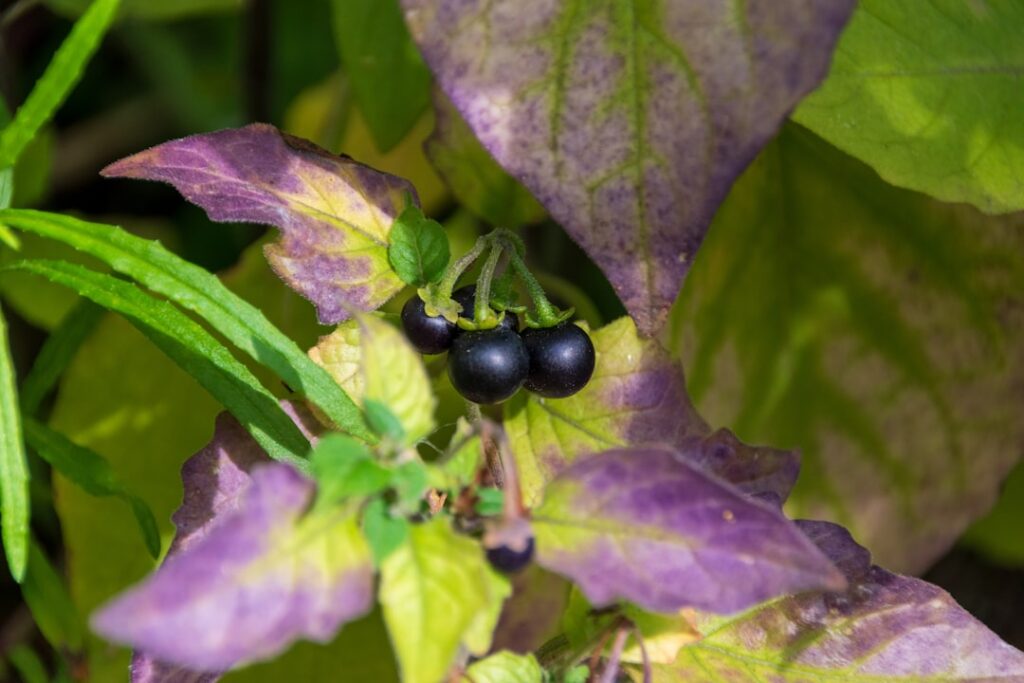
- Berries: shiny, round, and black when ripe (green when unripe), about the size of a small cherry, each cradled in a green five-pointed star-shaped calyx.
- Habitat: often found in shaded, disturbed ground, woodland edges, hedgerows, and waste areas.
If you are not certain of the identification, treat the plant as toxic until a local extension office, master gardener program, or botanist confirms what it is. Do not rely on taste or guesswork.
Recognizing Possible Poisoning
Symptoms of nightshade poisoning can appear within minutes to a couple of hours and may include dilated pupils, blurred vision, dry mouth, flushed and hot skin, rapid heartbeat, confusion, hallucinations, difficulty swallowing, and in severe cases convulsions or loss of consciousness. In pets, watch for drooling, vomiting, dilated pupils, weakness, tremors, or collapse. These signs are a medical emergency.
What to Do if Ingestion Is Suspected
Act fast and do not wait for symptoms to worsen:
- For a person in the US, call Poison Control at 1-800-222-1222 right away. If the person is unconscious, having seizures, or struggling to breathe, call 911 immediately.
- For a pet, contact your veterinarian or an emergency animal hospital at once. You can also reach the ASPCA Animal Poison Control Center at 1-888-426-4435 (a consultation fee may apply).
- Do not induce vomiting unless a poison control professional or medical provider specifically tells you to.
- Bring a sample or photo of the plant and berries if it can be done safely, to help with identification and treatment.
Quick action saves lives, and many poisonings are treatable when addressed promptly.
Removing Deadly Nightshade From Your Yard
If you have confirmed the plant on your property, removing it protects your family and pets. Take these precautions:
- Wear protective gloves, long sleeves, and pants, since the alkaloids can be absorbed through skin and through cuts.
- Avoid touching your face, and never handle food or rub your eyes while working with the plant.
- Dig out the entire root system, because the plant is a perennial and will regrow from roots left behind.
- Bag all plant material and berries in sealed trash bags. Do not compost it and do not burn it, as the smoke can be irritating.
- Dispose of it with household trash rather than yard waste that may be composted.
- Wash your gloves, tools, and clothing thoroughly afterward, and wash your hands well.
For large infestations, a targeted herbicide or help from a professional landscaper may be warranted. Check the area in following seasons for regrowth.
Common Look-Alikes and How to Tell Them Apart
Many plants get mistakenly called “deadly nightshade,” and confusing them runs both ways: harmless plants get destroyed needlessly, and dangerous ones get overlooked. True Atropa belladonna has solitary, drooping, bell-shaped purplish-brown flowers and single shiny black berries sitting in a five-pointed green calyx. Some plants frequently mistaken for it include:
- Black nightshade (Solanum nigrum): bears clusters of small black berries and white star-shaped flowers; it is also considered toxic when unripe and is not the same plant.
- Bittersweet nightshade (Solanum dulcamara): has purple flowers with a yellow center and red oval berries; it is toxic and a common garden weed.
- Pokeweed: tall with drooping clusters of dark purple berries on pink-red stems; toxic and often confused with nightshades.
- Edible berries like elderberry or blueberry: grow in clusters, not solitary, and have very different leaves and flowers.
The safest rule is simple: never eat a wild berry unless an expert has positively identified it, and treat any unknown black berry on a shrubby plant as potentially dangerous.
Why It Grows Where It Does
Deadly nightshade favors disturbed, shaded, and limestone-rich soils, which is why it often appears along woodland edges, in hedgerows, near old foundations, and in neglected corners of a yard. Birds eat the berries without harm and spread the seeds, so the plant can pop up far from any obvious parent. If you find one plant, scan the surrounding area for seedlings and check the same spots in following seasons, because the seed bank in the soil can produce new plants for years.
Keeping Children and Pets Safe
Until the plant is gone, keep children and animals away from the area. Teach kids never to eat any wild berries, because many toxic species mimic edible ones. If you forage or have a garden, learn the dangerous look-alikes in your region so you can tell them apart with confidence.
The Bottom Line
The deadly nightshade berry is genuinely dangerous and deserves respect, not curiosity. Learn to recognize the bushy plant with drooping purple-brown bell flowers and shiny black berries in star-shaped calyxes, never eat any part of it, and remove it carefully with gloves and full root extraction. If you suspect anyone or any pet has ingested it, call Poison Control at 1-800-222-1222, contact a veterinarian for animals, or dial 911 in a severe emergency. When it comes to this plant, fast professional help and prevention are everything.