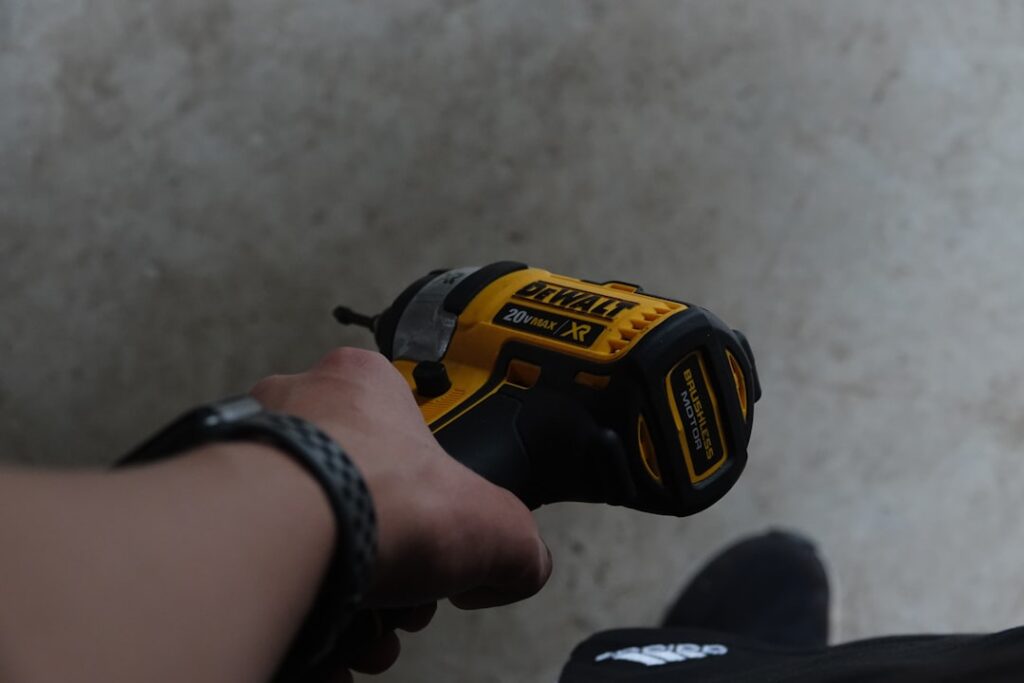
Cutting an electrical box opening with a jab saw takes a minute or two and usually ends with a ragged edge or a blown-out corner. A spiral cutout tool does the same opening in about ten seconds, tracing the box from inside so the hole lands exactly where the fixture is. The DeWalt drywall cutout tool — the cordless DCE555 on the 20V Max platform — is DeWalt’s answer to the corded RotoZip that hangers have carried for decades, and for anyone already invested in yellow batteries it’s the obvious candidate. After running one through a basement refinish and a whole-house fixture swap, here’s where it shines, where it frustrates, and how to set it up so it cuts clean instead of wandering.
What the DCE555 Is
The DCE555 is a 20V Max brushless spiral saw: a compact inline body that spins a 1/8-inch or 5/32-inch spiral bit at up to 26,000 RPM. Unlike a jab saw or oscillating tool, it cuts by routing — the bit plunges through the drywall and moves laterally, chewing a narrow kerf in any direction. The brushless motor is the headline over older corded units; it maintains speed under load and stretches battery life meaningfully. The tool ships bare (around $99 to $119) or in kit form with a 1.5 or 2Ah battery and charger for $159 to $199.
- Motor: Brushless, up to 26,000 RPM
- Collets: 1/8 inch and 5/32 inch included
- Depth control: Tool-free adjustable shoe
- Weight: About 3.2 pounds with a 2Ah pack
- Extras: Dual-position on/off switch, LED work light, bit wrench storage on board
Runtime is better than the spec sheet suggests because the duty cycle is short bursts. A 2Ah battery handled roughly 60 to 80 box and can-light cutouts in 1/2-inch drywall before needing a swap — plenty for a full day of hanging in a typical house.
Where It Beats Every Other Method
Box cutouts are the signature move. Hang the sheet right over the installed electrical box, mark the approximate center from your floor reference marks, plunge the bit, drift until it contacts the inside of the box, pop over the edge, and trace the outside perimeter counterclockwise. The bit rides the box like a router bearing riding a template, and the opening comes out gasket-tight. Once the motion is in your hands, a box takes 10 to 15 seconds — and because you’re tracing the actual box, mislocated openings essentially disappear from your punch list.
Recessed can lights are even faster: plunge, find the rim, trace. Window and door openings work the same way against the jamb or buck. Beyond hanging, the tool earns its keep on remodel work — cutting in old-work boxes, opening inspection holes, trimming back damaged drywall to joist centers — anywhere you want a controlled cut without the violence of a reciprocating saw near hidden wiring. The 26,000 RPM spiral bit will nick a wire it touches, so the rule stands: cut counterclockwise around boxes (it pushes the bit against the box, away from wires stuffed behind) and keep plunge depth to about 3/4 inch with the shoe.
Bits: The Difference Between Clean and Chewed
Bit choice matters more than tool brand here. The standard 1/8-inch spiral drywall bit is the everyday choice — thin kerf, minimal tear-out, cheap ($8 to $12 for multipacks; DeWalt’s DWA and RotoZip’s ZB bits both fit). The guidepoint drywall bit has a smooth pilot tip that rides templates without cutting them — essential when tracing plastic boxes, since a plain spiral bit will happily eat the box edge along with the drywall. Buy the guidepoint style for box work, full stop. For cement board and tile backer, step up to carbide-tipped or diamond-grit spiral bits and accept slower feed. Bits snap when side-loaded aggressively — keep a five-pack in the pouch, because you will break one the day you have none.
Dust: Plan for It
Spiral saws make gypsum dust like nothing else in the trade — a fine white plume that hangs in the air and coats every horizontal surface. The DCE555 has no integrated extraction port, which is its biggest shortcoming versus a dedicated dust-managed setup. On occupied remodels, three habits keep it civilized: run a helper holding a vacuum nozzle (a HEPA-filtered shop vac like the DeWalt DXV10P) two inches below the cut, wear an N95 or better every time, and isolate the room with plastic and a box-fan exhaust when cutting more than a few openings. For new-construction hanging where the house gets sanded anyway, most crews just let it fly and sweep.
DCE555 vs. RotoZip vs. Oscillating Tool
Against the corded RotoZip RZ1500 (about $80 to $100), the DeWalt trades peak grunt for freedom of movement. The RotoZip’s cord is a genuine liability on scaffolds and ladders; the DeWalt goes wherever the sheet goes. Cut speed in 1/2- and 5/8-inch drywall is effectively identical. The RotoZip ecosystem still has more attachments (right-angle heads, zip mate saw wheels), so remodelers who cut a lot of tile may still prefer it. Milwaukee’s M18 cutout tool is the closest cordless rival — comparable performance, so platform loyalty should decide.
Against an oscillating multi-tool, there’s no contest for volume work: the oscillating tool is cleaner and more controlled for a single surgical patch cut, but it’s five times slower per opening and eats blades. And against the humble $12 jab saw — the jab saw still belongs in the pouch for one-off holes, because no battery, no bits, no dust plume. The cutout tool is for the day you have twenty openings, not two.
Setup Tips That Prevent Wandering Cuts
- Set depth shallow: Adjust the shoe so the bit protrudes about 1/4 inch past the drywall thickness. Deep bit exposure is what finds wires and water lines.
- Let the RPM do the work: Feed at a steady walk. Forcing the bit deflects it, and a deflected spiral bit cuts a beveled, wandering line — or snaps.
- Counterclockwise outside, clockwise inside: Trace the outside of boxes counterclockwise and the inside of a marked opening clockwise so bit rotation pulls the tool against the guide edge instead of away from it.
- Mark centers before hanging: Write box heights on the floor with lumber crayon before the sheet goes up. Ten seconds of layout beats exploratory plunges.
- Two-hand grip for long cuts: Choke up with your off-hand near the shoe for straight runs; the tool is nose-heavy and steadier that way.
Living With It: Durability and Quirks
After a few months of jobsite use, the DCE555’s build holds up the way DeWalt’s mid-tier tools usually do. The collet threads stay clean if you blow them out at day’s end — gypsum dust is abrasive, and a gritty collet is the main cause of bit slip complaints. The dual-position switch takes a week to love: it lets lefties and righties both run their thumb to it naturally, but it also means you’ll bump it off mid-cut occasionally until muscle memory sets. The LED is genuinely useful inside dark closets and soffits, where most cutout work seems to happen.
Two quirks worth knowing before you buy. First, the tool has no variable speed — it’s full 26,000 RPM or nothing, which is correct for drywall but limits its usefulness as a light router substitute. Second, bit changes require the included wrench; there’s no one-hand chuck like some competitors offer. Neither issue slows drywall work meaningfully, but they define the tool as a hanger’s instrument rather than a general rotary tool. Treat it that way and it stays reliable.
Verdict
The DeWalt drywall cutout tool is a specialist that does its one job dramatically better than the general-purpose alternatives. For anyone hanging more than a room or two of drywall — remodelers, flippers, serious DIYers finishing a basement — the DCE555 pays for itself in saved layout time and eliminated re-cuts, and the cordless format genuinely changes how you move around the job. Buy it bare if you own 20V Max packs, add guidepoint bits and a five-pack of spares, and pair it with a HEPA vac on occupied work. If you hang drywall once every five years, keep the jab saw and spend the hundred dollars on a better taping knife instead.