Stand in the plumbing aisle and the copper looks identical, yet the color of the printing on the outside tells a plumber exactly where each length belongs. The different types of copper pipe are graded by wall thickness, and choosing wrong means either overpaying for water lines or, worse, running a pipe too thin for the pressure it will see. Copper has carried drinking water for a century because it resists corrosion, handles heat, and lasts 50 years or more. This guide sorts out the four main types, their color codes, and where each one belongs.
How Copper Pipe Is Graded
All rigid copper shares the same outside diameter for a given nominal size, which is why fittings interchange. What changes between types is the wall thickness, and thicker walls mean a higher pressure rating and a higher price. The industry marks each grade with a colored stripe and matching printed text so you can identify it at a glance without a caliper.
- Type K — green marking, thickest wall
- Type L — blue marking, medium wall
- Type M — red marking, thinnest rigid wall
- DWV — yellow marking, drain-waste-vent, non-pressure
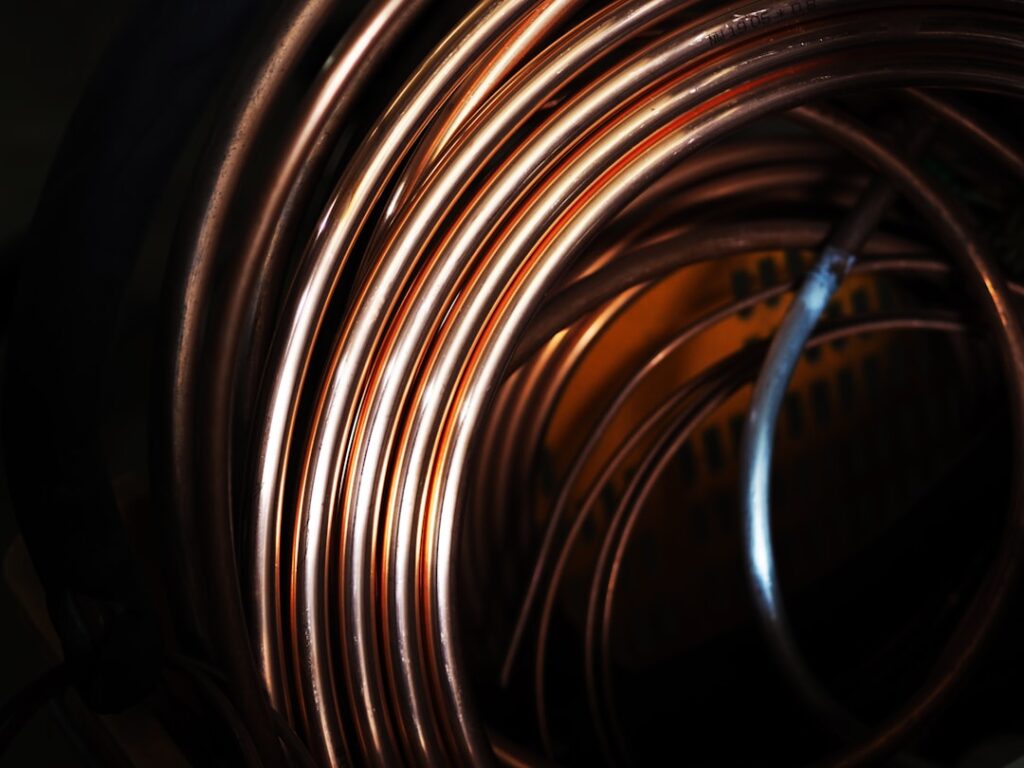
There is also soft copper sold in coils versus hard copper sold in straight 10- and 20-foot lengths. Soft (annealed) copper bends by hand and is used where a run needs to flex, while hard-drawn copper stays rigid and looks cleaner on exposed runs.
Type K Copper
Type K has the thickest wall of the three pressure grades. In 1/2-inch nominal size its wall runs about 0.049 inches, versus 0.040 for Type L. That extra metal makes it the most durable and the highest pressure rating, which is why it is the standard for underground water service lines running from the street main to the house. Soft Type K coils can be pulled through a trench in one piece with no buried joints, a real advantage since every underground fitting is a potential leak. It is also the most expensive, so it rarely appears inside walls where thinner grades do the job.
Type L Copper
Type L is the workhorse of residential and commercial plumbing. Its medium wall thickness, about 0.040 inches at 1/2-inch nominal, handles household water pressure with a large safety margin and resists the occasional pressure spike or water hammer better than thinner pipe. Plumbers use hard Type L for interior supply lines, and many local codes require it (rather than Type M) for anything inside a wall or buried, because a pinhole leak hidden in a wall is far costlier than the small premium L costs over M. If you want one grade that satisfies inspectors almost everywhere, Type L is it.
Type M Copper
Type M has the thinnest wall of the rigid pressure types, roughly 0.028 inches at 1/2-inch nominal. It is noticeably cheaper, and for exposed, accessible interior water lines, such as a basement or utility room where a leak would be seen and fixed quickly, many jurisdictions permit it. The catch is that some cities and towns prohibit Type M inside finished walls or underground. Always check your local code before running it, because passing inspection with the wrong grade means tearing it out. For low-pressure applications and DIY basement plumbing where it is allowed, Type M keeps material costs down.
DWV Copper
Copper DWV, marked yellow, is a thin-wall pipe made only for drain, waste, and vent lines that never hold pressure. It was common in mid-century homes but has been almost entirely replaced by PVC and ABS plastic, which cost a fraction as much for the same job. You will mostly encounter DWV copper when repairing an older home, and it is generally repaired with plastic rather than matched.
Copper Versus the Alternatives
Copper is no longer the only choice. PEX, a flexible cross-linked polyethylene tubing, has taken over a large share of new residential supply plumbing because it is cheaper, freeze-resistant, and installs faster with crimp or push-fit fittings and no torch. Copper still wins where homeowners want a proven 50-year lifespan, resistance to rodents chewing lines, and a material that does not degrade under UV or high heat near a water heater. Many plumbers now run PEX for the branch lines and copper for the stub-outs and water-heater connections.
Soft Versus Hard Copper
Beyond wall thickness, copper is sold in two tempers. Hard-drawn copper comes in rigid straight lengths and is what you see on neat, strapped runs along a basement ceiling; it holds its shape and looks clean but must be joined with fittings at every direction change. Soft (annealed) copper comes coiled and bends by hand or with a bending spring, which lets it snake around obstacles and, importantly, run underground in a single length with no buried joints. Type K and Type L are available in both tempers, while Type M is generally sold hard-drawn only. For a water service line under a lawn, soft Type K in one continuous coil is the gold standard precisely because a jointless run cannot leak in the trench.
Reading the Pressure Ratings
Thicker walls carry higher working pressure, but for a typical home the difference is academic because all three grades far exceed household supply pressure, which usually sits between 40 and 80 psi. Where the margin matters is water hammer and pressure spikes: the thicker wall of Type L absorbs those repeated shocks better over decades than thin Type M, which is part of why codes favor L in concealed locations. If your home has high static pressure above 80 psi, install a pressure-reducing valve regardless of pipe grade, since sustained high pressure stresses fittings, fixtures, and the water heater far more than it stresses the pipe itself.
Working With Copper: Quick Pointers
Rigid copper is joined by sweat-soldering with a propane torch, flux, and lead-free solder, or with modern press fittings that crimp with a special tool and no flame. Cut it square with a tubing cutter rather than a hacksaw, ream the burr from the inside so it does not restrict flow, and clean both the pipe end and fitting to bright copper before soldering. Always drain the line completely before soldering, because even a few drops of water in the joint absorb the torch heat and prevent the solder from flowing into the fitting. A clean, dry joint is the difference between a leak-free connection and a callback.
Frequently Asked Questions
Which type of copper pipe is best for home water lines?
Type L is the standard choice for interior supply plumbing because its medium wall thickness satisfies nearly every local code and handles household pressure with margin. Type K is reserved for buried water service lines.
What do the colors on copper pipe mean?
The printed stripe identifies the grade: green is Type K (thickest), blue is Type L (medium), red is Type M (thinnest rigid pressure pipe), and yellow is DWV drain pipe. The color is your quickest field identification.
Can I use Type M copper in my walls?
Sometimes, but many local codes require Type L inside finished walls and underground because a hidden pinhole leak is costly. Confirm with your local building department before running Type M anywhere it cannot be easily inspected.
Is copper or PEX better?
PEX is cheaper, freeze-tolerant, and faster to install, while copper offers a longer proven lifespan and resistance to heat, UV, and rodents. Many modern homes use PEX for branch runs and copper at water heaters and fixture stub-outs.
How long does copper pipe last?
Properly installed copper commonly lasts 50 years or more. Lifespan drops in areas with acidic or aggressive water chemistry, which can cause pinhole corrosion over time, so a water test is worthwhile in problem regions.