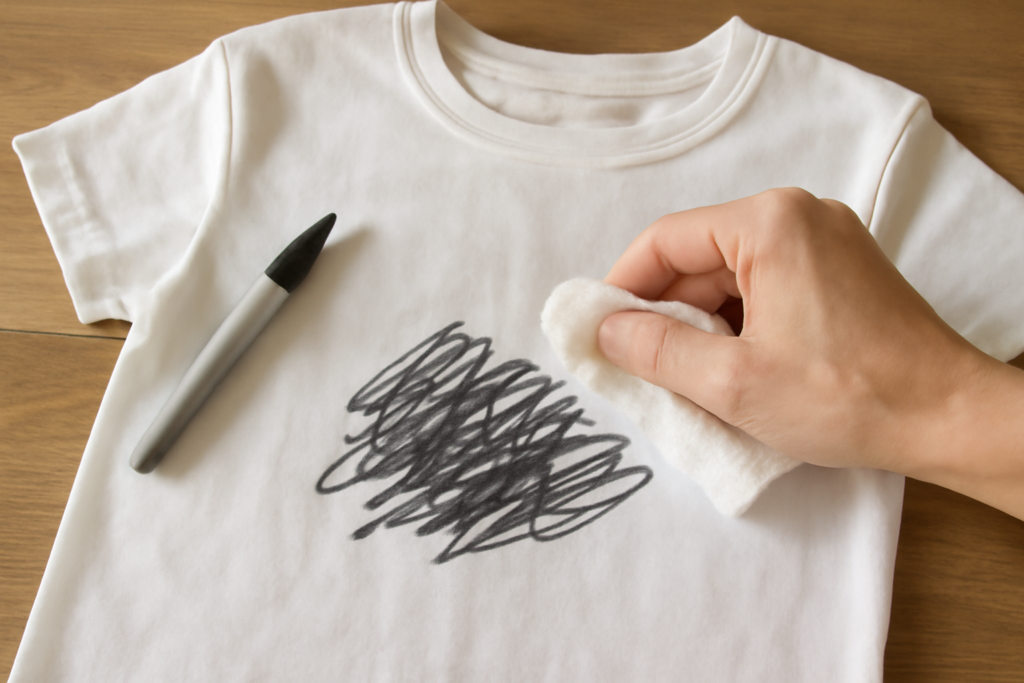
Spill a permanent marker across your favorite shirt and the first panic question is always the same: does Sharpie come out of clothes? The honest answer is yes, Sharpie ink usually comes out of clothes, but success depends on the fabric, how fast you act, and which solvent you reach for. Permanent marker is designed to bond to surfaces, so plain water and regular detergent almost never lift it on their own. What actually breaks the ink loose is an alcohol-based or oil-based solvent that dissolves the pigment before it locks into the fibers.
Why Sharpie Is So Hard to Remove
Sharpie ink is built from three ingredients: colorant, a carrier solvent, and a resin binder. The solvent flashes off within seconds, leaving the pigment and resin fused to whatever surface it touched. That resin is the problem. On a nonporous surface like glass it sits on top and wipes away, but on woven cotton or polyester it seeps between the threads and hardens.
Once the ink dries, you are no longer cleaning a stain sitting on the fabric. You are trying to re-dissolve a cured film that has soaked into the weave. This is why a marker line an hour old comes out far easier than one that has gone through a hot dryer cycle. Heat cures the resin permanently, so the single biggest mistake people make is tossing a stained garment into the dryer before the ink is gone.
Act Fast Before the Stain Sets
Speed matters more than any single product. Fresh ink still has some of its carrier solvent present, which keeps the pigment loose and workable. Blot, do not rub. Rubbing grinds the pigment deeper and spreads a small dot into a wide smear.
- Place a clean white paper towel or rag directly under the stain so ink transfers down, not sideways into clean fabric.
- Work from the outside of the stain toward the center to keep it from spreading.
- Never apply heat, including hot water, until the ink is fully lifted.
- Change your backing towel often so you are always blotting onto a dry, clean surface.
Rubbing Alcohol: The Go-To Solvent
Isopropyl alcohol at 70 percent or higher is the most reliable Sharpie remover in most homes. It dissolves the dye carrier and pulls the pigment back into a liquid state where a rag can absorb it. A bottle costs about $2 to $4 at any drugstore, and 91 percent strength works noticeably faster than the standard 70 percent version.
Lay the stained area face-down on a stack of paper towels. Dampen a cotton ball with alcohol and dab the back of the fabric so the ink pushes out toward the towels underneath. You will watch the color bleed into the paper. Keep swapping fresh towels and reapplying alcohol until no more ink transfers, then launder as usual with cold water. Expect to spend 10 to 20 minutes on a stubborn mark.
Alternatives When Alcohol Isn’t Enough
Certain products cut through Sharpie faster than alcohol, especially on synthetics that repel water-based dyes.
Hand Sanitizer
Alcohol-based hand sanitizer is essentially rubbing alcohol in gel form. The gel clings to vertical or awkward areas better than liquid. Work a dollop into the stain, let it sit five minutes, then blot.
Hairspray
Older aerosol hairsprays worked because they were loaded with alcohol. Many modern formulas are now alcohol-free and useless for this, so check the label. If it lists alcohol high in the ingredients, spray generously and blot.
Acetone or Nail Polish Remover
Acetone is aggressive and effective on white cotton and denim, but it can melt acetate, rayon, and some synthetics, and it may strip dye from colored fabric. Test a hidden seam first. WD-40 also works on oil-based marker but leaves a grease ring you must wash out afterward.
How Different Fabrics React
Fabric type changes both your odds and your method. Sturdy natural fibers tolerate strong solvents; delicate or synthetic ones do not.
- Cotton and denim: The most forgiving. Alcohol, acetone, and repeated washing all work well. These fibers release ink readily.
- Polyester: Repels water, so lean on alcohol or hand sanitizer rather than detergent soaks. Results are usually good but may need two rounds.
- Silk and wool: Fragile protein fibers. Skip acetone entirely. Use diluted alcohol, dab gently, and consider a professional cleaner for anything valuable.
- Acetate and rayon: Acetone dissolves these fabrics, so never use it. Stick with mild alcohol and patience.
Step-by-Step Removal Method
- Slide several white paper towels or a clean rag directly beneath the stained layer.
- Test your chosen solvent on an inside seam and wait two minutes to confirm the fabric and its dye hold up.
- Dampen a cotton ball and dab the ink from the back side, pushing it down into the towels.
- Replace the backing towels as they absorb ink so you never re-deposit color.
- Continue until no more pigment lifts, adding fresh solvent as needed.
- Rinse the treated area under cold running water to flush out loosened ink and solvent.
- Pretreat any ghost stain with a dab of liquid laundry detergent and wash cold.
- Air dry and inspect. Only put it in the dryer once the stain is fully gone.
When Sharpie Won’t Fully Come Out
Not every stain surrenders. Ink that has been through a hot dryer, older marks weeks or months old, and vivid colors on light fabric sometimes leave a permanent shadow. If two full rounds of alcohol and a wash barely fade the mark, you have likely hit the ceiling of home treatment.
At that point you have a few realistic options. A commercial ink remover such as Amodex, which sells for around $8 and is trusted by tattoo shops for stray marker, can rescue stains that alcohol cannot. For sentimental or expensive garments, a professional dry cleaner has industrial solvents worth the $10 to $15 charge. And when nothing works, embrace it: an iron-on patch, a strategic embroidery patch, or fabric dye that covers the whole piece turns a ruined shirt into a wearable one.
Preventing the Next Accident
The cheapest stain is the one that never happens. Keep permanent markers capped and stored away from where laundry piles up, and hand kids washable markers such as Crayola Ultra-Clean, which rinse out with warm water and a normal wash cycle. If you do craft or label work with Sharpies, wear an apron or an old shirt you have already written off. A little habit change saves you the 20-minute rescue mission and the gamble of whether the ink comes out at all.