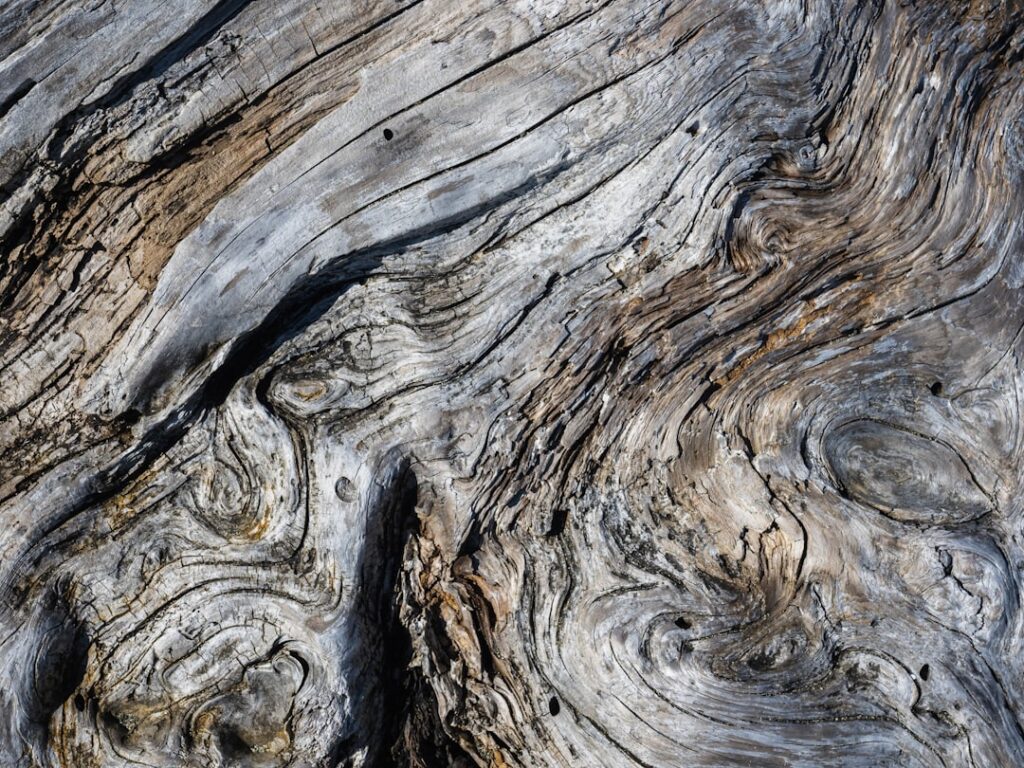
Coastal calm meets rugged durability in driftwood tile, a wood-look porcelain or ceramic plank that mimics the silvery, weathered planks of timber worn smooth by sun and surf. Instead of the warm golds and reds of fresh hardwood, driftwood tile leans into muted grays, soft taupes, and washed-out browns, delivering the organic texture of reclaimed wood with none of the maintenance headaches real wood brings to a wet or high-traffic space.
The appeal is easy to understand. You get the character of aged, beachcombed lumber, complete with knots, grain, and subtle color variation, in a material you can install in a bathroom, mudroom, or kitchen without worrying about water, scratches, or fading. It is a design that feels relaxed and timeless at once.
What Driftwood Tile Actually Is
Nearly all driftwood tile is porcelain or ceramic manufactured with high-definition inkjet printing that reproduces the look of weathered planks. The best examples use multiple print screens, sometimes a dozen or more distinct faces, so the same grain pattern does not repeat conspicuously across a floor. Surface texturing adds a tactile wood grain you can feel underfoot, reinforcing the illusion.
The format is almost always a plank rather than a square, echoing real board proportions. Common sizes include 6-by-24, 8-by-36, 8-by-48, and 9-by-48 inches, with longer planks reading as more realistic and higher-end. The color story is what sets driftwood apart from other wood-looks: think foggy gray, greige, pale ash, and salt-washed brown rather than honey oak or walnut.
Why Homeowners Choose It
The practical advantages over real wood are substantial, and they explain the format’s popularity in coastal, farmhouse, and modern-rustic interiors:
- Waterproof: porcelain does not swell, warp, or rot, so it works in bathrooms, laundry rooms, and basements where hardwood cannot go.
- Scratch and dent resistant: it shrugs off pet claws, dropped pans, and heavy furniture far better than softwood.
- Fade resistant: the color is baked in, so sunlight through a window will not bleach it.
- Low maintenance: no sanding, refinishing, oiling, or waxing, ever.
- Radiant-heat friendly: tile conducts warmth efficiently, making it ideal over in-floor heating.
The trade-off is the same as with any tile: the surface is hard and cold underfoot without radiant heat, and installation is more involved than clicking together a floating floor.
What It Costs
Driftwood-style porcelain planks are competitively priced against other quality wood-look tile. Expect the material alone to run roughly $3 to $10 per square foot for standard lines, with premium large-format or textured collections reaching $12 to $15. Ceramic versions sit at the lower end, while rectified porcelain planks with realistic embossing command more.
Professional installation typically adds $6 to $15 per square foot. Plank tile costs a bit more to install than square tile because the long, narrow format demands a flat substrate and careful attention to lippage. Budget an extra 10 to 15 percent of material for cuts and waste, and buy from a single dye lot so your planks match.
Best Places to Use Driftwood Tile
The waterproof, worn-wood look makes this tile a natural fit for spaces where you want warmth without vulnerability. Bathrooms top the list, since driftwood planks bring a spa-like, coastal serenity to a floor that will see constant moisture. Kitchens benefit from the same durability against spills and dropped cookware.
Beyond those, driftwood tile shines in entryways and mudrooms that track in sand and water, in laundry rooms, in sunrooms and enclosed porches, and across open-concept main floors where a single continuous surface ties rooms together. It also works on shower walls and as a feature accent, though for shower floors you will want a version with adequate slip resistance.
The coastal palette also pairs beautifully with a wide range of decor. Set against white shiplap and navy accents it reads crisp and nautical, while alongside natural linen, rattan, and greenery it feels organic and calm. Because the tones are neutral rather than warm or cool in the extreme, driftwood planks give you unusual freedom to change wall colors and furnishings over the years without the floor ever fighting the room.
Choosing the Right Shade and Finish
Driftwood covers a surprisingly wide tonal range, so match it to your light and palette. Cooler, grayer planks amplify a modern coastal or Scandinavian scheme and can make a small room feel airy. Warmer greige and taupe versions play well with farmhouse and transitional decor and feel cozier in a north-facing space with less natural light.
For finish, a matte or textured surface both looks more authentically weathered and provides better traction, which matters in a bathroom. Seek a slip-resistance rating (DCOF) of 0.42 or higher for any floor that will get wet. Pair the tile with a grout color close to the plank tone; a tight color match makes the floor read as continuous wood rather than a grid of tiles.
Installation Considerations
Setting wood-look plank tile rewards patience and a flat subfloor. Keep these points in mind:
- The substrate must be flat within about 1/8 inch over 10 feet. Long planks telegraph every dip, and an uneven base causes lippage where one plank sits higher than its neighbor.
- Do not run plank tile in a full 50 percent brick-style offset. Manufacturers recommend a maximum stagger of about one-third the plank length to avoid lippage caused by the natural crown in long tiles.
- Use a large-format, medium-bed mortar and back-butter each plank for full coverage; hollow spots crack under load.
- Leverage tile leveling clips to hold adjacent planks flush while the thinset cures.
- Maintain a small expansion gap at walls and use spacers, typically 1/16 to 3/16 inch, for a realistic wood-plank grout line.
This is a job many confident DIYers tackle, but the flatness and lippage requirements make it more demanding than it looks. If your subfloor is questionable, a self-leveling underlayment is money well spent.
Cleaning and Long-Term Care
Care could hardly be simpler. Sweep or dry-mop to remove grit that can dull the surface over time, then damp-mop with a pH-neutral tile cleaner as needed. Because porcelain is nonporous, the tile face never needs sealing. Avoid oil soaps and waxes meant for real wood, as they leave a film on porcelain.
The only ongoing attention goes to the grout lines, which can pick up dirt in high-traffic zones. Grout sealer applied at installation and refreshed periodically keeps them looking clean, and a soft grout brush handles any buildup. With this minimal routine, a driftwood tile floor holds its weathered good looks for decades, easily outlasting the real wood it imitates.
For spot cleaning, address spills promptly even though the tile itself is stain-proof; a puddle left on grout can leave a faint mark over time. Skip abrasive scouring pads and harsh chemicals, which are unnecessary on porcelain and can scratch or dull the surface texture. A microfiber mop and warm water handle daily grime, and a deeper clean once a season keeps grout looking new.
The Bottom Line
Driftwood tile gives you the serene, sun-bleached charm of coastal reclaimed wood in a waterproof, scratch-proof, fade-proof package. It is an ideal pick for bathrooms, kitchens, and hardworking entryways where hardwood would fail, and its soft gray-brown palette suits everything from beach cottages to modern homes. Invest in realistic large-format planks, a flat subfloor, and a well-matched grout, and you will land a floor that looks effortlessly natural while demanding almost nothing in return.
Prefer to explore on your own?
See how new flooring looks in your actual room in seconds — free, no signup.
Try the free Floor Studio →