Nothing captures the sun-bleached, salt-washed look of weathered wood quite like driftwood vinyl plank flooring. It borrows the soft grays, sandy taupes, and faded silvers of wood that has spent years tumbling in the surf, then packages that look into a waterproof, dent-resistant plank you can install yourself. Homeowners love it because it hides scratches, pairs with almost any wall color, and never demands the babying that real reclaimed wood does. Here is everything you need to know before you buy.
- What Driftwood Color Actually Looks Like
- Why Vinyl Plank Suits the Driftwood Look
- Driftwood Vinyl Plank Flooring Cost
- Choosing the Right Wear Layer
- Plank Size and Layout
- Best Rooms for Driftwood Vinyl
- Installation Tips
- Driftwood vs. Gray Oak: Telling Them Apart
- Common Mistakes to Avoid
- Care and Maintenance
What Driftwood Color Actually Looks Like
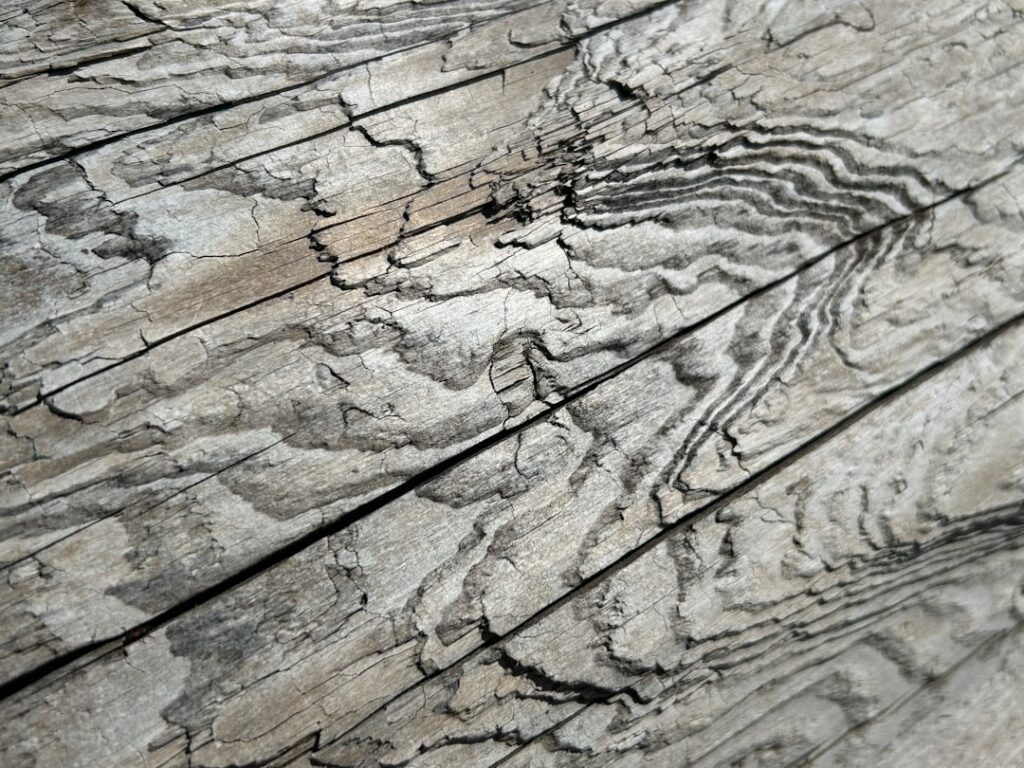
Driftwood is not a single shade. It is a family of muted, cool-to-neutral tones that read gray from across the room and reveal warmer undertones up close. The best planks use four to six color variations across the run so no two boards look identical, which is exactly how genuine weathered lumber behaves.
When you shop, you will run into three broad families:
- Cool gray driftwood — silvery, almost blue-gray, ideal for modern coastal and Scandinavian rooms.
- Greige driftwood — a gray-beige blend that stays neutral and works with both warm and cool decor.
- Weathered taupe driftwood — sandier and warmer, leaning toward a beachy, relaxed farmhouse feel.
Look closely at the embossing, too. Quality driftwood planks use EIR (embossed-in-register) texture, meaning the surface grain lines up with the printed grain. Run your hand across a sample: you should feel the cracks, knots, and wire-brushed grooves that give real driftwood its character.
Why Vinyl Plank Suits the Driftwood Look
Real driftwood is impractical as flooring. Vinyl solves that while keeping the aesthetic intact. A rigid-core luxury vinyl plank (LVP) is 100% waterproof, so it handles the mudrooms, bathrooms, and beach-house kitchens where this look feels at home. The muted gray tones also do a remarkable job of camouflaging dust, sand, and pet hair between cleanings.
There is a practical bonus: driftwood’s naturally distressed print hides real-world wear. Scuffs from dog nails, grit dragged in from the yard, and the occasional dropped skillet all disappear into the busy grain pattern. A glossy dark-walnut floor shows every scratch; a matte driftwood floor forgives them.
Driftwood Vinyl Plank Flooring Cost
Pricing tracks closely with the type of vinyl construction rather than the color itself. Expect these ranges for materials:
- Flexible/glue-down LVP: $1.50 to $3.00 per square foot
- WPC (wood-plastic composite) click plank: $2.50 to $4.50 per square foot
- SPC (stone-plastic composite) rigid core: $3.00 to $5.50 per square foot
- Premium wide-plank driftwood with attached pad: $4.50 to $7.00 per square foot
Professional installation adds roughly $1.50 to $4.00 per square foot depending on your region and subfloor prep. For a 300-square-foot living room, budget about $1,350 to $2,700 installed with a mid-grade SPC plank. If you install it yourself with a click-lock product, you can cut that nearly in half. Always order 7 to 10% extra for cuts, waste, and future repairs.
Choosing the Right Wear Layer
The wear layer is the clear top coat that protects the printed design, and it is the single most important spec for durability. It is measured in mils (thousandths of an inch), not to be confused with millimeters.
- 6 to 8 mil — light residential use, bedrooms and closets
- 12 mil — busy households, hallways, family rooms
- 20 mil and up — heavy traffic, entryways, light commercial, homes with big dogs
For a beach house or a family home where sand and grit are a fact of life, do not go below 12 mil. That extra thickness is what stands between your floor and the fine abrasive particles that wear driftwood finishes dull.
Plank Size and Layout
Driftwood reads most authentically in wider, longer planks. Look for widths of 7 to 9 inches and lengths of 48 to 60 inches, which mimic the proportions of milled reclaimed lumber and reduce the number of seams. Narrow 4-inch planks can make the floor look busy and less like weathered wood.
Because driftwood tones are low-contrast, they let a room feel larger and calmer. Run the planks parallel to the longest wall or toward the main light source to stretch the space visually. Stagger end joints by at least 8 inches, and never let seams line up in an H-pattern, which looks unnatural and weakens the floor.
Best Rooms for Driftwood Vinyl
This flooring shines in coastal, transitional, and farmhouse interiors, but its neutrality makes it flexible. Consider it for:
- Open-concept living and kitchen spaces, where its waterproof core handles spills and its cool tone keeps large areas from feeling heavy
- Bathrooms and laundry rooms, thanks to the fully waterproof SPC core
- Basements, where the rigid core tolerates minor subfloor imperfections and slab moisture
- Sunrooms and enclosed porches, where the faded palette complements natural light
Pair driftwood floors with white or soft-blue walls for classic coastal, or with charcoal and black accents for a moodier modern contrast. Woven jute rugs, linen upholstery, and brushed-nickel hardware all sit beautifully against the weathered gray.
Installation Tips
Most driftwood LVP uses a click-lock angle-tap system that floats over the subfloor, no glue required. Acclimate the boxes flat in the installation room for 48 hours so the planks adjust to your home’s temperature and humidity. Keep the room between 65 and 85°F during and after install.
Leave a 1/4-inch expansion gap around the entire perimeter and around fixed objects like cabinets and pipes; the floor needs room to move with seasonal changes. Use a tapping block and pull bar for tight seams, and cut planks with a utility knife (score and snap) or a fine-tooth jigsaw for curves. Cover the gap with baseboard or quarter-round, never caulk, so the floor stays free to float.
Driftwood vs. Gray Oak: Telling Them Apart
Shoppers often confuse driftwood with plain gray oak, and the difference matters for the look you end up with. Gray oak is a straightforward gray-toned wood print, usually with even color and a clean grain. Driftwood is more complex: it layers gray with sandy, silvery, and faintly warm undertones, and it carries the distressed cracks, splits, and worn edges of wood that has been battered by water and sun.
If you want a modern, uniform look, gray oak is the safer pick. If you want texture, character, and that relaxed coastal story, driftwood is worth seeking out. Bring home samples of both and set them side by side in your room’s natural light before deciding, since gray tones shift dramatically depending on whether your space leans warm or cool.
Common Mistakes to Avoid
A few missteps trip up first-time buyers of driftwood vinyl:
- Buying too thin a wear layer for a high-traffic or sandy space, then watching the finish dull within a few years.
- Choosing narrow planks that make the floor look busy instead of like weathered lumber.
- Skipping acclimation, which leads to gapping or peaking after the seasons change.
- Pairing driftwood with too many cool grays elsewhere in the room, which can make the whole space feel flat and cold. Warm it up with wood accents, brass, or natural fiber textures.
Avoid these and your driftwood floor will look intentional and high-end rather than accidental.
Care and Maintenance
Driftwood vinyl is close to fuss-free. Sweep or dust-mop regularly to clear the sand and grit that dull any finish. Damp-mop with a pH-neutral vinyl cleaner or a splash of white vinegar in warm water; skip steam mops, wax, and oil soaps, which can cloud the wear layer. Use felt pads under furniture legs and a walk-off mat at exterior doors to catch abrasive debris before it reaches the floor.
With basic care, a quality 12-to-20-mil driftwood plank floor should hold its looks for 15 to 25 years. That combination of coastal character, waterproof toughness, and near-zero upkeep is exactly why driftwood vinyl plank remains one of the most requested looks in flooring showrooms today.
Prefer to explore on your own?
See how new flooring looks in your actual room in seconds — free, no signup.
Try the free Floor Studio →