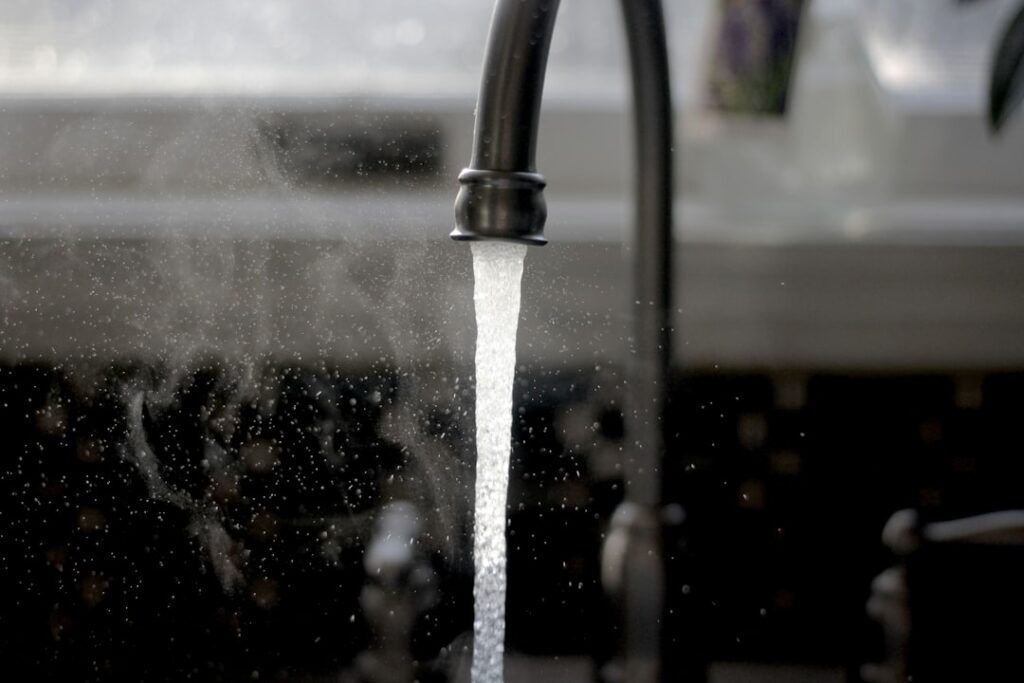
When the forecast drops into the single digits, your grandmother’s advice comes back: leave a faucet running overnight. She was right. Dripping a faucet to prevent freezing is one of the cheapest, most effective things you can do to keep a pipe from bursting, and it costs you pennies compared to the $1,000 to $4,000 you would spend cleaning up after a break. But it only works if you do it correctly, and plenty of people open the wrong tap, run too little water, or trust it alone when the situation calls for more.
- Why a Dripping Faucet Stops Frozen Pipes From Bursting
- When You Should Start Dripping Faucets
- Which Faucets to Open, and How Many
- How Much Water Should You Actually Run?
- What Does Dripping a Faucet Actually Cost?
- Do These Things Along With Dripping
- The Honest Limits of This Trick
- Quick Reference for a Cold Snap
I have been called out to more frozen-pipe disasters than I can count, and almost every one could have been avoided with a slow trickle and a couple of other small steps. Here is exactly how and why it works, and where its limits are.
Why a Dripping Faucet Stops Frozen Pipes From Bursting
Here is the part most people get wrong. A dripping faucet does not mainly work by keeping the water warm enough to stay liquid. Moving water does resist freezing slightly, but a thin trickle in a wall cavity at 10 degrees Fahrenheit can still freeze.
The real magic is pressure relief. When water freezes inside a pipe, ice forms a blockage and keeps expanding toward the closed faucet. Trapped between that growing ice plug and the shut valve, pressure skyrockets, sometimes past 3,000 psi. That pressure, not the ice itself, is what splits copper and cracks PEX. When you leave the faucet open even a crack, the expanding water has somewhere to go. Pressure bleeds off through the open spout instead of building against a sealed valve, and the pipe survives even if a little ice forms.
So the open faucet is a relief valve. The moving water is a bonus that slightly lowers the odds of a blockage forming in the first place. Understand that, and every other decision about how and where to drip makes sense.
When You Should Start Dripping Faucets
You do not need to run water every chilly night. Do it when the conditions actually threaten your pipes.
- Temperature: Start when the outdoor temperature will hold at or below 20 degrees Fahrenheit for several hours, especially overnight. Twenty degrees is the widely cited threshold at which vulnerable pipes begin to freeze, and the risk climbs sharply as you drop toward zero.
- Duration: A quick dip to 20 for an hour before dawn is low risk. A sustained cold snap that stays below freezing all day and night is when pipes actually fail. Drip through the entire cold spell, not just one night.
- Wind: A hard wind through a crawl space or against an exterior wall pulls heat out fast and can freeze a pipe at higher temperatures than still air would.
The pipes most at risk run through exterior walls, unheated basements, crawl spaces, attics and garages. Kitchen and bathroom lines on an outside wall are common failure points. If you are unsure which lines are vulnerable, the faucet fed by the longest run of pipe through cold space is your prime candidate.
Which Faucets to Open, and How Many
Do not just open the tap nearest the door. Think about the path the water travels.
Open the faucet farthest from where the main water line enters your home. That forces water to move through the longest, coldest stretch of pipe, which is exactly the run most likely to freeze. If you have a bathroom at the far end of the house on an exterior wall, that is your faucet.
Open both the hot and cold sides. People forget the hot line freezes too. Your water heater does not keep the whole hot run warm overnight, and a frozen hot pipe bursts just as easily. If the faucet feeds from a single mixed supply, set it to lukewarm so both supply lines see movement. On a two-handle faucet, crack both handles open slightly.
In a serious cold snap, run more than one faucet. Pick one at each far corner of the house or on each exterior wall. In a small home a single well-chosen faucet often covers it; in a sprawling ranch you may want three or four.
How Much Water Should You Actually Run?
This trips people up in both directions. Too little does nothing; a wide-open faucet wastes money for no added benefit.
The right target is a slow, steady trickle, not the intermittent drip you might picture. Aim for a stream about the width of a pencil lead or a piece of cooked spaghetti. Roughly five drops per minute is the bare minimum, but on the coldest nights a thin continuous stream is safer than an occasional drip because it keeps water genuinely moving and the pressure path constantly open.
If the temperature is going to bottom out near zero, lean toward the thin steady stream. If it is a mild dip to the low 20s, a fast drip is plenty. When in doubt, run slightly more rather than less. The extra water is measured in cents; a burst pipe is measured in thousands.
What Does Dripping a Faucet Actually Cost?
This is the objection I hear most, and the math is reassuring. A slow trickle uses far less than people fear.
- A pencil-lead stream runs roughly 5 to 10 gallons over a 12-hour night.
- At an average U.S. water and sewer rate near 1.5 cents per gallon, that is well under a quarter per night.
- Even running several faucets at a slightly heavier trickle, you are looking at a few cents up to about 50 cents per night.
Now weigh that against the alternative. A single burst pipe floods drywall, flooring and belongings. Repairs plus water damage routinely run $1,000 to $4,000, and a bad break behind a finished wall can climb well past that once mold remediation enters the picture. Practicing dripping a faucet to prevent freezing for a week of hard cold might cost you $3 in water. That is the best insurance you will ever buy.
Do These Things Along With Dripping
A trickling faucet is one layer of protection, not the whole strategy. Stack these measures with it for the coldest nights.
- Open cabinet doors. Kitchen and bathroom sinks on exterior walls sit in closed cabinets that block household heat. Open the doors so warm room air reaches the supply lines underneath.
- Keep the heat on, 55 degrees minimum. Never drop the thermostat below 55 in a cold snap, even when you are away. If you travel, this is non-negotiable.
- Disconnect garden hoses. A hose left attached traps water in the spigot and the pipe behind it, and that is a classic burst point. Drain and store hoses, and shut off the interior valve to outdoor spigots if you have one.
- Insulate exposed pipe. Foam pipe sleeves cost about 50 cents to $1 per foot and slip right on. In crawl spaces and garages they make a real difference.
- Seal rim joists and air leaks. Cold air pouring in through a gap at the sill plate or an unsealed rim joist can freeze a pipe six feet away. A can of spray foam and some weatherstripping closes those gaps cheaply.
- Warm truly stubborn spots. A pipe that has frozen before may need a small space heater aimed at the cold cabinet or a length of thermostatic heat tape, roughly $20 to $40, for guaranteed protection.
The Honest Limits of This Trick
I want to be straight with you, because overconfidence is how people still lose pipes. Dripping a faucet dramatically reduces the risk of a burst, but it does not guarantee your pipes will not freeze. In an extreme, prolonged deep freeze, a poorly insulated pipe in a wind-blown wall can still ice up and, if the trickle stops, build dangerous pressure.
The trick also depends on the faucet staying open and the drain staying clear. If your drain line itself freezes, the sink can back up and overflow, so keep an eye on it. And a faucet fed by a pipe that has already frozen solid upstream will stop dripping entirely, which is your warning sign to act fast with heat before that section bursts on thaw.
Treat the drip as your first and cheapest line of defense, then back it up with insulation, sealed air leaks and steady household heat. Do all of it together and you will make it through the coldest nights with dry floors and intact plumbing.
Quick Reference for a Cold Snap
- When: Sustained temps at or below 20 degrees Fahrenheit, worse with wind.
- Where: Faucets farthest from the main line and on exterior walls.
- How much: Pencil-lead trickle to a thin steady stream; both hot and cold.
- Cost: A few cents to about 50 cents a night, versus $1,000 to $4,000 for a burst.
- Backup: Open cabinets, heat at 55-plus, disconnect hoses, insulate, seal leaks.
Do it right and dripping a faucet earns its keep every single winter.