Whether you are dealing with water damage from a roof leak, removing wallpaper that has destroyed the paper face, or opening walls during a remodel, drywall replacement is one of the most common renovation tasks homeowners face. Drywall replacement cost ranges widely based on scope — a single patch job runs under $200, while replacing all the drywall in a 2,000 square foot home can exceed $20,000. Understanding what drives the price helps you budget accurately and know whether a quote is fair.
This guide breaks down the costs by job size, region, and complexity, plus the labor stages that affect the final invoice.
Average Cost Per Square Foot
National average for drywall replacement runs $2.00 to $3.50 per square foot installed and finished. That includes demolition of the old drywall, hauling, new sheetrock, screws, tape, joint compound, three coats of finishing, and primer-ready surface. Painting is typically extra.
Regional variation is significant. Major metro markets (NYC, San Francisco, Seattle, Boston) often hit $4.50 to $6.00 per square foot. Mid-sized markets (Denver, Atlanta, Phoenix) sit at $2.50 to $4.00. Rural areas and smaller markets run $1.75 to $2.75.
Room-by-Room Estimates
To budget by room, calculate the wall area (perimeter times ceiling height, minus 21 sq ft for an average door, 15 sq ft for an average window) plus the ceiling area.
- Small bedroom (10×12, 8-foot ceilings): 472 sq ft of drywall surface. Replacement cost: $940 to $1,650
- Master bedroom (15×16, 9-foot ceilings): 798 sq ft. Cost: $1,600 to $2,790
- Standard living room (15×20, 9-foot ceilings): 930 sq ft. Cost: $1,860 to $3,255
- Kitchen (12×14, 8-foot ceilings): 584 sq ft. Cost: $1,170 to $2,045
- Whole house (1,800 sq ft floor area, 8-foot ceilings): roughly 5,800 sq ft drywall. Cost: $11,600 to $20,300
These numbers assume standard demolition, no asbestos abatement, no lead paint, and no structural framing issues.
Labor Breakdown
Labor accounts for 60 to 75 percent of total drywall replacement cost. Here is how the time and money is typically split:
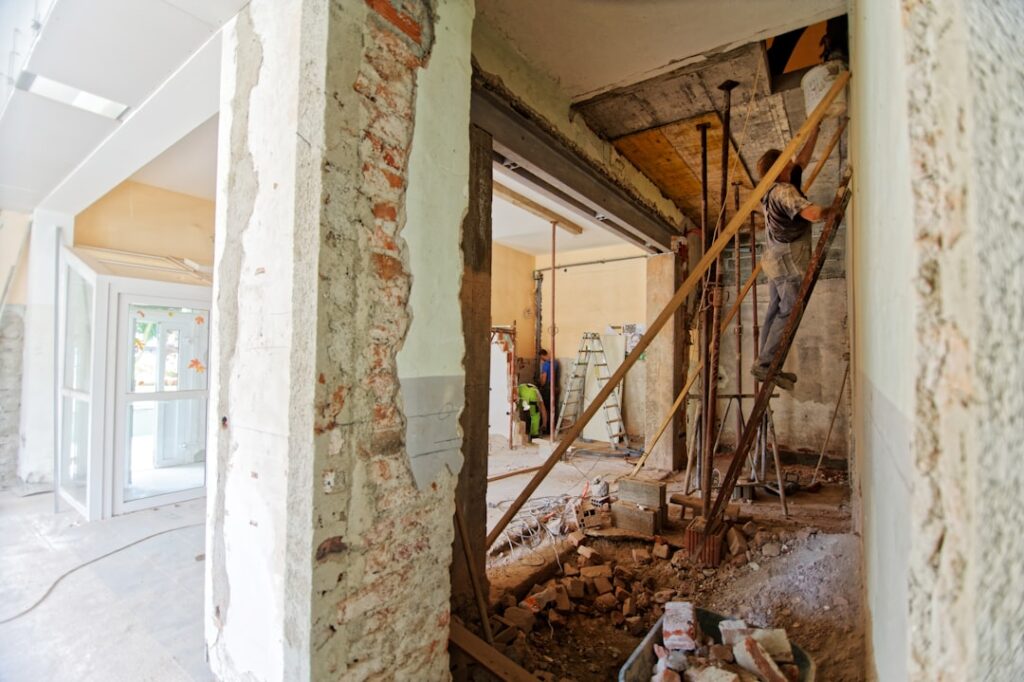
- Demolition and hauling: $0.50 to $1.00 per sq ft. Includes removing old drywall, cleaning the framing bay, and dumpster fees
- Hanging: $0.40 to $0.80 per sq ft. Sheetrock installed and screwed to studs and joists
- Taping and three coats of mud: $0.90 to $1.50 per sq ft. The longest stage — typically 3 to 4 days for a single room with cure time between coats
- Sanding and final prep: $0.25 to $0.45 per sq ft
- Texture matching: $0.30 to $0.75 per sq ft if existing walls have orange peel, knockdown, or hand-troweled texture
Material costs run roughly $0.40 to $0.70 per sq ft for 1/2-inch standard drywall, plus mud and tape.
What Drives Costs Higher
Five factors push the bottom line up significantly:
- Ceiling height: Anything above 9 feet requires scaffolding or stilts. Add 15 to 25 percent
- Vaulted or cathedral ceilings: Cut angles, harder lifting, more waste. Add 20 to 40 percent
- Curved walls or complex geometry: Custom scoring of drywall, often requires double-laminated 1/4-inch sheets. Add 30 to 60 percent
- Asbestos or lead paint in existing drywall: Required abatement costs $5 to $15 per sq ft on top of replacement
- Moisture damage requiring framing or insulation replacement: Add $2 to $6 per sq ft of affected area
Patch vs Full Replacement Cost
For localized damage — a hole from moving furniture, water staining in one corner, or a section of failed wall — patching is far more economical than full replacement.
- Small patch (under 2 sq ft): $75 to $200, often a single visit
- Medium patch (2 to 8 sq ft): $150 to $400
- Large patch (8 to 32 sq ft): $300 to $800. May require multiple visits for mud cure time
Once damage exceeds 30 percent of a wall, full replacement of that wall makes more sense than patching. The labor cost to feather and texture a large patch approaches the cost of replacing the entire wall.
Drywall Type Affects Price
Standard 1/2-inch interior drywall is the baseline. Specialty sheetrock adds cost:
- 5/8-inch fire-rated (Type X): Required at garage walls, ceilings under living space, and walls between units. Adds $0.10 to $0.20 per sq ft
- Moisture-resistant green board: Bathrooms, laundry rooms. Adds $0.15 to $0.30 per sq ft
- Cement board (DensShield, HardieBacker, Wedi): Wet areas behind tile. Adds $1.00 to $2.50 per sq ft over standard drywall
- Acoustic / soundproofing drywall (QuietRock, SilentFX): Home theaters, shared walls. Adds $2.50 to $6.00 per sq ft
DIY vs Hiring a Professional
Drywall replacement is one of the more DIY-friendly trades for hanging — most homeowners can install sheetrock with a few hours of YouTube research. Taping and mudding is a different story. Producing a smooth, flat, paint-ready surface takes practice. Most DIY mud jobs are visible under raking light from a low-angle lamp even after sanding.
If you have the time, hang the drywall yourself and hire a taper for the finishing. Pro tapers typically charge $0.90 to $1.50 per sq ft to mud and sand, which is the highest-skill stage. Total savings vs full contractor work: 30 to 40 percent on a typical room.
Hidden Costs to Watch For
A few line items routinely surprise homeowners:
- Dumpster fees: $300 to $600 for a 10-yard dumpster needed for a whole-room demo
- Permit fees: $50 to $250 in jurisdictions that require permits for drywall replacement (uncommon but possible)
- Electrical or plumbing rework: If walls are opened and code violations are discovered, fixing them is mandatory before reclose
- Insulation upgrades: Open walls are the perfect time to add R-15 to R-19 batts. Add $1.00 to $2.50 per sq ft of wall area
- Painting: Almost never included. Add $1.50 to $4.00 per sq ft for two coats of paint on the new surface
Saving Money Without Cutting Quality
Three strategies actually work for trimming drywall replacement cost on a project:
- Bundle drywall work with other remodel trades. Contractors discount when mobilized for a larger project
- Get three written estimates with itemized labor and materials. Prices vary widely for the same scope
- Schedule in slow season (January, February, July) when contractors are hungrier for work
Skip the temptation to use bargain crews advertising 50 percent below market. Drywall finishing is highly skill-dependent, and a bad mud job follows you forever — it shows under every lamp and accent light.