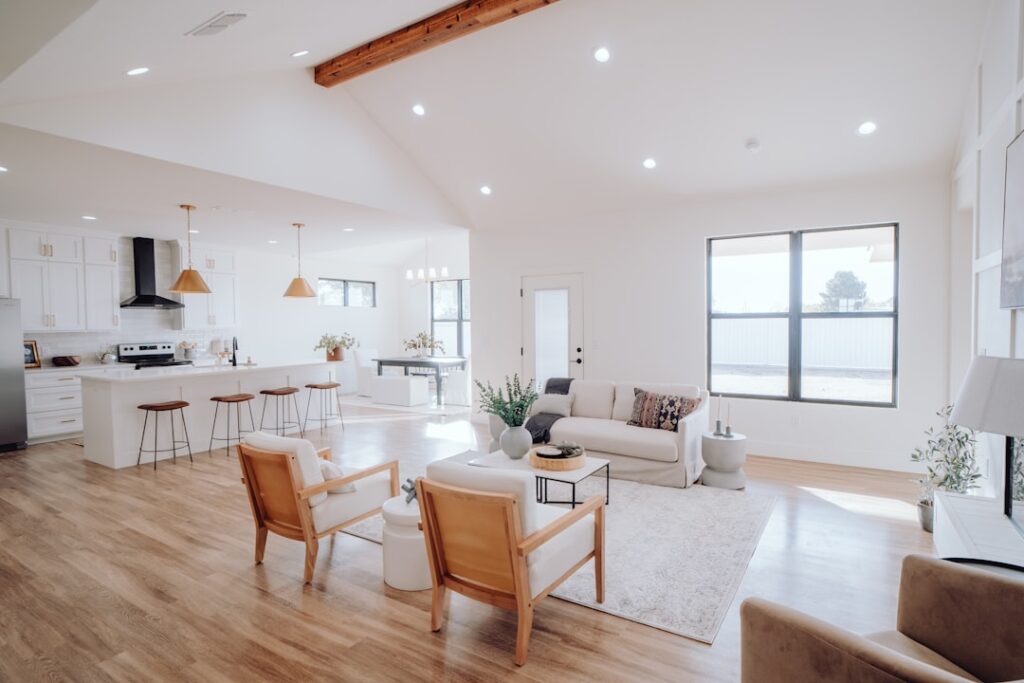
London homes face a particular set of demands: damp Victorian floorboards, tight terraced footprints, and a growing push to renovate without piling on carbon. That mix is exactly why eco-friendly flooring London has become such a popular search for homeowners renovating period and new-build properties alike. Sustainable flooring is no longer a niche compromise; today’s cork, bamboo, and reclaimed options look sharp, perform well, and suit the city’s climate and conscience.
- What Makes Flooring Eco-Friendly
- The Best Sustainable Options
- Cork: Quiet and Warm
- Reclaimed Wood for Period Homes
- Dealing With London Damp
- Pros and Cons of Going Green
- Choosing and Installing in London
- Linoleum: The Overlooked Eco Original
- Underfloor Heating and Eco Floors
- Cost, Grants, and Long-Term Value
What Makes Flooring Eco-Friendly
Sustainability spans the whole life of a floor, not just the raw material. The greenest options use rapidly renewable or reclaimed resources, low-VOC adhesives and finishes, and minimal energy to manufacture and ship.
Look for credible certifications. FSC certification confirms responsibly sourced wood, while low-VOC labels protect the indoor air quality that matters in airtight, energy-efficient London homes.
The Best Sustainable Options
Several materials genuinely earn the eco label. Here is how they compare on price and use:
- Cork — harvested from bark without felling the tree, warm and quiet, £25 to £45 per square meter.
- Bamboo — a fast-growing grass that matures in 5 years, hard and modern-looking, £30 to £60 per sq m.
- Reclaimed wood — salvaged timber with history and zero new harvesting, £40 to £90 per sq m.
- Linoleum (true lino) — made from linseed oil, cork dust, and jute, biodegradable, £25 to £45 per sq m.
- Engineered FSC wood — uses less slow-grown timber than solid planks, £35 to £80 per sq m.
Cork: Quiet and Warm
Cork suits London flats beautifully. It is harvested from the bark of cork oaks every nine years without harming the tree, and the trees keep absorbing carbon for decades. Underfoot it is soft, warm, and naturally sound-dampening — a real advantage in a converted flat with neighbors below.
Modern cork comes in click-lock planks and tiles with durable finishes, a far cry from the dated brown squares of the 1970s. Seal it well and it handles a busy household for 20-plus years.
Reclaimed Wood for Period Homes
Nothing complements a Victorian or Georgian terrace like reclaimed timber. Salvaged from old factories, barns, and schools, it carries genuine patina, avoids new harvesting entirely, and matches the character of an older London property in a way new wood cannot fake.
The trade-offs are cost and availability. Quality reclaimed boards are pricey and supply is inconsistent, so you may need to source from a specialist yard and accept the lengths and species available rather than ordering to spec.
Dealing With London Damp
Period London homes often have damp solid floors and original boards over poorly ventilated voids. Before laying any eco floor, address moisture, because even sustainable wood and cork rot or warp in persistent damp.
For ground-floor rooms over a slab or solid floor, a breathable limecrete build-up or a proper damp-proof membrane protects your investment. Bamboo and engineered FSC wood, being more stable, tolerate London’s humidity better than solid boards.
Pros and Cons of Going Green
The upsides are substantial. Eco floors cut your renovation’s carbon footprint, improve indoor air quality with low-VOC finishes, and often add a warm, characterful look that buyers in London’s market increasingly value.
The drawbacks are mostly practical. Some sustainable materials carry a price premium, reclaimed stock is unpredictable, and cork and bamboo need correct sealing to resist moisture. None is a deal-breaker, but each requires choosing the right product for the room.
Choosing and Installing in London
Pick a supplier who can show FSC documentation and provenance for reclaimed stock. For installation, hire a fitter experienced with period properties and breathable build-ups, since the wrong sealed system can trap damp in an old solid floor and cause more harm than good.
Budget for acclimation — let timber and bamboo sit in the room for at least a week so they adjust to your home’s humidity before fitting. Choose carefully and eco-friendly flooring in London delivers a floor that is kind to the planet, suited to the city’s homes, and built to last.
Linoleum: The Overlooked Eco Original
True linoleum deserves more attention than it gets. Often confused with vinyl, genuine lino is made entirely from natural raw materials — linseed oil, pine rosin, cork dust, wood flour, and jute backing. It is biodegradable, naturally antibacterial, and lasts 30 to 40 years, which makes it one of the most sustainable hard floors you can buy in London.
Brands like Forbo Marmoleum have modernized the look far beyond the institutional sheets of decades past, with click-lock planks and rich marbled colors. At £25 to £45 per square meter it sits in the affordable range, and its warmth and resilience suit kitchens and hallways in both period and contemporary homes.
Underfloor Heating and Eco Floors
Many London renovations add underfloor heating, and not every sustainable floor is compatible. Engineered FSC wood, bamboo, and linoleum generally work well over warm-water or electric systems, conducting heat efficiently while staying dimensionally stable. Thick cork insulates more, which can slow heat transfer, so check the manufacturer’s tog rating before pairing it with underfloor heating.
Solid reclaimed boards are the trickiest match, since wide solid timber moves more with temperature swings and can gap over a heated subfloor. If underfloor heating is part of your plan, lean toward engineered or click-lock eco products and confirm the maximum surface temperature the flooring tolerates, usually around 27 degrees Celsius.
Cost, Grants, and Long-Term Value
Eco flooring carries a modest premium over basic synthetic options, but the long-term math often favors it. Durable natural floors like linoleum, cork, and engineered wood last decades, spreading their cost across far more years than cheap laminate you replace twice. Reclaimed timber can even appreciate the character value of a period London home.
Factor in resale appeal too. London buyers increasingly prioritize energy efficiency and natural materials, and a well-chosen sustainable floor signals a quality renovation. While dedicated flooring grants are rare, choosing low-VOC, healthy materials supports the broader retrofit and air-quality goals many London boroughs now encourage.
Prefer to explore on your own?
See how new flooring looks in your actual room in seconds — free, no signup.
Try the free Floor Studio →