The first few feet inside your door take the hardest beating of any spot in the house. Shoes track in grit, water, and salt that scratch floors and spread through the home. A well-chosen entry rug stops most of that at the source, protecting your flooring while setting the tone for your decor. But the wrong rug curls, slides, or falls apart within a season. Here is how to choose an entry rug that looks good and works hard.
What an Entry Rug Does
An entry rug, sometimes called a doormat or entry runner, serves a clear job: trap dirt, moisture, and debris before they reach your main floors. By catching grit at the door, it reduces scratching on hardwood and tile, cuts down on mopping, and keeps the rest of the house cleaner.
It also makes a first impression. The entry sets the style for your home, so the rug does double duty as both a functional shield and a design statement.
Indoor vs. Outdoor Entry Rugs
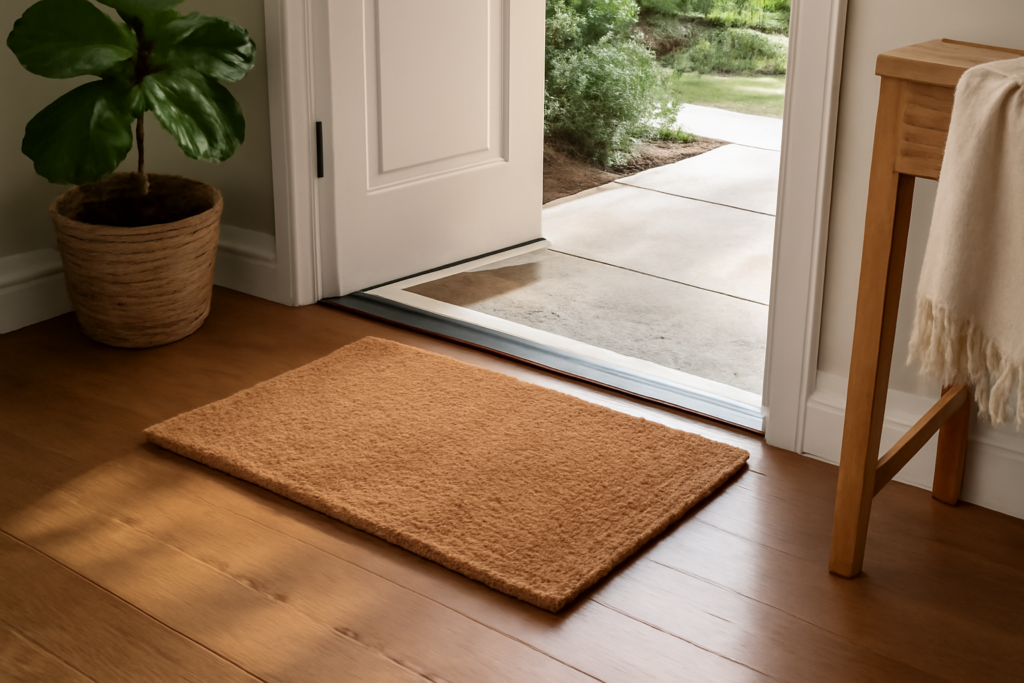
Most homes benefit from a two-rug system. An outdoor mat at the threshold scrapes off the heaviest dirt and mud, while an indoor rug just inside the door catches the rest and absorbs moisture from shoes.
- Outdoor mats: Tough materials like coir, rubber, or polypropylene that handle weather and scrape soles clean.
- Indoor entry rugs: Softer, absorbent fibers that finish the cleaning job and add comfort and style inside.
Using both maximizes dirt capture and protects your floors far better than a single rug ever could.
Best Materials
Material choice determines how well an entry rug performs and how long it lasts.
- Coir (coconut fiber): Excellent for scraping mud off shoes outdoors, though it sheds and is rough underfoot.
- Polypropylene: Durable, stain-resistant, and quick-drying, great for both indoor and covered outdoor use.
- Nylon: Resilient and easy to clean, holding up well to heavy foot traffic.
- Cotton and washable blends: Soft and machine-washable, ideal for indoor entries that need frequent cleaning.
- Rubber-backed mats: Built-in grip and water resistance, perfect for catching moisture.
Choosing the Right Size
Size matters more than people expect. A rug that is too small looks lost and lets dirt slip past. For a standard door, a mat around 2 by 3 feet works for the threshold. Inside, a runner of 2 by 6 feet or larger suits a hallway entry, while a wider foyer benefits from a 4 by 6 or larger area rug.
Aim for a rug wide enough that someone steps fully onto it as they come through the door. Measure your entry and leave clearance so the door swings freely over the rug.
Non-Slip Backing Is Essential
An entry rug that slides is both annoying and dangerous, since people often enter quickly with wet shoes. Choose a rug with a built-in rubber or latex backing, or add a separate non-slip pad underneath. On hard floors, this single feature prevents the most common entryway slip-and-fall risk.
Check that any backing is safe for your floor type, since some rubber backings can discolor certain finishes over time. A breathable non-slip pad avoids that problem.
Washable and Easy-Care Options
Because entry rugs get dirty fast, easy cleaning is a major plus. Machine-washable rugs and flat-weave designs let you toss them in the laundry regularly. For larger or non-washable rugs, choose stain-resistant fibers you can shake out, vacuum, and spot-clean.
Plan to clean the entry rug more often than any other floor covering in the house. Shaking it out weekly and washing or deep-cleaning monthly keeps it from becoming a dirt reservoir.
Matching the Rug to Your Floor Type
The flooring just inside your door affects which rug works best. On hardwood, prioritize a soft, non-abrasive backing and confirm the backing will not trap moisture or discolor the finish, since standing water under a rubber mat can damage wood over time. A breathable rug pad helps protect a wood floor.
On tile and stone, slip resistance is the top concern, especially when shoes track in water. A rug with a firm non-slip backing keeps it from sliding on the smooth surface. For homes with both an entry and an adjacent living area, coordinate the entry rug’s color and style with the larger space so the transition feels seamless rather than abrupt.
Style and Color Choices
Because the entry sets the tone for your home, the rug’s look matters as much as its function. Darker colors and busy patterns hide dirt far better than light solids, which is a practical advantage in a high-traffic, high-mess zone. A patterned rug can disguise the inevitable scuffs and tracked-in grit between cleanings.
That said, the entry is also your home’s first impression, so choose a style that welcomes guests and reflects your taste. A bold geometric pattern energizes a modern entry, while a classic woven or natural-fiber rug suits a traditional one. Balance practicality with personality, leaning toward forgiving colors that still look intentional and inviting.
Cost and Value
Entry rugs are an affordable upgrade. Simple doormats start around $15 to $40, washable indoor entry rugs and runners run $30 to $90, and larger or designer foyer rugs reach $100 to $250 or more. Given how much they protect your floors and reduce cleaning, even a mid-range entry rug pays for itself in saved wear and effort.
Caring for an Entry Rug
Because the entry takes the heaviest soil in the house, regular cleaning keeps the rug effective and presentable. Shake or beat the rug outdoors weekly to release trapped grit, and vacuum it as often as you vacuum your main floors. The grit captured at the door is exactly what you do not want grinding back into the fibers.
For washable rugs, launder them on the schedule the care label recommends, and dry them fully before returning them to the floor to avoid trapping moisture underneath. Spot-clean spills promptly, and rotate the rug occasionally so wear spreads evenly across its surface. A well-maintained entry rug not only lasts longer but keeps doing its real job of protecting the floors beyond it.
Final Thoughts
An entry rug is small but mighty, guarding your floors against grit and moisture while welcoming guests in style. Use an outdoor mat plus an indoor rug, pick durable or washable materials, size it generously, and insist on non-slip backing. Clean it often, and your entry rug will keep your floors cleaner and your home safer for years.