When ordinary spray paint chips off an appliance or peels from a metal cabinet, the answer is usually a tougher coating. Epoxy spray paint is an aerosol finish formulated with epoxy resins that cure into a hard, chemical-resistant, and abrasion-resistant film, far more durable than standard enamel. It is the go-to for refinishing appliances, tubs, tile, metal hardware, tool boxes, and surfaces that take a beating. This guide explains how it works, where it shines, how to apply it for a smooth finish, and the safety steps you cannot skip.
What Makes It Different
Regular spray paint dries by evaporation, leaving a relatively soft film that scratches and chips. Epoxy-based aerosols cure into a much harder coating that resists moisture, household chemicals, and wear. That toughness is why manufacturers market epoxy spray for appliances and high-contact surfaces. Some products are single-can formulas, while others are two-part aerosols that you activate by pressing an internal button to mix a hardener into the can before spraying, which delivers the most durable result.
Best Uses for Epoxy Spray Paint
This coating excels where durability matters more than a thick, brushed look.
- Appliances: Refrigerators, washers, dryers, and ranges that need a fresh, chip-resistant finish.
- Metal items: Tool chests, lockers, railings, brackets, and hardware.
- Tubs and tile: Specialty epoxy aerosols can refresh worn bathroom fixtures, though surface prep is critical.
- Cabinets and shelving: A hard, wipeable finish for high-use storage.
It is not ideal for large floor areas, where rollable two-part epoxy systems make more sense, or for flexible surfaces that bend, since the rigid film can crack.
Surface Preparation
Adhesion lives or dies on prep. Clean the surface thoroughly to remove all grease, soap scum, and dust. Degrease metal and appliances with a suitable cleaner, then rinse and dry. Scuff glossy surfaces with fine sandpaper, around 220 to 400 grit, so the coating has something to grip. Wipe away sanding dust with a tack cloth. On bare metal, a compatible primer improves both adhesion and rust resistance. Mask off everything you do not want painted, because overspray travels far.
How to Apply for a Smooth Finish
Technique separates a glassy result from a runny mess.
- Work in the right conditions. Aim for temperatures around 50 to 90 degrees Fahrenheit and low humidity. Cold or damp air ruins the cure.
- Shake the can thoroughly for at least a minute, and for two-part cans, activate the hardener and use it within the stated pot life, often a few hours.
- Hold the can roughly 8 to 12 inches from the surface and keep it moving in steady, overlapping passes.
- Apply thin coats. Several light coats beat one heavy coat every time. Thick passes sag and run.
- Wait between coats for the recoat window printed on the can, usually a few minutes to an hour depending on the product.
- Let it cure fully. The paint may feel dry in an hour but can take several days to a week to reach full hardness. Avoid heavy use until then.
Safety Comes First
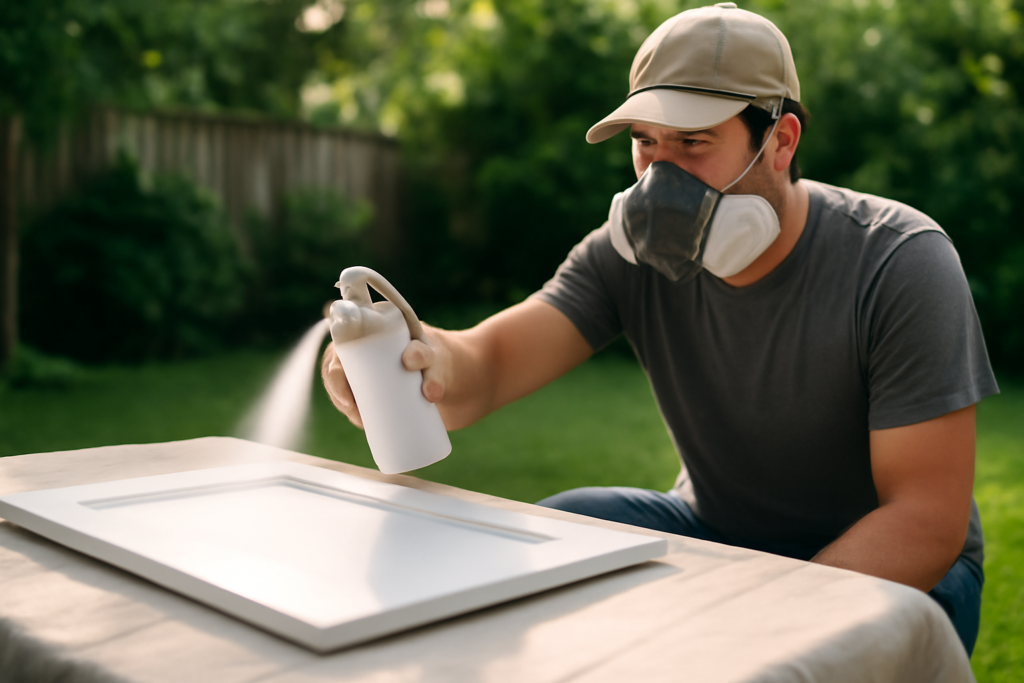
Epoxy aerosols release strong fumes and fine particulates, so protection is mandatory. Always work in a well-ventilated space, ideally outdoors or in a garage with the door open and a fan moving air. Wear a properly fitted respirator rated for organic vapors and particulates, not a thin dust mask, since the solvents are harmful to breathe. Use safety glasses and chemical-resistant gloves. Keep the spray away from open flames, pilot lights, and sparks, because the aerosol and fumes are flammable. Protect surrounding surfaces from overspray, which drifts and lands as a fine grit on cars, floors, and furniture. Read and follow every instruction and warning on the can and its safety data sheet.
Common Mistakes to Avoid
The usual failures are predictable. Spraying too close or too heavy causes runs and sags. Skipping the scuff-sand step leads to peeling weeks later. Painting in cold or humid weather produces a cloudy, soft finish that never fully hardens. Rushing the cure and using the surface too soon leaves fingerprints and scratches baked into the film. Patience with thin coats and full cure time is the secret to a professional-looking result.
Single-Part Versus Two-Part Cans
Not all epoxy aerosols are created equal. Single-part cans are convenient and shelf-stable, spraying like ordinary paint but with a tougher, epoxy-enhanced film. They are fine for refreshing metal items and surfaces that see moderate use. Two-part aerosols hold the resin and hardener separately inside the can; you activate them by pressing an internal button to combine the components, then shake and spray. These deliver the hardest, most chemical-resistant finish, rivaling brushed-on epoxy, which makes them the choice for appliances, tubs, and high-wear surfaces.
The catch with two-part cans is pot life. Once activated, the can must be used within a limited window, often a few hours, before the contents harden inside and the can becomes unusable. Plan your project so you can finish all coats within that window, and do not activate the can until you are fully prepped and ready to spray.
How Long the Finish Lasts
A properly applied epoxy spray finish holds up for years on items that are not constantly abraded. The keys to longevity are thorough degreasing and scuff-sanding before painting, thin and even coats, and allowing the full cure before heavy use. On appliances and metal, expect a durable, wipeable surface that resists moisture and household cleaners. On refinished tubs and tile, lifespan depends heavily on prep and gentle use, since standing water and abrasive scrubbing shorten it. When a coating does eventually wear, you can usually scuff, clean, and recoat rather than stripping it down to bare material.
Is It Right for Your Project
For small to medium metal items, appliances, and fixtures that need a hard, lasting finish, epoxy spray paint is an excellent and affordable choice, with most cans running roughly 8 to 20 dollars. For large floors, two-part rollable epoxy is the better tool. Match the product to the surface, prep carefully, protect yourself with proper ventilation and a respirator, and you will end up with a durable, factory-smooth finish that holds up for years.