
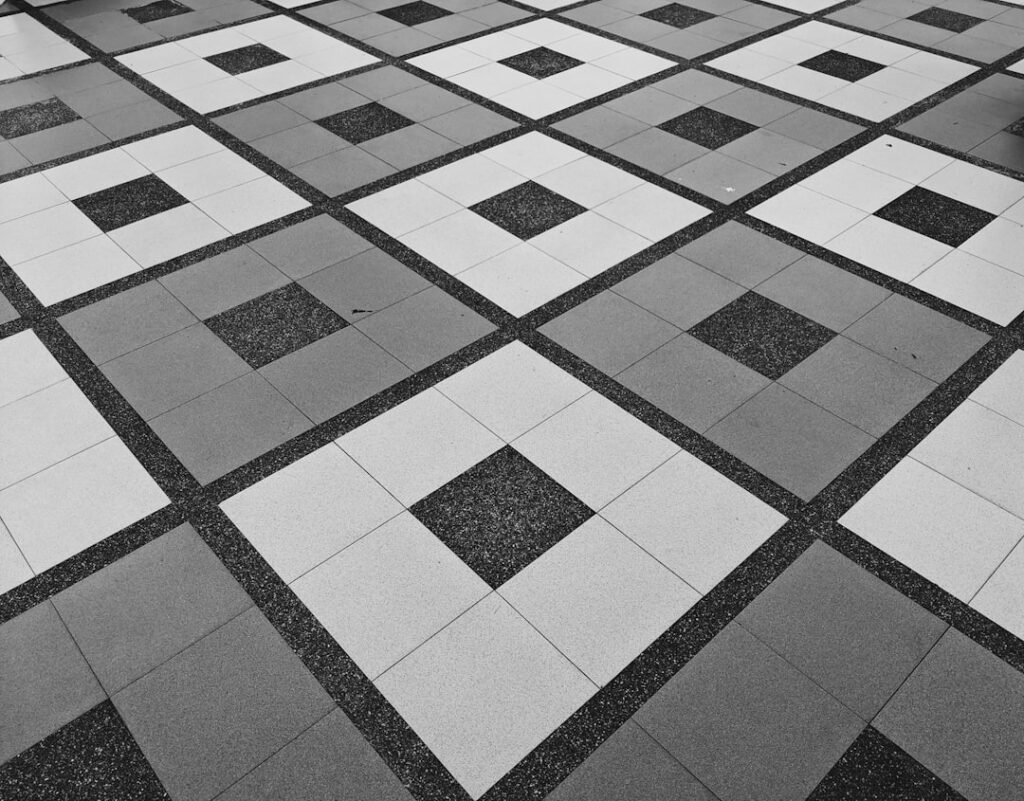
Finger block parquet flooring is the geometric wood floor you have almost certainly seen in a mid-century school, town hall, or 1960s home, where short strips of wood are grouped into square blocks and laid in a basketweave pattern. Each block is made of several narrow “fingers” of hardwood set side by side, and the blocks alternate direction to create the checkerboard-and-weave look that defines this style.
Over years of restoring and installing wood floors, I have watched finger block swing back into fashion as homeowners rediscover its texture and craftsmanship. Here is what it is, where it came from, what it costs, and how to buy it well.
What Finger Block Parquet Actually Is
A single finger block is a square, typically 6 by 6 inches up to 9 by 9 inches, built from five to nine short strips of solid hardwood glued edge to edge. When installed, the grain of one block runs perpendicular to its neighbors, so light catches each block differently and produces the woven visual effect. The classic version is unfinished solid oak roughly 5/16 to 3/4 inch thick, though beech, maple, and iroko blocks are also common in older buildings.
Because the strips are short, finger block makes efficient use of offcuts and small pieces of hardwood, which is one reason it became a budget-friendly institutional floor in the twentieth century.
A Short History
Parquetry itself dates to seventeenth-century France, where craftsmen laid decorative wood patterns in grand houses like Versailles to replace cold, moisture-prone marble. The finger block variant is far more recent. It rose to prominence in the mid-twentieth century as a mass-producible, hardwearing floor for public buildings.
From the 1940s through the 1970s, finger block oak covered gymnasiums, libraries, church halls, and countless suburban homes across the U.S. and U.K. Its density and thickness let it take decades of foot traffic and repeated sanding. Many original floors from that era are still in service today, which is a testament to how well solid parquet holds up when maintained.
Patterns and Layouts
The blocks themselves are simple, but how you arrange them changes the whole room:
- Basketweave: The traditional layout where blocks alternate horizontal and vertical. Calm and classic.
- Brick bond: Blocks offset like masonry for a more linear, contemporary feel.
- Herringbone-look borders: A perimeter of angled blocks framing a basketweave field.
- Double basketweave: Larger visual squares built from grouped blocks for a bolder pattern.
Borders and feature strips in a contrasting species let you frame a room or define zones in an open floor plan, which is a detail I recommend when clients want the parquet to feel intentional rather than institutional.
Finger Block Parquet Flooring Cost
Pricing depends heavily on whether you buy new blocks, reclaimed blocks, or engineered parquet panels that mimic the look. Material costs typically run:
- New solid oak finger blocks: $7 to $14 per sq ft
- Reclaimed original blocks: $5 to $11 per sq ft, plus cleaning labor
- Engineered finger block panels: $6 to $10 per sq ft
Installation is where parquet gets expensive. Because each block is bonded down individually in a precise pattern, expect labor of $6 to $12 per sq ft, higher than the $3 to $5 for standard strip flooring. Sanding and finishing solid blocks adds $3 to $6 per sq ft. A 300-square-foot room in new solid oak finger block, installed and finished, realistically runs $6,000 to $9,500.
Wood Species and Their Look
The species you choose sets the tone of the whole floor. Oak is the traditional workhorse, with its open grain, warm color, and excellent durability, and it accepts stain readily if you want to shift the tone. Beech gives a paler, smoother, more uniform surface with a subtle pinkish cast, common in older European and institutional installations.
- Oak: Durable, characterful, stains well, the safe default.
- Maple: Pale, hard, and clean, with a fine grain that suits contemporary rooms.
- Beech: Smooth and consistent, slightly softer, warm neutral tone.
- Iroko and merbau: Exotic hardwoods with rich brown tones, seen in mid-century commercial floors.
Because the finger blocks are small, the grain direction alternates constantly across the floor, which means even a plain species like oak reads with far more movement and texture than the same wood laid as long straight planks.
Restoring an Original Finger Block Floor
Many homeowners uncover an original finger block floor hiding under old carpet or vinyl, and these are almost always worth saving. Solid blocks from the 1950s and 1960s typically have plenty of thickness left for at least one more sanding. Start by scraping off any bitumen adhesive residue, re-bond any loose or lifted blocks, and fill gaps with a matching wood filler.
A full sand with a drum or belt sander followed by an edger flattens the surface, and two to three coats of finish bring it back to life. I have restored 60-year-old oak parquet that looked like garbage under the carpet and came up gorgeous after a day of sanding, which is a fraction of the cost of a new floor.
Solid vs Engineered Finger Block
Solid blocks are the authentic article and can be sanded and refinished many times over a 50-plus year life. They demand a dry, stable subfloor and careful moisture control because solid wood laid in small pieces moves seasonally.
Engineered finger block panels come pre-assembled into larger tiles with a hardwood wear layer over a plywood base. They install faster, tolerate slight moisture swings better, and suit installations over concrete slabs or radiant heat. The tradeoff is a thinner wear layer, usually 3 to 6 mm, that limits how many times you can refinish. For a bathroom-adjacent or basement install, I lean engineered. For a heritage restoration, solid every time.
Installation and Maintenance
Finger block is almost always fully bonded to the subfloor with flexible flooring adhesive rather than nailed, because the blocks are too small to nail individually. The subfloor must be flat within 1/8 inch over 6 feet, clean, and dry, with concrete slabs tested below 4 percent moisture and often sealed with a moisture barrier primer first.
Let the blocks acclimate in the room for 7 to 14 days before laying. After installation, solid blocks are sanded flat and finished with two to three coats of polyurethane or a penetrating oil. Maintenance is simple: sweep or vacuum grit, wipe up spills quickly, and recoat the finish every 7 to 10 years in high-traffic areas. Avoid steam mops and standing water, which can lift blocks over time.
Is It Right for Your Home?
Choose finger block when you want texture, a nod to mid-century design, and a real wood floor with more visual interest than plain strips. It shines in entryways, living rooms, studies, and commercial receptions where the pattern makes a statement. Just budget for the higher installation labor and hire someone experienced in parquet, because a sloppy pattern layout is glaringly obvious once the finish goes on.
Handled by a skilled installer, finger block parquet flooring delivers a floor that feels crafted rather than mass-produced, ages beautifully, and can be brought back to life through refinishing for decades. It is one of the few flooring styles that manages to feel both retro and current at the same time, which is exactly why it keeps coming back. Whether you are laying new blocks or reviving an original floor, the woven geometry rewards the extra care it demands with a surface people notice and remember.
Prefer to explore on your own?
See how new flooring looks in your actual room in seconds — free, no signup.
Try the free Floor Studio →

