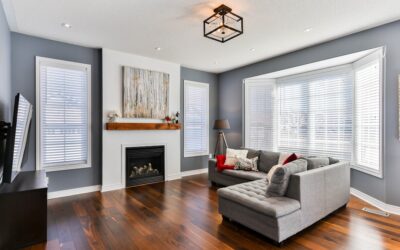
Here’s something worth knowing up front: fir hardwood flooring isn’t technically a hardwood at all. Douglas fir is a softwood, but it has been used as flooring for well over a century, prized for its warm amber tone, beautiful vertical grain, and old-house authenticity. Walk into a craftsman bungalow or a converted warehouse loft and the original floors are often fir. This guide gives you the honest picture: where fir shines, where its softness causes problems, and how to buy and care for it.
Softwood, Not Hardwood
The “hardwood” in the name is a misnomer. Hardwood and softwood are botanical classifications, not hardness measurements. Douglas fir comes from a coniferous tree, which makes it a softwood, even though it’s denser and harder than many other softwoods like pine. On the Janka hardness scale, Douglas fir lands around 660, well below red oak at 1,290. That number tells you most of what you need to know about how it behaves underfoot.
Fir was historically abundant and affordable in the Pacific Northwest, which is why so many older homes there and across the country have original fir floors that have lasted generations despite the softness.
Vertical Grain and Its Appeal
Fir’s signature look comes from how it’s milled. Vertical-grain (or quarter-sawn) fir produces tight, straight, parallel lines that give floors a refined, linear elegance. Flat-grain fir shows the wider, flame-like cathedral patterns. Many buyers specifically seek vertical-grain fir for its clean, period-correct appearance and its slightly better dimensional stability.
The wood’s color is part of the draw too. Fresh fir has a light amber-pink tone that deepens to a rich honey-gold with age and sun exposure, giving older floors their characteristic glow.
Pros of Fir Flooring
Despite the softness, fir has real strengths:
- Warm, classic look: Amber tones and vertical grain suit historic and craftsman interiors.
- Authenticity: It’s often the only correct choice for restoring a period home.
- Refinishable: Solid fir can be sanded and refinished multiple times over decades.
- Sustainable and available: Douglas fir grows quickly and is widely harvested in the U.S.
- Cost: Often more affordable than premium hardwoods.
The Cons You Must Accept
The softness is the headline trade-off, and you should go in with eyes open:
- Dents and dings: Furniture, heels, and dropped objects mark fir easily.
- Scratches: Pet claws and grit show more readily than on hard species.
- Wear patterns: High-traffic lanes can develop visible paths over time.
- Soft latewood/earlywood difference: Uneven density can cause the grain to wear unevenly.
Many fir-floor owners come to embrace the dents as character, the lived-in patina that gives an old home its soul. If you want a pristine, dent-free surface, fir is not the wood for you.
Cost and What to Budget
Pricing varies with grade and grain orientation:
- Standard flat-grain fir: Roughly $3 to $6 per square foot for materials.
- Vertical-grain (quarter-sawn) fir: Often $6 to $10 per square foot, sometimes higher for clear grades.
- Reclaimed fir: Highly variable, frequently $8 to $15-plus per square foot for character boards.
- Installation: Typically $3 to $6 per square foot for nail-down solid fir.
Reclaimed fir, salvaged from old barns and warehouses, is especially popular for its tight old-growth grain and rich aged color.
Finishing and Care Tips
Because fir is soft, the finish does a lot of the protective work. A few smart practices:
- Choose a durable finish; a quality water-based or oil-modified urethane resists wear better than oil-only on a soft wood.
- Add felt pads under all furniture and rugs in high-traffic lanes.
- Sweep grit promptly, since sand acts like sandpaper on soft floors.
- Keep indoor humidity stable to limit seasonal gapping.
- Plan to refinish solid fir periodically; the good news is it sands beautifully.
Who Should Choose Fir
Fir is the right call for historic restorations, craftsman and cottage homes, and anyone who loves a warm, character-rich floor that wears in rather than out. It suits lower-traffic rooms, bedrooms, and homes where a softer, more relaxed aesthetic fits. For a high-traffic entry, an active home with big dogs, or anyone who wants a dent-resistant surface, a harder species like oak or hickory is the more practical choice.
Fir vs Other Softwood Floors
Fir isn’t the only softwood used for flooring, and it’s worth knowing how it compares:
- Pine: Even softer than fir (eastern white pine sits around 380 Janka), so it dents more but offers a charming knotty, country look.
- Douglas fir: Harder and denser than most pines, with a tighter, straighter grain, especially in vertical-grain cuts.
- Hemlock: Another softwood option, generally softer and less commonly used for flooring than fir.
Among the softwoods, Douglas fir strikes a good balance of durability and beauty, which is exactly why it became the historic favorite in so many regions.
Solid vs Reclaimed Fir
You’ll generally choose between new solid fir and reclaimed fir. New solid fir is consistent, readily available, and offers vertical-grain options for stability and a refined look. Reclaimed fir, salvaged from old buildings, brings dense old-growth grain that’s tighter than most new-growth lumber, plus a deep aged patina that can’t be faked. Reclaimed boards cost more and may need extra prep, denailing, milling, and grading, but for a historic restoration the authenticity is unmatched. Either way, fir can be sanded and refinished multiple times, which is a major advantage over many engineered and laminate alternatives.
Where Fir Comes From and Why It Matters
Most flooring fir is Douglas fir harvested in the Pacific Northwest, where it grew abundantly and supplied generations of home builders. That regional history is why so many older West Coast homes have original fir floors still in service. The distinction between old-growth and new-growth fir matters for buyers: old-growth fir, found mostly in reclaimed boards, has very tight, dense grain rings from slow forest growth, making it harder and more stable than fast-grown new lumber. New-growth fir is perfectly serviceable and more affordable, but if you want the densest, most dimensionally stable fir with the finest grain, reclaimed old-growth is the prize, which is part of why it commands premium prices. Knowing the source helps you set realistic expectations for hardness and grain before you buy.
The Bottom Line
Fir hardwood flooring offers timeless warmth and unmatched authenticity for period homes, but never forget it’s a softwood that dents and wears. Choose vertical-grain or reclaimed fir for the best look and stability, protect it with a durable finish and felt pads, and embrace the patina. Handled with realistic expectations, fir delivers a floor with real soul that can be refinished for generations.
Prefer to explore on your own?
See how new flooring looks in your actual room in seconds — free, no signup.
Try the free Floor Studio →