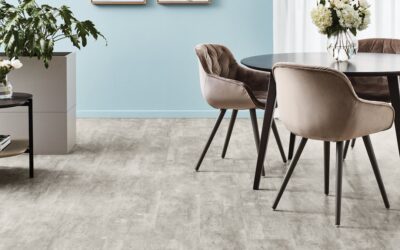
Walk into any 1970s rental kitchen and the speckled, slightly-curling sheet underfoot is the original flexible vinyl flooring — the granddaddy of the category. The product has come a long way since then. Modern flexible vinyl flooring spans flat sheet goods that mimic tile and wood, peel-and-stick tile that installs in an afternoon, and high-end welded sheet vinyl used in hospitals. Pricing starts at $0.79 per sq ft for budget peel-and-stick and runs to $7.99 for commercial-grade homogeneous sheet. The visual quality has improved dramatically since 2018 — the bigger question now is which flexible vinyl type fits your project.
Flexible vs Rigid Vinyl — What Actually Differs
The vinyl flooring category splits along a fundamental dividing line: products with a flexible PVC core that conforms to subfloor irregularities, and rigid core products (SPC/WPC) that span minor imperfections without telegraphing them. Flexible vinyl includes:
- Sheet vinyl — rolled goods 6-12 feet wide, cut to room dimensions
- Peel-and-stick vinyl tile — self-adhesive 12×12 or 18×18 squares
- Glue-down luxury vinyl tile (LVT) — premium tiles bonded with separate adhesive
- Loose-lay vinyl planks — heavy backing holds position by gravity and friction
Each handles subfloor imperfections, water, and replacement differently. Picking the right format saves money on substrate prep and headaches over the life of the floor.
Pros of Flexible Vinyl Flooring
The category has genuine advantages that rigid SPC cannot fully match.
- Significantly cheaper — sheet vinyl runs $1-$4 per sq ft material versus $2-$5 for SPC
- Conforms to slightly uneven subfloors that would telegraph through rigid core products
- Sheet vinyl creates fully waterproof installations with welded seams (homogeneous commercial)
- Peel-and-stick tile installs without specialized tools — perfect for renters and DIYers
- Faster installation than tile, plank, or hardwood — a kitchen can be redone in a weekend
- Softer underfoot than rigid core or tile, especially with felt-backed sheet products
For rental properties, basements, kitchens on tight budgets, and quick refresh projects, flexible vinyl remains the highest value-per-dollar flooring category available.
Cons and Where It Falls Short
The honest list:
Telegraphing is the biggest issue. Any imperfection in the subfloor under a flexible vinyl product eventually shows through — nail heads, plywood seams, dried adhesive ridges, deep scratches. Subfloor prep has to be more thorough than for rigid plank products. Most installers run a thin self-leveling underlayment under sheet vinyl as standard practice.
Indentation is the second concern. Heavy furniture legs, refrigerators, and chairs without proper foot protection can leave permanent dents in flexible vinyl that do not rebound. Use furniture coasters or wider foot pads under heavy items.
Seams are also a weak point on sheet vinyl. DIY-installed sheet vinyl rarely achieves the welded seams used in commercial settings, and unwelded seams can lift, allow moisture infiltration, and discolor over years. For homes with high seam-failure risk areas (bathrooms, laundry rooms), invest in heat-welded installation or use seamless products.
Product Categories in Detail
Sheet Vinyl
Rolled goods 6-12 feet wide, $0.79-$4.99 per sq ft. Cut to room dimensions for nearly seamless coverage in spaces narrower than the roll width. Felt-backed for residential or fiberglass-reinforced for commercial. Service life 7-15 years residential, 15-25 years commercial.
Peel-and-Stick Tile
Self-adhesive 12-inch or 18-inch squares, $0.79-$2.49 per sq ft. Installation is fast but requires meticulous substrate prep — any dust under the adhesive backing causes lift. Best for rental units and quick refresh projects with 5-7 year expected lifespan.
Glue-Down Luxury Vinyl Tile (LVT)
Premium tiles installed with separate adhesive, $2.99-$5.99 per sq ft. Commercial-grade construction with 12-30 mil wear layers. Used in retail, healthcare, and high-end residential. Service life 15-25 years.
Loose-Lay Vinyl
Heavy planks or tiles with high-density backing that holds position by gravity and friction, $3.99-$6.99 per sq ft. No glue required, easy to lift and replace individual pieces. Great for basements and below-grade applications.
Subfloor Requirements
Substrate prep determines long-term success more than the flooring choice itself.
- Concrete: flat to 3/16 inch over 10 feet, fully cured, moisture-tested under 4 lbs MVER
- Wood subfloor: 1/4-inch underlayment plywood screwed flat with seams filled
- Existing vinyl: remove unless single layer that is fully bonded and flat
- Patching: use trowelable underlayment for low spots over 1/16 inch deep
- Cleaning: sweep, vacuum, and damp-mop within 24 hours of install
For sheet vinyl installations specifically, run a thin coat of self-leveling underlayment over any subfloor with visible imperfections. The $40 bag of leveler prevents thousands of dollars of telegraphing complaints later.
Installation Walkthrough for Sheet Vinyl
Sheet vinyl installation is the most demanding of the flexible category but produces the most seamless result.
- Make a paper or kraft template of the room including all jogs and cuts
- Transfer template to vinyl sheet and cut with hooked utility blade
- Dry-fit and trim along walls with a wall scribe tool
- Spread adhesive with notched trowel matching adhesive spec
- Roll vinyl into adhesive within working time window
- Press flat with 100-lb roller from center outward
- Heat-weld seams if using commercial homogeneous product
- Install transition strips and reset cabinet toe-kicks
Maintenance for Long Life
Daily care is simple. Sweep or dry mop to remove grit. Damp mop weekly with pH-neutral cleaner. Avoid harsh solvents, ammonia-based cleaners, and abrasive scrubbing pads. Use furniture coasters on all heavy furniture legs to prevent indentation. Address spills promptly to prevent moisture migration through seams.
Final Take
Flexible vinyl flooring covers an enormous value spectrum from $0.79 peel-and-stick to $7 commercial sheet. Match the product to the application — sheet vinyl for kitchens and laundry rooms where waterproof seams matter, peel-and-stick for rental refresh projects, glue-down LVT for premium residential, and loose-lay for basements. Invest in subfloor prep, choose products with at least 12-mil wear layers for kitchens, and the floor delivers 10-25 years of service depending on grade.
Prefer to explore on your own?
See how new flooring looks in your actual room in seconds — free, no signup.
Try the free Floor Studio →