Cork has been quietly outperforming engineered hardwood and laminate in dropped-glass tests, sound absorption, and underfoot comfort for decades — yet most homeowners have never seriously considered it. Floating cork flooring sits in the same price range as mid-tier laminate and offers benefits that hard floors cannot match. After installing cork in libraries, kitchens, kids’ rooms, and basement offices, I have a clear sense of where it shines and where it disappoints. This guide walks through the real-world performance, install considerations, and costs.
What This Product Actually Is
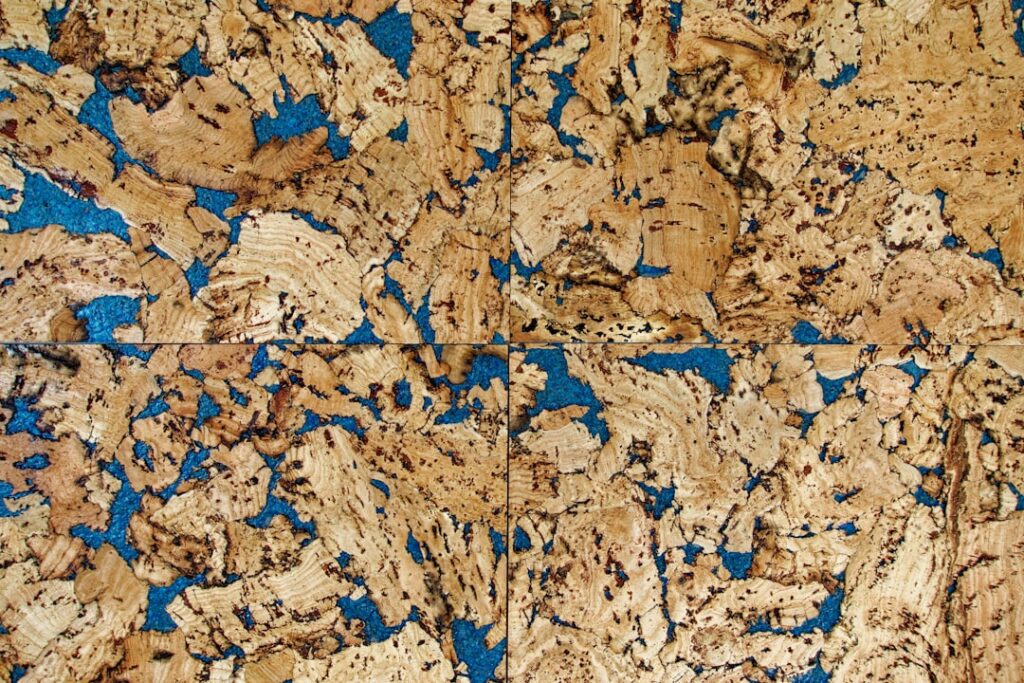
The system uses click-lock planks built around an HDF (high-density fiberboard) core sandwiched between two cork layers. The top wear layer is solid cork — typically 2 to 4 mm thick — sealed with a polyurethane or wax finish. The bottom layer is cork underlayment that absorbs sound and adds cushion.
The cork itself comes from the bark of the cork oak tree (Quercus suber), harvested every 9 years without killing the tree. Portugal supplies about 50 percent of the global cork market.
Pros That Make Cork Worth Considering
Cork’s standout traits:
- Soft and warm underfoot — feels noticeably better than wood or LVP in bare feet
- Excellent sound dampening — reduces impact noise by 50 to 70 percent
- Naturally insulating — R-value of 0.45 per inch, useful in basements
- Hypoallergenic — natural antimicrobial properties resist mold and dust mites
- Sustainable — harvested without harming trees, biodegradable at end of life
- Bounces back from impacts — dropped dishes survive that would break on tile
- Easy DIY installation — click-lock planks float over most subfloors
The dropped-glass test is real. I have personally watched a wine glass bounce off cork flooring three times before settling unbroken.
Cons and Real-World Limitations
Cork is not perfect:
- Dents under heavy furniture — point loads from piano legs or refrigerators leave permanent marks
- Fades in direct sunlight — natural cork lightens significantly within 5 years of UV exposure
- Sensitive to moisture — standing water swells the HDF core and warps planks
- Limited wear life — 10 to 25 years depending on quality and traffic
- Visible seams over time — gaps can form between planks as the core ages
- Pet claws scratch the finish — large dogs can wear through wear layer
The dent issue catches most people off guard. Cork compresses under sustained weight and the indents do not always recover.
Top Brands to Consider
Quality varies dramatically. The leaders:
- Wicanders (Amorim) — Portuguese, the original cork flooring company, $5 to $9 per sq ft
- Globus Cork — US-based custom cork, $7 to $12 per sq ft
- USFloors Natural Cork — owned by Shaw, $4 to $7 per sq ft, available at Lowe’s
- Cali Bamboo Cork Plus — entry-level, $3 to $5 per sq ft, online direct
- APC Cork — premium, custom patterns and colors, $8 to $15 per sq ft
Stick with brands that publish wear-layer thickness in millimeters. Marketing terms like “premium wear layer” without a number are meaningless.
Best Rooms for Floating Cork
Cork excels in:
- Bedrooms — quiet, warm, comfortable for bare feet
- Home offices — sound-dampening helps on calls
- Libraries and reading rooms — quiet, traditional aesthetic
- Kids’ playrooms — forgiving on falls, dampens noise
- Basements — naturally insulating, comfortable on cold concrete
- Yoga and meditation spaces — soft underfoot, naturally non-slip
Skip cork in:
- Kitchens (with caveats — possible if water exposure is controlled)
- Bathrooms (moisture risk)
- Mudrooms (heavy traffic plus moisture)
- Sun-drenched south-facing rooms (UV fading)
- Homes with large dogs that have nails
Installation Process
Floating cork installs much like laminate or LVP:
- Acclimate planks 72 hours in the room (cork needs longer than wood)
- Verify subfloor flatness — 3/16 inch deviation over 10 feet maximum
- Install vapor barrier on concrete subfloors
- Begin laying planks along the longest wall with quarter-inch expansion gap
- Click-lock planks together using gentle pressure — no tapping block needed
- Cut around obstacles with a sharp utility knife (cork cuts much easier than laminate)
- Install quarter-round or shoe molding to cover expansion gap
DIY install runs about 30 percent faster than laminate because cork is lighter and easier to maneuver. A 200 sq ft room takes 4 to 6 hours.
Subfloor and Underlayment Requirements
Most floating cork has attached cork underlayment, so additional underlayment is unnecessary and may void warranty. On concrete, install a 6-mil polyethylene vapor barrier first.
The subfloor must be flat, dry, and clean. Cork is more forgiving than tile but less forgiving than LVP — bumps telegraph through and cause clicking sounds underfoot.
Maintenance Routine
Cork care is simple but specific:
- Sweep or vacuum (no beater bar) daily in high-traffic zones
- Damp mop weekly with pH-neutral cleaner — never wet mop
- Reseal polyurethane finish every 5 to 7 years
- Use felt pads under all furniture legs
- Avoid steam mops, harsh chemicals, and oil-based cleaners
Bona Hard-Surface Cleaner and the Method Wood Floor Cleaner both work well. Murphy Oil Soap and bleach destroy the finish quickly.
Warranty Considerations
Quality cork floors carry 15 to 25-year residential warranties. Read the fine print — most warranties exclude:
- Dents from furniture or appliances
- Fading from direct sunlight
- Water damage from spills or floods
- Pet damage
- Damage from improper cleaning chemicals
The exclusions cover most real-world failure modes, so warranty value is limited. Buy quality cork from a reputable brand, install correctly, and rely on the product itself rather than the paper warranty.
Cost Summary
Budget for a complete cork install:
- Material: $4 to $9 per sq ft for mid-tier; $9 to $15 for premium
- Vapor barrier (concrete): $0.30 per sq ft
- Professional install: $3 to $5 per sq ft
- Trim and transitions: $200 to $500 per project
A 1,000 sq ft installation runs $7,000 to $14,000 fully installed.
FAQ
How long does this type of cork floor last?
10 to 25 years depending on wear layer thickness, traffic, and maintenance. Premium 4mm cork in low-traffic rooms can last 30-plus years.
Is cork flooring waterproof?
No — cork is water-resistant but not waterproof. Standing water for more than a few hours damages the HDF core. Skip cork in bathrooms and mudrooms.
Does cork flooring fade in sunlight?
Yes — natural cork lightens significantly with UV exposure. Use UV-blocking window film or rotate area rugs every six months in sun-heavy rooms.
Can cork flooring be refinished?
Premium cork (4mm wear layer) can be lightly sanded and refinished once or twice. Thinner cork cannot. Most homeowners replace rather than refinish.
Prefer to explore on your own?
See how new flooring looks in your actual room in seconds — free, no signup.
Try the free Floor Studio →