If you typed Floor and Fecor into a search bar, you were almost certainly looking for Floor and Decor, the large warehouse-format flooring retailer. The spelling trips people up constantly, so do not worry about it. What matters is knowing how to shop a big-box flooring warehouse so you walk out with the right product at the right price instead of overwhelmed by a 50,000-square-foot showroom. This guide explains what a warehouse flooring store offers and how to make the most of it whether you are a DIYer or hiring a pro.
What a Warehouse Flooring Store Actually Is
A warehouse flooring retailer stocks tile, wood, laminate, vinyl, and the installation materials to go with them, all under one roof and usually in stock for same-day pickup. The model is volume-driven: huge quantities, in-store inventory, and prices that often undercut traditional specialty showrooms. Unlike a general home-improvement store that carries a little of everything, a dedicated flooring warehouse goes deep on flooring categories and the accessories that surround them.
The trade-off for that selection is that you are largely self-directed. Staff can help, but you will get the best results by arriving with a plan.
What You Can Buy
Expect a wide range across every major flooring family, plus the supporting cast that turns a box of planks into a finished floor.
- Porcelain and ceramic tile in wood-look, stone-look, and decorative styles
- Natural stone such as marble, travertine, and slate
- Solid and engineered hardwood in multiple species and widths
- Laminate and luxury vinyl plank for budget-friendly, water-resistant looks
- Installation materials: thinset, grout, underlayment, trim, and tools
Buying flooring and the matching trim, transitions, and setting materials in one trip is the real convenience here. It saves the back-and-forth of sourcing a transition strip that actually matches your planks.
How Pricing Works
Flooring is priced per square foot, and the spread is enormous. Budget laminate and basic ceramic tile sit at the low end, mid-range luxury vinyl and porcelain in the middle, and premium hardwood and natural stone at the top. Always calculate the full project cost, not just the headline plank price, because trim, underlayment, thinset, and grout add up.
Add a waste factor when you estimate quantity. Plan for roughly 10 percent extra for straight layouts and around 15 percent for diagonal or herringbone patterns and rooms with lots of cuts. Buying a little extra from the same production lot now is far easier than matching a discontinued color later.
Use the Sample and Visualization Tools
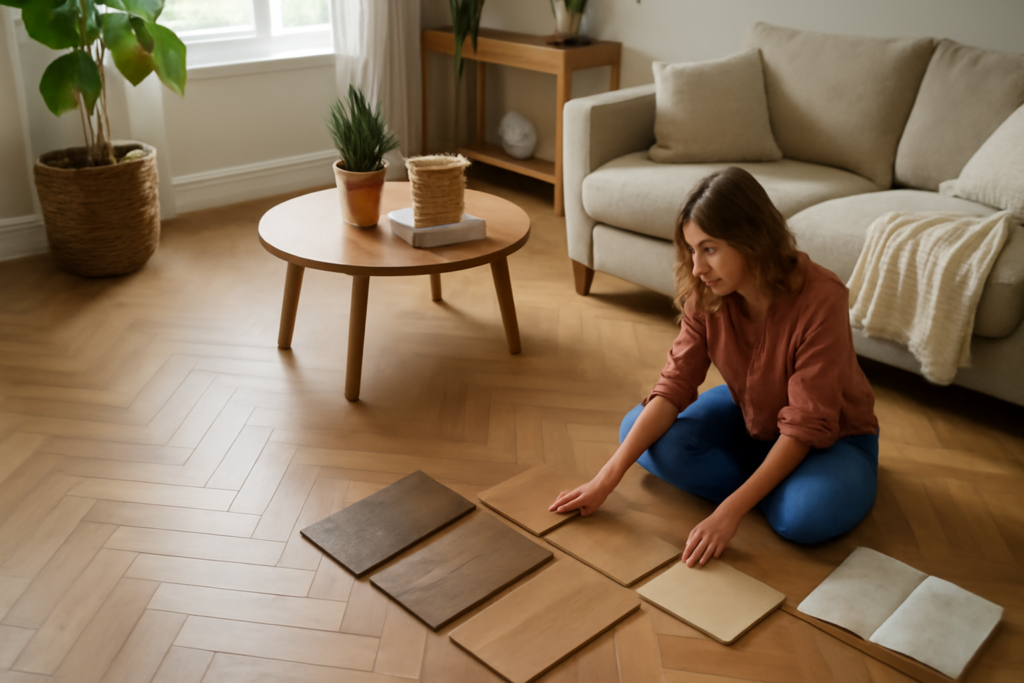
Never choose a floor from a tiny chip under fluorescent store lighting. Take full samples home and view them in your own daylight and evening light, against your cabinets and wall color. Lighting changes how wood tone and tile shade read more than most people expect.
Many large flooring retailers also offer online room visualizers and design consultations. These are genuinely useful for picturing a whole floor rather than a single tile, and a free design appointment can help you coordinate floor, trim, and grout color without guesswork.
Pro Services and DIY Support
Warehouse flooring stores typically cater to both contractors and homeowners. There is often a dedicated pro desk for trade buyers with bulk pricing and will-call pickup, and many stores can connect homeowners with installation services if you are not doing the work yourself. If you are a DIYer, ask staff about the specific thinset, trowel size, and underlayment your chosen product needs; matching materials to the floor prevents most beginner failures.
For tile especially, confirm whether your product needs an uncoupling membrane or a particular setting material. Getting that right at the counter saves a return trip and a cracked floor down the line.
Tips for a Smart Shopping Trip
- Measure your rooms and bring the square footage with you
- Take home large samples before committing to a full order
- Buy all you need from one production lot to avoid shade variation
- Add a 10 to 15 percent waste factor to your quantity
- Price the whole job, including trim, underlayment, and setting materials
- Ask about return policies on full, unopened boxes
How a Warehouse Store Differs From a General Big Box
People often lump a flooring warehouse together with a general home-improvement store, but they serve different needs. A general big-box store carries a curated, smaller flooring selection alongside lumber, paint, and appliances, which is convenient if you are buying many things at once. A dedicated flooring warehouse goes far deeper on flooring alone, with more tile patterns, more wood species, and more specialized setting materials in stock.
The practical upshot is selection and expertise. If you want one specific look and a quick grab-and-go, a general store may suffice. If you want choice, in-stock quantity for a large project, and staff who specialize in flooring, the warehouse format is the stronger fit. Many homeowners use both, sourcing the floor itself from the warehouse and small consumables from wherever is closest.
Avoiding Common Shopping Mistakes
The warehouse format rewards preparation and punishes guesswork. The most common mistakes are easy to sidestep once you know them.
- Under-ordering: Skipping the waste factor and running short mid-install, only to find the lot is gone
- Mixing lots: Buying boxes from different production runs that vary subtly in shade
- Ignoring setting materials: Choosing the wrong thinset or trowel for a tile, which leads to failure
- Judging color in store: Picking a floor under bright store lights instead of in your own home
- Forgetting trim: Buying the field product but not the transitions and moldings that finish the job
Spend ten extra minutes at the counter confirming quantity, lot numbers, and setting materials, and you will avoid the return trips that derail a weekend project.
The Bottom Line
Floor and Fecor is simply a common misspelling of Floor and Decor, but the underlying question is a good one: how do you shop a warehouse flooring store well? Go in measured and prepared, take real samples home, budget for the full job including materials and waste, and lean on the pro desk or design help when you need it. Approach it that way and the warehouse format delivers exactly what it promises, broad selection at competitive prices.
Prefer to explore on your own?
See how new flooring looks in your actual room in seconds — free, no signup.
Try the free Floor Studio →