
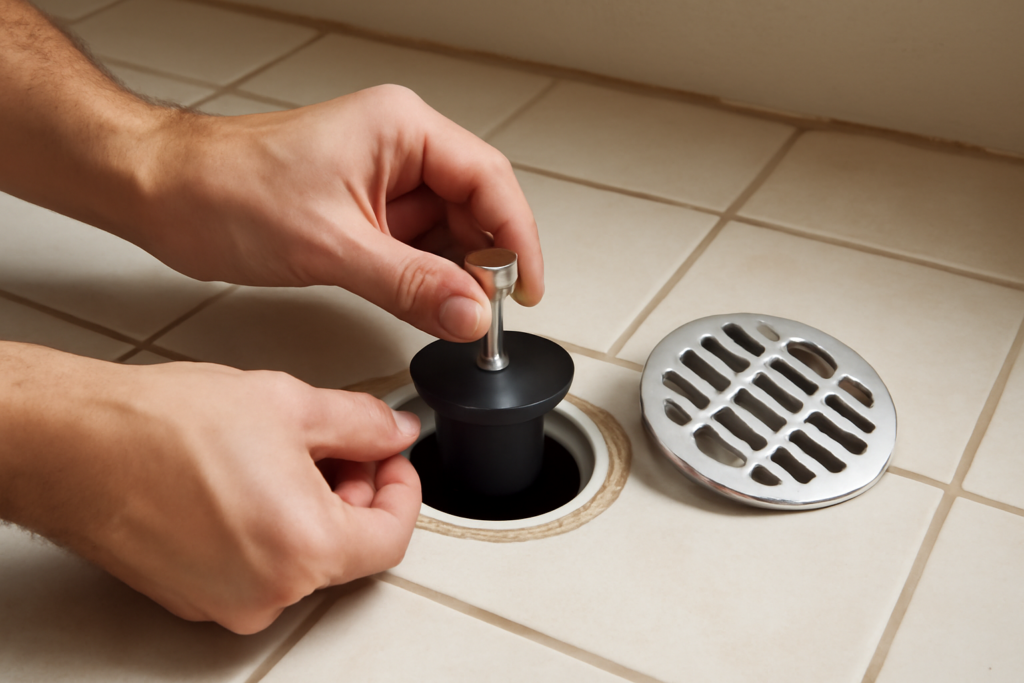
A floor drain plug is a simple fitting that seals an unused or vulnerable floor drain, keeping sewer gas, pests, and backflow out of your basement, garage, or utility room. Whether you are abandoning an old drain, protecting against a backup during heavy rain, or winterizing a property, the right floor drain plug solves a problem that would otherwise be expensive and unpleasant to ignore.
Floor drains are common in basements, laundry rooms, mechanical rooms, and garages. They are designed to carry away water, but when they sit dry or connect to a compromised line, they become an open pathway for odors and water. This guide walks you through the types, sizing, installation, and code considerations so you can choose and fit a plug with confidence.
What a Floor Drain Plug Does
The job of a drain plug is to create a watertight or gas-tight barrier inside or over the drain opening. A floor drain normally relies on a P-trap holding a small reservoir of water that blocks sewer gas. When that trap dries out, which happens often in seldom-used basements, smells rise into the living space. A plug provides a positive seal that does not depend on standing water.
Plugs also defend against backflow. During municipal sewer surcharges or storm events, wastewater can be pushed back up the line and out of the lowest opening in your home, which is usually the basement floor drain. A properly rated plug can hold against moderate back-pressure and prevent a flooded basement, though a dedicated backwater valve is the better long-term answer for chronic backups.
Common Types of Floor Drain Plugs
There are several styles, each suited to a different goal. Match the type to whether the drain is being permanently abandoned or temporarily protected.
- Expandable rubber plugs (twist or wing-nut): A rubber gasket compresses between two plates when you turn a wing nut, sealing inside the pipe. Easy to install and remove, ideal for temporary protection.
- Mechanical test plugs: Similar expandable design rated to hold water pressure, often used by plumbers during testing and good for backflow defense.
- Inflatable pneumatic plugs: A bladder you inflate with a pump to fill irregular openings. Useful for odd pipe sizes but can deflate over time.
- Threaded cleanout or screw-in caps: For drains with a threaded cleanout port, a brass or plastic cap provides a clean, durable seal.
- Permanent cap-and-fill: When abandoning a drain for good, plumbers may install a cap and fill the void with mortar or concrete after disconnecting the line.
Sizing the Plug Correctly
Sizing is the most common mistake homeowners make. A plug that is too small slips or leaks; one that is too large will not seat. Floor drains commonly use 2-inch, 3-inch, or 4-inch pipe, but the actual sealing surface may be the pipe’s inner diameter or a recessed grate opening.
Measure the inside diameter of the pipe where the plug will seat, not the outer rim of the grate. Remove the strainer grate first, since plugs are designed to expand against the smooth pipe wall below it. If your drain has a stepped or beehive insert, account for the narrowest point. When in doubt, take the old grate or a photo with measurements to a plumbing supplier rather than guessing.
How to Install an Expandable Floor Drain Plug
For the most common rubber expandable type, installation takes only a few minutes once you have the right size.
- Remove the strainer grate, usually held by one or two screws.
- Clear debris, scale, and sediment from inside the pipe so the gasket can seat against a clean surface.
- Insert the plug to the depth where the pipe is smooth and round.
- Turn the wing nut or handle clockwise to compress the rubber until it grips firmly. Do not overtighten, which can split older cast iron or crack the plug.
- Test by pouring a small amount of water on top; it should not drain past the seal.
For inflatable types, insert the deflated bladder, then pump to the manufacturer’s marked pressure. Check pneumatic plugs periodically, since they can lose pressure and fail silently.
Backflow and Sewer Gas Considerations
If your reason for plugging is recurring sewer backups, understand the limits. A plug blocks the opening but does not address the underlying cause, which is usually a sewer surcharge, a partially blocked main, or a low-lying fixture. For repeated flooding, a licensed plumber can install a backwater valve, which automatically closes during backflow and reopens for normal drainage. That solution preserves the drain’s function while a permanent plug does not.
Sewer gas is the other risk. Hydrogen sulfide and methane from the sewer line are unpleasant and, at high concentrations in confined spaces, hazardous. If you smell persistent rotten-egg odor near a floor drain, first try refilling the P-trap by pouring a quart of water down it, and add a small amount of mineral oil to slow evaporation. If the smell continues, a sealing plug or trap primer may be warranted, and a plumber should rule out a broken trap or vent.
Plumbing Code and When to Call a Pro
Building and plumbing codes treat floor drains as part of the sanitary or storm system, so altering them is not always a free-for-all. Many jurisdictions require that an active floor drain keep its trap functional, and some require trap primers in occupied buildings to prevent the seal from drying. Permanently abandoning a drain often requires proper disconnection and capping below the floor, not just a surface plug, and may need an inspection.
Before permanently sealing any drain, check your local code or consult a licensed plumber, especially if the drain serves as an emergency overflow for a water heater, boiler, or laundry. Capping a required safety drain can create a flood hazard and may violate code. For temporary protection a homeowner-installed plug is generally fine; for permanent changes, professional involvement protects both your home and your resale value.
Maintenance and Long-Term Care
A plug is not entirely set-and-forget. Rubber gaskets harden and shrink over years of exposure to moisture and minor chemical contact, so inspect a long-term plug annually. Re-tighten expandable types if the seal feels loose, and replace any plug that shows cracking, swelling, or permanent deformation.
If you remove the plug seasonally, such as for spring storm season or winterizing, keep it dry and out of direct sunlight between uses to extend its life. Label which drain it fits if you manage more than one. With basic attention, a quality plug delivers years of reliable service.
Choosing the Right Solution for Your Home
For occasional protection against odors or a rare backup, an inexpensive expandable rubber plug in the $5 to $20 range is usually enough. For a drain you want to defend against repeated backflow, a pressure-rated mechanical plug or, better, a professionally installed backwater valve is the smarter investment, often running a few hundred dollars installed depending on access. For permanent abandonment, budget for a plumber to disconnect and cap the line correctly.
Whatever path you choose, start by identifying why the drain needs sealing, measure carefully, and respect the role the drain may play in your home’s drainage and safety systems. A correctly chosen floor drain plug is a small purchase that prevents large headaches.
Prefer to explore on your own?
See how new flooring looks in your actual room in seconds — free, no signup.
Try the free Floor Studio →

