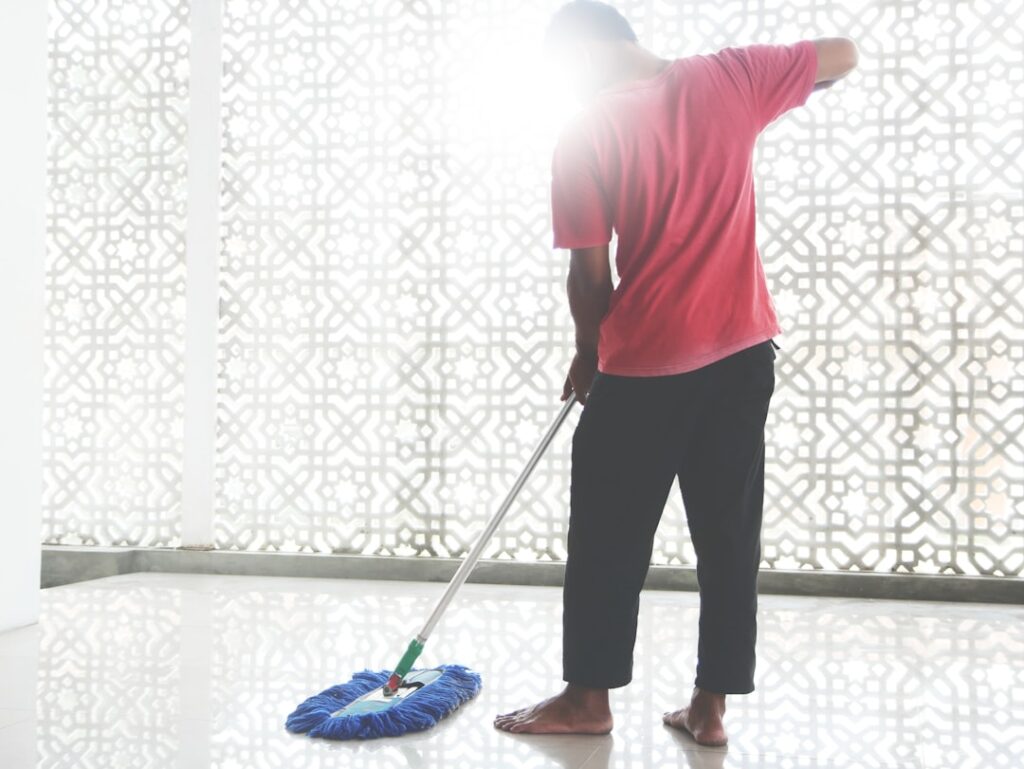
A good floor duster is one of the most underrated tools in any home, quietly doing the work that keeps your floors looking clean between deep cleanings. If you have ever run a damp mop across a hardwood floor only to push gritty dust into muddy streaks, you already understand why dry dusting comes first.
The right floor duster lifts and traps fine particles instead of scattering them, protecting both your floors and the air you breathe. This guide walks through how floor dusters work, the main types available, how to use one correctly, and how to choose the model that fits your home.
What a Floor Duster Actually Does
A floor duster is a lightweight cleaning tool, usually a flat head on a long handle, designed to glide across hard surfaces and capture loose dust, hair, pet dander, and fine debris. Unlike a broom, which relies on stiff bristles to sweep particles into a pile, a duster uses cloth, microfiber, or electrostatically charged fibers to grab and hold dust so it does not float back into the air.
This distinction matters more than most people realize. Sweeping with a traditional broom can launch fine particles upward, where they settle again minutes later. A quality duster traps those particles on contact, which is why it is often the preferred first step before mopping or vacuuming.
The Main Types of Floor Dusters
Not every floor duster works the same way, and the best choice depends on your flooring and how often you clean. Here are the most common styles you will find:
- Microfiber flat dusters: A flat rectangular head fitted with a washable microfiber pad. The split fibers create static cling that grabs dust and is gentle enough for hardwood, laminate, and tile.
- Disposable-pad dusters: A flat head that accepts pre-treated disposable cloths. Convenient and effective, though the ongoing cost of refills adds up over time.
- Electrostatic dusters: Fluffy, fringed heads that build a static charge as they move, pulling dust toward the fibers. Great for quick passes and reaching under furniture.
- Dust mops with cotton heads: A classic choice for larger areas like basements, garages, and commercial-style floors, where a wide cotton head covers ground fast.
- Spray-and-dust combos: Tools with a built-in reservoir that mists a light cleaning solution, blending dry dusting with a touch of damp cleaning.
Choosing the Right Floor Duster for Your Home
Start with your flooring. Hardwood and luxury vinyl benefit from soft microfiber that will not scratch the finish, while textured tile may need a slightly stiffer pad to dig dust out of grout lines. If you have pets, look for a head that grips hair rather than rolling it into clumps.
Consider the size of the area you clean most. A standard 12-to-18-inch head handles typical rooms well, while a wider head saves time in large open spaces. Handle length matters too: an adjustable telescoping handle, often ranging from about 40 to 60 inches, lets taller users avoid hunching and helps you reach under low furniture without kneeling.
Finally, weigh recurring costs. A washable microfiber duster costs more upfront, often in the range of $15 to $40, but eliminates the steady expense of disposable cloths. Disposable systems are cheaper to buy but cost more over the years.
How to Use a Floor Duster Correctly
Using a floor duster well is mostly about technique. Rushing creates streaks and leaves dust behind, while a slow, deliberate pass collects nearly everything in one pass.
- Clear the floor of large debris first; dusters handle fine particles, not chunks of food or gravel.
- Start at the far corner of the room and work toward the door so you never walk back across cleaned areas.
- Move in long, overlapping straight lines rather than scrubbing back and forth, which can release trapped dust.
- Keep the head flat against the floor to maintain full contact with the surface.
- When the pad looks loaded with dust, take it outside to shake it or swap in a fresh one.
- For corners and baseboards, tip the duster on edge or use a smaller handheld tool to finish the detail work.
Caring for Your Floor Duster
A duster only works as well as its surface allows, and a clogged or matted pad simply smears dust around. Washable microfiber pads should be machine washed in cold or warm water without fabric softener, since softener coats the fibers and destroys their ability to grab dust. Air dry them or use low heat; high heat can melt the synthetic fibers over time.
Shake out electrostatic and cotton heads after every use, and replace any pad that has lost its grip or developed a permanent odor. With proper care, a quality microfiber pad can last through dozens of washes before it needs replacing.
Floor Duster vs. Broom vs. Vacuum
Each tool has a role, and the smartest homeowners use them together rather than choosing just one. A broom is best for heavy debris and rough surfaces like a garage or patio. A vacuum excels on carpet and pulls deep grit out of textured floors and crevices.
A floor duster shines for daily and weekly maintenance on hard floors, capturing the fine dust that brooms scatter and that you do not want to drag a heavy vacuum out to handle. Many people dust several times a week and reserve vacuuming or mopping for a less frequent deep clean, which keeps floors looking polished with minimal effort.
Common Mistakes to Avoid
The biggest mistake is treating a dry duster like a mop and pressing too hard, which can grind trapped grit into the floor finish. Let the fibers do the work with light, even contact. Another frequent error is over-relying on disposable cloths well past the point where they are saturated, which only redeposits dust.
People also forget to dust before mopping. Mopping over a dusty floor turns loose particles into a thin film of dirty residue. Always dry dust first, then mop, for the cleanest result and the least wasted effort.
Final Thoughts on Picking a Floor Duster
A floor duster is a small investment that pays off every single week. Match the head material to your flooring, choose a handle length that fits your body and your rooms, and decide whether washable or disposable pads suit your budget and routine.
Keep the pad clean, use slow overlapping strokes, and dust before you mop. Do that consistently, and you will spend far less time fighting dust while keeping your floors looking their best year-round.
Prefer to explore on your own?
See how new flooring looks in your actual room in seconds — free, no signup.
Try the free Floor Studio →