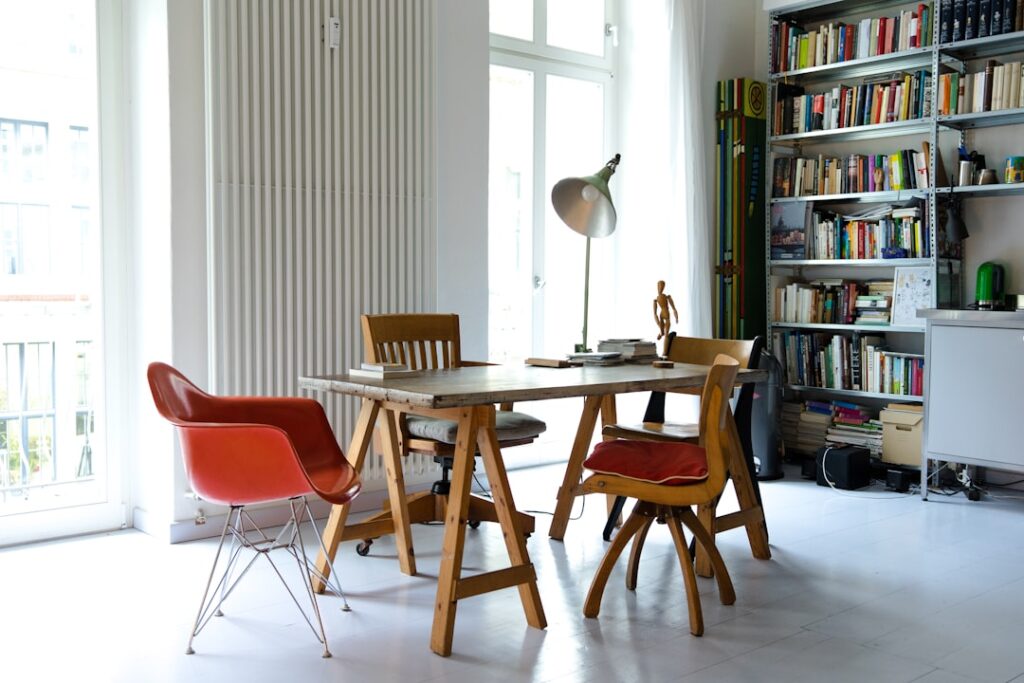
The phrase covers more ground than most homeowners realise. Walk into a builders merchant asking about floor paneling and you may be pointed at structural chipboard, plywood, OSB, click-lock LVT, engineered wood planks, or even decorative tongue-and-groove pine for ceilings — the same word covers six different product categories that solve different problems. Sorting which type you actually need is half the battle, because using furniture-grade decorative paneling as a structural floor or running structural OSB as a finished surface produces predictable disasters at predictable price points.
The Six Types of Floor Paneling
- Structural subfloor panels — plywood, OSB, chipboard sheets that span joists
- Click-lock plank flooring — engineered wood, laminate, vinyl planks that lock together
- Tongue-and-groove decorative boards — pine, cedar, MDF wall and ceiling panels sometimes used on accent floors
- Modular access flooring panels — raised floor systems for offices and data centres
- Floor underlayment panels — cement board, fibre cement, gypsum panels under tile
- Decking and outdoor flooring panels — composite or pressure-treated deck boards
Structural Subfloor Panels
Plywood (typically 5/8-inch or 3/4-inch CDX or T&G), OSB (commonly 23/32-inch tongue-and-groove), and chipboard (22mm flooring grade in the UK, less common in the US) form the structural deck that carries everything else. Span ratings printed on each panel — 24/16, 32/16, 40/20, 48/24 — indicate maximum joist spacing for roof and floor applications respectively.
Plywood costs $2.50 to $3.50 per sq ft installed, OSB $1.50 to $2.50, chipboard $1.20 to $1.80 in the UK market. Plywood holds screws and nails better, OSB is more dimensionally stable in dry conditions, chipboard is cheapest but vulnerable to moisture.
Click-Lock Plank Flooring
Most modern finished floors are technically panel products. Engineered wood planks, laminate boards, SPC vinyl, and WPC vinyl all use angle-and-drop or angle-and-tap mechanical locking systems. Sizes range from 6 inches by 36 inches up to 9 inches by 75 inches; thickness from 4mm rigid SPC up to 21mm engineered wood.
The benefit is fast installation without nails, glue, or specialised tools. The trade-off is that floating click systems require flat substrates (3/16-inch in 10 feet), proper underlayment, and 10mm perimeter expansion gaps to perform correctly.
Pricing ranges $2 to $12 per square foot for material, with installation adding $2 to $6 per square foot.
Tongue-and-Groove Decorative Boards
Pine, cedar, and MDF V-groove panels — often sold as 8-foot lengths in 6-inch or 8-inch widths — were historically used for ceilings and walls but occasionally appear in cottage-style floors. They are not engineered for structural floor loads and will deflect under furniture point loads.
If you want the look of tongue-and-groove pine boards on a floor, buy actual flooring-grade product (typically 3/4-inch thick southern yellow pine or eastern white pine) rather than wall paneling. The visual is similar; the structural performance is not.
Modular Access Flooring Panels
Raised access floor systems use 24-inch by 24-inch steel or composite panels supported on adjustable pedestals, creating an air plenum and cable tray below. Common in offices, server rooms, and trading floors. Materials run $15 to $40 per square foot installed, plus the underfloor pedestals at $4 to $10 per square foot.
For most homeowners this is overkill, but media rooms and home offices with extensive AV cabling occasionally use a low-profile version (3- to 6-inch raised height) to manage cable runs invisibly.
Underlayment Panels
Cement board (HardieBacker, Durock, WonderBoard) and uncoupling membranes (Schluter Ditra) form the substrate that lets tile work over plywood subfloors. Cement board panels run $0.80 to $1.30 per sq ft, and proper installation requires both thinset under the panel and screws on a 6-inch pattern at edges and 8-inch pattern in the field.
Skip cement board over a wood subfloor and tile cracks within 12 to 36 months as the substrate flexes seasonally. Skip the thinset under the cement board and the panel itself can flex enough to crack tiles.
Pricing Reality Across Categories
For a typical 1,000 sq ft project, rough budget benchmarks for 2026:
- Structural plywood subfloor (T&G 3/4-inch): $2,500 to $3,500 supplied and installed
- Cement board underlayment for tile: $1,200 to $1,800
- Mid-range click LVT or laminate finish: $4,000 to $7,500 installed
- Engineered hardwood click flooring: $7,000 to $14,000 installed
- Decorative pine T&G ceiling panels: $4 to $8 per sq ft installed
Installation Pointers Across the Board
For all panel products, three rules cover most failures. First, leave expansion gaps — 10mm to 12mm at the perimeter of every floating product, 1/8-inch between every structural subfloor panel. Second, stagger joints — never align edges across more than two adjacent panels. Third, fix substrates flat before installing finish — 3/16-inch in 10 feet for click flooring, 1/8-inch in 6 feet for glue-down or tile.
Use the right fasteners. Plywood gets ring-shank or threaded nails; chipboard wants coarse-thread screws; cement board takes corrosion-resistant cement board screws on a tight schedule.
Common Mistakes to Avoid
- Using wall paneling as floor finish — fails structurally
- Skipping panel adhesive on subfloor T&G joints — produces squeaks
- Installing cement board without thinset under the panel — tile cracks follow
- No expansion gaps around perimeter — peaking and buckling
- Mixing panel thicknesses across a floor — uneven finish surface
Maintenance Notes
Subfloor panels do not need maintenance once buried. Click-lock finished floor paneling needs sweeping, occasional damp mopping with neutral pH cleaner, and felt pads under furniture. Decorative wood paneling on accent floors benefits from periodic finish refresh — wax, oil, or recoat depending on the original finish.
Bottom Line
Floor paneling spans six product categories that share a name and almost nothing else. Match the panel type to the actual job — structural, finish, underlayment, decorative — and read the span rating, expansion gap, and fastener spec on the product literature. Get those three numbers right and the floor performs as it should for decades; get any of them wrong and you are pulling product up before the next renovation cycle.
Prefer to explore on your own?
See how new flooring looks in your actual room in seconds — free, no signup.
Try the free Floor Studio →