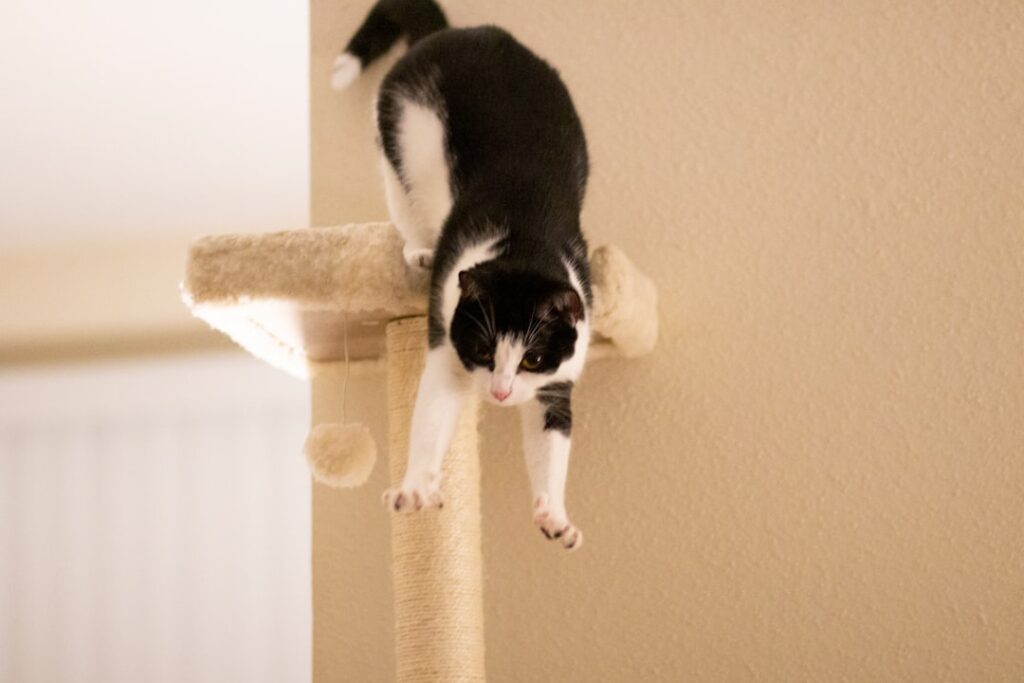
A floor to ceiling cat tower turns unused vertical space into a playground, giving your cat the height it instinctively craves without eating up valuable floor area. Cats are natural climbers, and a tall tower satisfies that drive to perch, survey, and retreat while keeping claws off your furniture and curtains.
For homeowners with multiple cats, limited square footage, or an energetic climber that has outgrown a short tree, a full-height tower is often the most space-efficient enrichment you can buy. This guide explains how the designs differ, what to look for in a stable model, and how to set one up safely.
Why Go Floor to Ceiling
Vertical territory matters more to cats than horizontal space. A tower that reaches the ceiling effectively multiplies your room’s usable square footage from your cat’s point of view, giving it multiple levels to claim. That added height reduces tension in multi-cat households, where the ability to perch above a housemate prevents many spats.
Tall designs also have a small footprint. Because the structure rises rather than sprawls, you get many platforms, perches, and scratching surfaces in roughly the floor space of a single chair. For apartments and compact rooms, that ratio is hard to beat.
Tension-Mount vs Bolted Designs
There are two main ways a floor to ceiling cat tower stays upright, and the difference matters for both safety and your walls:
- Tension-mounted — An adjustable pole wedges between floor and ceiling using a spring or screw mechanism. No drilling required, which makes it renter-friendly, but it depends on correct, snug installation.
- Bolted or bracketed — The unit fastens to the ceiling, a wall stud, or both with hardware for maximum rigidity. More permanent and more stable, but it leaves holes when removed.
Tension models suit most homes with standard 8-foot ceilings and are by far the most common. If you have a very large cat, several cats using the tower at once, or unusually high ceilings, a bolted or wall-anchored design gives extra peace of mind.
Key Features to Look For
Not every tall tower is built the same. Prioritize the features that match how your cat actually behaves:
- Sisal-wrapped posts for durable scratching that protects your sofa.
- Multiple perches and a top platform sized to your cat’s body, ideally at least 10 to 12 inches across for an average adult.
- An enclosed condo or hammock for cats that like to hide and nap.
- A stable, weighted base that resists wobble during launch-off jumps.
- Replaceable or re-wrappable posts to extend the tower’s life.
Check the manufacturer’s weight rating for each platform, especially if you own a larger breed like a Maine Coon. Wider, well-padded perches will see far more use than narrow ledges.
Sizing It to Your Space
Measure your ceiling height before you buy. Most tension-mount towers adjust to fit ceilings roughly between 7.5 and 9 feet, but ranges vary by model, so confirm yours falls within the listed window. Account for any ceiling features: sloped, vaulted, or drop-tile ceilings complicate tension mounting, because the pole needs a firm, flat surface above to press against.
For drop ceilings or unusually tall rooms, a tension mount may not hold securely, and a bolted design or a slightly shorter freestanding tree is the safer route. Also pick a location against a wall or in a corner, which adds stability and gives your cat a sense of security from above.
Safe Setup and Anchoring
Stability is everything with a tall structure, so follow the assembly instructions exactly rather than improvising. For tension models, tighten the pole until it is genuinely firm against the ceiling; a loose pole can shift or drop over time. Place a protective pad or the included plate between the pole and ceiling to spread the load and avoid denting drywall.
After installation, test the tower yourself by pushing and shaking the upper platforms before letting your cat use it. Re-check the tension every few weeks, since seasonal humidity and normal use can loosen the fit. If the tower ever wobbles, stop your cat from using it until you re-secure it. For homes with very active jumpers, adding an L-bracket to a wall stud dramatically reduces sway, even on a tension model.
Helping Your Cat Take to It
Even the best tower goes unused if your cat ignores it. Placement near a window gives your cat something to watch and instantly makes the top perch desirable. Rub the sisal posts and platforms with a little catnip, or set treats on each level to lure a hesitant climber upward step by step.
Position the tower in a room where your family spends time, since cats want to be near their people while still elevated. Be patient; some cats claim a new tower within hours, while shy ones take a week or two of gentle encouragement before they treat it as their own.
Maintenance and Longevity
A cat tower sees daily climbing, scratching, and shedding, so a little upkeep keeps it looking good and lasting longer. Vacuum the platforms and condo weekly to control hair and dander, and spot-clean fabric surfaces with a pet-safe cleaner as needed. Check the hardware periodically, tightening any platform bolts that work loose from repeated jumping.
Sisal posts are the part that wears fastest. Rotating a reversible post or choosing a model with replaceable wraps extends the tower’s life considerably, so you are not replacing the whole unit when only the scratching surface is spent. When a post finally frays beyond use, re-wrapping it with fresh sisal rope is an inexpensive afternoon project that makes an aging tower feel new again.
Final Thoughts
A floor to ceiling cat tower is one of the highest-value purchases you can make for a climbing cat, delivering exercise, scratching outlets, and prized vertical territory in a small footprint. Choose between a renter-friendly tension mount and a sturdier bolted design based on your ceilings and your cat’s size, prioritize wide perches and quality sisal, and always follow the setup instructions and weight limits. Do that, and your cat will have a personal skyscraper it loves for years.
Prefer to explore on your own?
See how new flooring looks in your actual room in seconds — free, no signup.
Try the free Floor Studio →