Salt air, summer humidity north of 80 percent, and the occasional hurricane evacuation turn most Pinellas County flooring decisions into a moisture-management exercise. Shopping for flooring Clearwater retailers can install starts with the materials that survive a Gulf Coast climate, not the prettiest plank on the showroom wall. Locally owned shops along US-19 and Gulf-to-Bay tend to push waterproof LVP and porcelain tile for good reason. After fifteen years selling and installing floors from Dunedin down to St. Pete Beach, the patterns are obvious. This guide breaks down the materials, the stores, and the contract language that protects you.
- Why Clearwater Climate Drives Material Choice
- Top Material Categories for the Tampa Bay Area
- Local Retailers Worth a Showroom Visit
- Installation Pricing in Pinellas County
- Pros and Cons of Hiring a Clearwater Installer
- Contract and Warranty Red Flags
- Best Picks by Room and Budget
- Timing the Install Around Florida Weather
Why Clearwater Climate Drives Material Choice
Clearwater sits in USDA zone 9b, with an average dew point above 70°F from June through September. Slab-on-grade homes near the coast routinely test at 4 to 6 pounds of moisture vapor emission per 1,000 sq ft per 24 hours, which exceeds the tolerance of most solid hardwood. Engineered hardwood survives if the subfloor is sealed, but most contractors quietly steer beachside clients toward waterproof LVP or porcelain plank.
Wind-driven rain during named storms is the second variable. Homes that took on water during Hurricane Idalia or Helene needed full tear-outs when carpet pad and laminate swelled. Replacement decisions now skew toward floors that can survive a sustained soak for 24 to 48 hours.
Top Material Categories for the Tampa Bay Area
Three product families dominate Clearwater installations in 2026, and each has a clear lane:
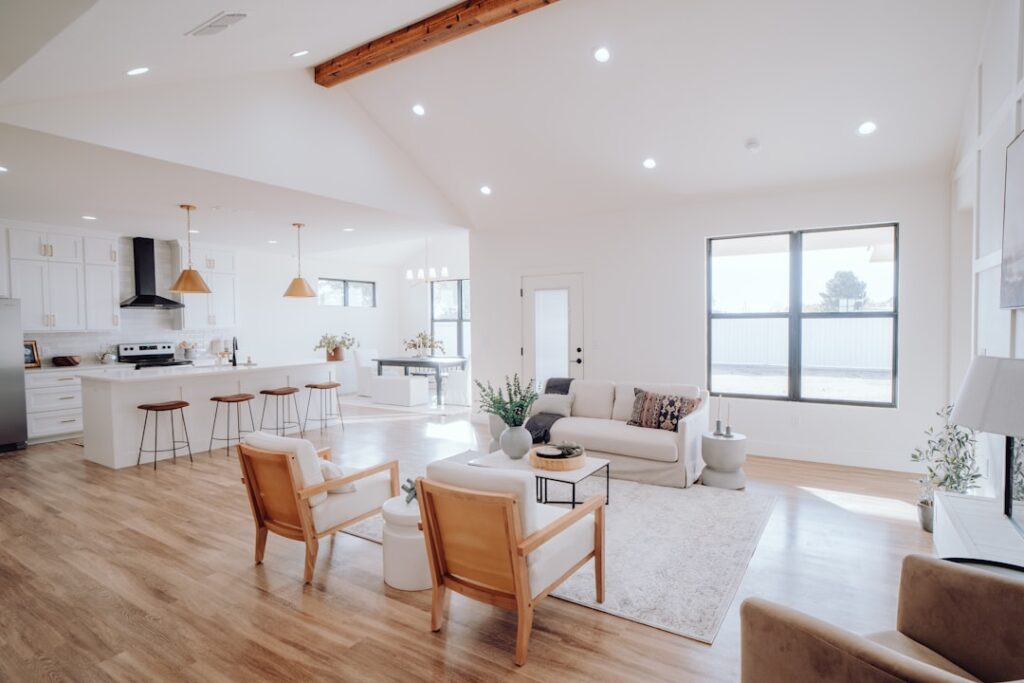
- Rigid core LVP (SPC) — 6mm to 8mm planks with attached pad, $2.49 to $5.99 per sq ft installed. Handles slab moisture up to 8 lbs MVER with a vapor barrier.
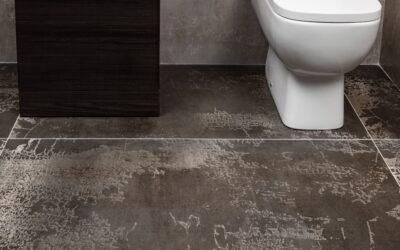
- Porcelain wood-look plank tile — 8×48 or 9×60 formats, $7 to $12 per sq ft installed. The premium pick for forever floors near the beach.
- Polished concrete — $4 to $8 per sq ft for existing slabs in good shape. Popular in mid-century ranches around Belleair.
Solid hardwood still sells in inland neighborhoods like Countryside, but reputable installers will refuse it on a coastal slab without significant prep.
Local Retailers Worth a Showroom Visit
Big-box options include the Home Depot on US-19 and Lowe’s on Gulf-to-Bay, both with installation networks and same-day pickup on stocked SKUs. For specialty selection, Flooring America in Clearwater, Hadinger Flooring in Largo, and 50 Floor mobile service all carry tiers above the warehouse brands.
Independent shops typically price 10 to 15 percent higher than big-box on identical-spec product but deliver tighter installation crews and faster warranty response. If your job exceeds 800 sq ft, get at least one quote from each tier.
Installation Pricing in Pinellas County
Labor in Clearwater runs higher than the Florida average because of the seasonal contractor crunch from November through April. Realistic 2026 numbers for a 1,200 sq ft single-story home:
- LVP install over existing tile (no demo): $1.89 to $2.75 per sq ft labor
- Porcelain tile install with thinset and grout: $6 to $9 per sq ft labor
- Carpet tear-out and haul-off: $0.85 to $1.40 per sq ft
- Self-leveling underlayment for wavy slabs: $2.50 to $4 per sq ft of poured area
Demo of glued-down vinyl or cutback adhesive can add $1.50 to $3 per sq ft and is the line item most often missed in cheap quotes.
Pros and Cons of Hiring a Clearwater Installer
Hiring locally has real advantages. Crews understand stem-wall versus monolithic slab construction, which insurers issued matching coverage after recent storms, and which HOAs in Sand Key require specific underlayment for sound transmission. The downside is scheduling. Snowbird season pushes lead times to 6 to 10 weeks from October through March.
Pros: code familiarity, warranty pickup, faster punch-list response. Cons: peak-season delays, higher labor rates, occasional language-barrier crews subbed by larger retailers.
Contract and Warranty Red Flags
Three clauses to insist on before signing. First, a moisture test result written into the contract — calcium chloride or in-situ RH probe, with a numeric reading. Second, separate line items for material, labor, demo, and disposal. Lump-sum quotes hide margin and make warranty disputes ugly. Third, a written acclimation period of 48 to 72 hours for any wood-product flooring, with the boxes opened on-site.
The Florida DBPR licenses flooring contractors under the CGC or CRC categories. Verify the license at myfloridalicense.com before any deposit changes hands.
Best Picks by Room and Budget
For whole-home replacement under $5 per sq ft installed, Shaw Floorte Plus or COREtec Pro Plus deliver the best long-term value in this market. For premium beachfront properties, Daltile Emerson Wood or Marazzi Treverkhome porcelain plank survives standing water and salt deposits indefinitely. Bedrooms in non-coastal zip codes still benefit from low-pile loop carpet from Mohawk SmartStrand — easier on bare feet and friendlier to retiree downsizers.
Skip glue-down sheet vinyl, peel-and-stick LVP from no-name brands, and any laminate marketed as “water resistant” without an actual waterproof rating. Clearwater humidity will find every seam within five years.
Timing the Install Around Florida Weather
Schedule major flooring jobs between mid-April and early June, or in October. The shoulder seasons deliver lower lead times, cooler interior conditions for acclimation, and reduced risk of tropical-storm disruption during install. Hurricane season runs June through November, and an active named-storm forecast can shut down a job for 5 to 10 days.
Run the air conditioning to 72 to 75°F and 45 to 55 percent relative humidity for at least 7 days before delivery. Most failed wood-product installs in Pinellas County trace back to materials acclimated in garages, lanais, or unconditioned warehouses where ambient humidity exceeded 70 percent. Acclimation happens inside the conditioned envelope or it does not happen.
Prefer to explore on your own?
See how new flooring looks in your actual room in seconds — free, no signup.
Try the free Floor Studio →