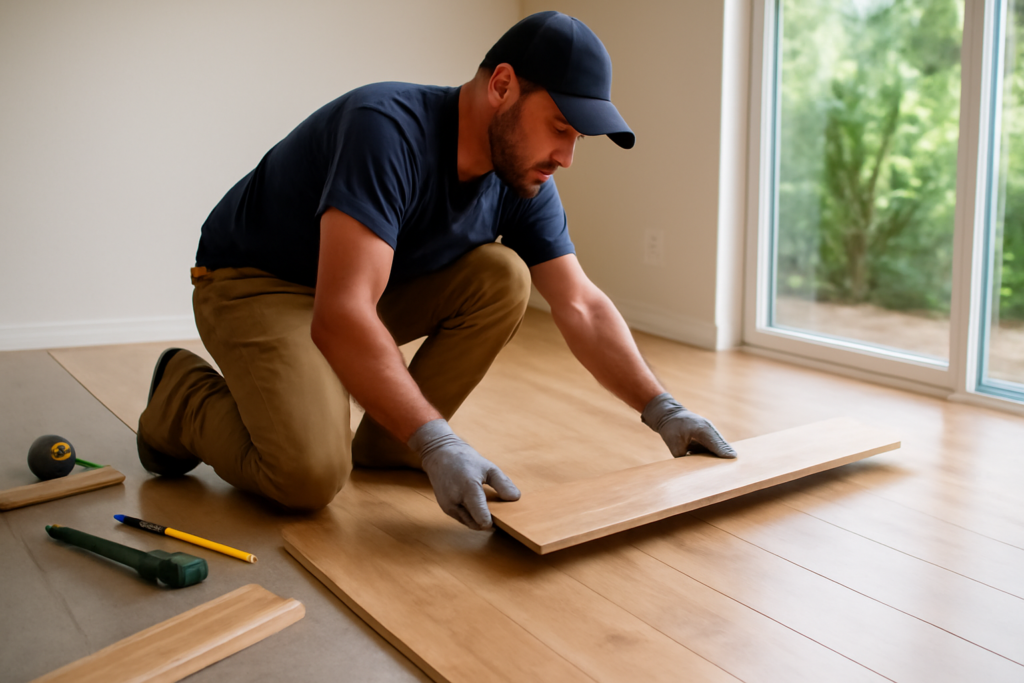
New flooring is one of the highest-impact upgrades a San Diego home can get, and it is also one of the easiest to get wrong. Hiring the wrong crew leads to gapped seams, uneven planks, and warranties voided by improper installation. The right flooring contractors in San Diego protect your investment by matching materials to the coastal climate and installing them to manufacturer spec. This guide covers how to vet a contractor, what installation costs, and which floors suit the region.
What a Flooring Contractor Handles
A full-service flooring contractor manages far more than laying material. The job includes assessing and preparing the subfloor, removing old flooring, leveling, moisture testing, installing the new surface, and finishing transitions and trim. Quality prep is invisible once the job is done, but it is the single biggest factor in how the floor performs over time.
Some contractors specialize in one category, such as hardwood or tile, while others handle everything. For a multi-material remodel, a versatile contractor or a coordinated team simplifies the project.
Climate Considerations on the Coast
San Diego’s mild, coastal climate is gentle on flooring overall, but proximity to the ocean brings salt air and humidity swings that matter for material choice:
- Luxury vinyl plank: waterproof, stable, and a strong all-around fit for the area
- Porcelain tile: durable, moisture-proof, and cool in summer heat
- Engineered hardwood: more stable than solid wood in humidity swings near the coast
- Solid hardwood: beautiful but more sensitive to moisture changes, best in controlled interiors
A knowledgeable contractor will recommend materials based on your specific location, since a home a block from the beach faces different conditions than one inland.
How to Vet San Diego Contractors
Before hiring, confirm the fundamentals. A trustworthy contractor provides them readily:
- An active California contractor’s license appropriate for flooring work
- Proof of liability insurance and, where applicable, workers’ compensation
- Recent local references and photos of comparable jobs
- Reviews across multiple platforms, read for recurring themes
- A written, itemized estimate rather than a single lump sum
Ask whether the company’s own employees do the work or whether they subcontract, and confirm who is responsible if a problem appears later.
Questions Worth Asking
The right questions reveal a contractor’s experience. Ask how they test for and address subfloor moisture, how they handle acclimating wood or laminate before installation, what the warranty covers on both materials and labor, and how they protect the manufacturer’s product warranty. A pro who installs to spec keeps your product warranty intact; a sloppy install can void it entirely.
Understanding the Cost
San Diego labor rates sit above the national average, and total cost depends heavily on the material. As general planning ranges, installed flooring often falls into these brackets:
- Luxury vinyl plank: roughly $4 to $9 per square foot installed
- Laminate: roughly $3 to $8 per square foot installed
- Tile: roughly $10 to $25 per square foot installed, depending on material and pattern
- Hardwood: often $8 to $20 per square foot installed, more for premium species
These are ballparks; demolition, subfloor repair, and leveling add cost. Collect at least three itemized quotes covering the same scope so the comparison is fair.
Red Flags to Avoid
Walk away from contractors who demand full payment up front, refuse to put scope and price in writing, lack a verifiable license, or pressure you with quotes that expire within hours. A standard arrangement is a reasonable deposit followed by the balance on satisfactory completion. Unusually low bids often hide skipped prep work that surfaces as problems months later.
Timeline and What to Expect
Knowing the rhythm of a flooring job helps you plan and spot problems early. After signing, expect a period for ordering and delivering material, which can take a week or more for special orders. Wood and laminate then need to acclimate in the home for a couple of days. The installation itself ranges from a single day for a small room to a week or more for a whole house, depending on the material and prep required.
A reliable contractor gives you a written schedule and communicates if anything slips. Hard surfaces like tile need cure time before heavy use, so ask when you can walk on, place furniture on, and fully use the new floor. Clear expectations up front prevent the frustration of an unexpectedly long project.
Protecting Your Investment
The work does not end at installation. To get the most from new floors, ask your contractor for care instructions specific to the material, since hardwood, tile, and luxury vinyl each want different cleaning approaches. Keep any product documentation and warranty paperwork, and register the product if the manufacturer requires it to keep coverage valid.
Simple habits extend a floor’s life dramatically in San Diego’s sandy coastal environment. Place mats at every entry to catch grit, add felt pads under furniture, and clean with the manufacturer-recommended products rather than harsh chemicals. A modest amount of care protects what is often a five-figure investment in the home.
Making Your Decision
Getting Accurate Quotes
The estimate process tells you a lot about a contractor’s professionalism. A serious pro visits the home to measure, inspect the subfloor, and discuss your needs before quoting, rather than throwing out a number over the phone. The written estimate should break out materials, labor, prep, removal of old flooring, and any add-ons so you can see exactly where the money goes.
When comparing bids, make sure each covers the same scope. A quote that looks cheaper may exclude subfloor leveling, demolition, or trim, costs that reappear later as change orders. Ask each contractor to quote the same square footage, material grade, and prep work, then compare line by line. The lowest bottom line is not the best value if it leaves out work the job genuinely requires.
Choosing among flooring contractors in San Diego comes down to verified credentials, transparent itemized quotes, and clear answers about prep and warranties. Prioritize the contractor who explains their moisture testing and subfloor process over the one offering the lowest number. Match the material to your coastal location, hire licensed and insured pros, and walk the finished job before final payment to ensure the floor lives up to the investment.
Prefer to explore on your own?
See how new flooring looks in your actual room in seconds — free, no signup.
Try the free Floor Studio →