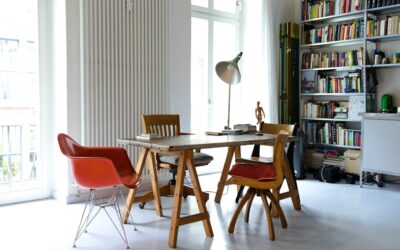
Choosing flooring for a home in Hagley or the surrounding villages means juggling traditional aesthetics with modern performance demands. The local housing stock skews older, often with Victorian or post-war character that calls for warm materials, while newer extensions and conversions need products that handle underfloor heating and active family life. Flooring Hagley shoppers usually walk into a showroom with too many choices and not enough framework for comparing them. This guide builds that framework.
- The Five Realistic Choices
- Engineered Hardwood: Best for Living Areas
- LVT: Best for Kitchens and Utility Rooms
- Laminate: Best for Bedrooms and Budget Spaces
- Porcelain Tile: Best for Wet Rooms
- Carpet: Best for Bedrooms and Stairs
- Subfloor Realities
- Underfloor Heating Compatibility
- Hiring Local Installers: Five Questions
- Budgeting the Whole House
- Common Mistakes to Avoid
- Material Lead Times and Project Planning
The Five Realistic Choices
For a UK residential property, the practical menu narrows to five categories: engineered hardwood, luxury vinyl tile (LVT), laminate, porcelain tile, and carpet. Solid hardwood remains an option for ground-floor reception rooms but rarely makes sense over concrete or with underfloor heating. Each material has a clear use case, and matching the right product to the right room is more important than picking a single floor for the whole house.
Engineered Hardwood: Best for Living Areas
Engineered hardwood uses a 3 to 6mm hardwood top layer bonded to a multi-ply or HDF core. The construction handles concrete slabs, underfloor heating, and humidity swings far better than solid wood. Quality brands include Kahrs, Boen, Junckers, Quick-Step, and Ted Todd. Expect $7.80 to $14.20 per square foot for material and $14.40 to $20.40 per square foot installed.
For Hagley homeowners, engineered oak in herringbone or wide-plank format suits both period properties and modern extensions. Specify a 4mm wear layer for long-term sandability.
LVT: Best for Kitchens and Utility Rooms
Luxury vinyl tile is 100 percent waterproof, dimensionally stable, and convincingly mimics wood or stone. The key spec is wear layer measured in mils:
- 12 mil: light residential use only
- 20 mil: standard family home, kitchens included
- 28 mil and above: commercial spec, overkill for most homes
Karndean Korlok Select, Amtico Spacia, and Moduleo Roots all deliver excellent residential LVT. Installed pricing runs $7.20 to $11.40 per square foot.
Laminate: Best for Bedrooms and Budget Spaces
Modern laminate has improved dramatically over the last decade. Pergo Outlast Plus, Mohawk RevWood Plus, and Quick-Step Eligna all carry AC4 ratings and waterproof or water-resistant guarantees. Installed pricing in Hagley typically runs $5.40 to $8.80 per square foot for mid-grade product.
Avoid AC3 budget laminate in any room that sees children, pets, or kitchen traffic. The wear layer fails within five to seven years and the floor looks tired well before that.
Porcelain Tile: Best for Wet Rooms
Porcelain handles bathrooms, kitchens, and mudrooms better than any wood product can. Look for through-body porcelain at 9mm to 12mm thickness, rectified edges for tight grout joints, and a DCOF wet rating of 0.42 or higher on any tile heading into a bathroom or kitchen. Brands worth shopping include Porcelanosa, Marazzi, and Daltile.
Installed pricing for porcelain runs $14.00 to $22.00 per square foot for standard installation, climbing to $26.00 to $36.00 for large-format slabs or intricate patterns.
Carpet: Best for Bedrooms and Stairs
Carpet has lost market share to hard flooring but retains a strong case in bedrooms, stairs, and home offices where warmth and acoustics matter. The two key specs are face weight (ounces per square yard) and density. Aim for 40 oz/sq yd minimum for bedrooms, 50 oz/sq yd for stairs and high-traffic landings.
Mohawk SmartStrand, Shaw Anso Caress, and Cormar Apollo Comfort all deliver strong residential performance. Installed pricing in Hagley runs $4.20 to $8.40 per square foot depending on the carpet grade and underlay quality.
Subfloor Realities
Many Hagley homes have suspended timber subfloors on the ground floor, with concrete slabs in extensions and upper floors that have been re-platformed. Each substrate has specific prep requirements:
- Suspended timber: overlay with 6mm plywood if installing LVT; check for joist movement before laying any rigid floor
- Concrete slab: test moisture per ASTM F2170 below 75 percent RH; level to 3mm over 2 meters
- Existing tile or vinyl: sometimes can be overlaid with self-leveling compound, but removal is usually cleaner
Underfloor Heating Compatibility
If you have UFH or plan to install it, ruling out incompatible materials matters more than aesthetics. Engineered hardwood up to 15mm thick works well, as does LVT, laminate, and porcelain tile. Solid wood, thick carpet with rubber underlay, and certain SPC products either reduce heat output below useful levels or risk damage from sustained temperature exposure above 27°C surface temperature.
Hiring Local Installers: Five Questions
- What moisture testing protocol do you use on concrete subfloors?
- What adhesive do you default to for this product type?
- Can I see photos of three completed jobs from the last 18 months?
- What is your written workmanship warranty separate from the manufacturer warranty?
- Will the same crew start and finish my job, or will you subcontract?
Most flooring complaints I hear in Hagley come down to one of these five points. A confident, specific answer to all five is the mark of an installer worth hiring.
Budgeting the Whole House
A typical Hagley three-bedroom semi has roughly 110 to 140 square meters of floor area (1,180 to 1,500 sq ft). A mixed-material specification might land at $14,000 to $22,000 for mid-grade product across all rooms, climbing to $32,000 or more with premium engineered wood, hand-laid herringbone, or large-format porcelain. Order all the material for the whole house at once where possible, both for pricing leverage and to ensure dye-lot consistency across batches.
Common Mistakes to Avoid
- Specifying solid hardwood over a concrete slab without moisture testing per ASTM F2170
- Choosing AC3 budget laminate for a busy family home, then replacing it within five years
- Skipping acoustic underlayment in upstairs rooms, which damages the resale value if buyers notice the hollow sound
- Mixing too many flooring types across visible sightlines, creating a fragmented design
- Underestimating subfloor leveling costs, which can run $2 to $4 per square foot on older properties
Address these planning issues at quote stage and the rest of the job flows smoothly.
Material Lead Times and Project Planning
Engineered hardwood from Kahrs, Boen, or Ted Todd typically ships within 5 to 15 business days from UK distributors. LVT from Karndean and Amtico runs 7 to 14 days. Porcelain tile from Porcelanosa and Marazzi varies wildly, with stock items shipping in a week and special-order patterns taking 6 to 14 weeks. Order all material before demolition begins, never during, to avoid the contractor sitting idle while waiting for backordered product.
Prefer to explore on your own?
See how new flooring looks in your actual room in seconds — free, no signup.
Try the free Floor Studio →