
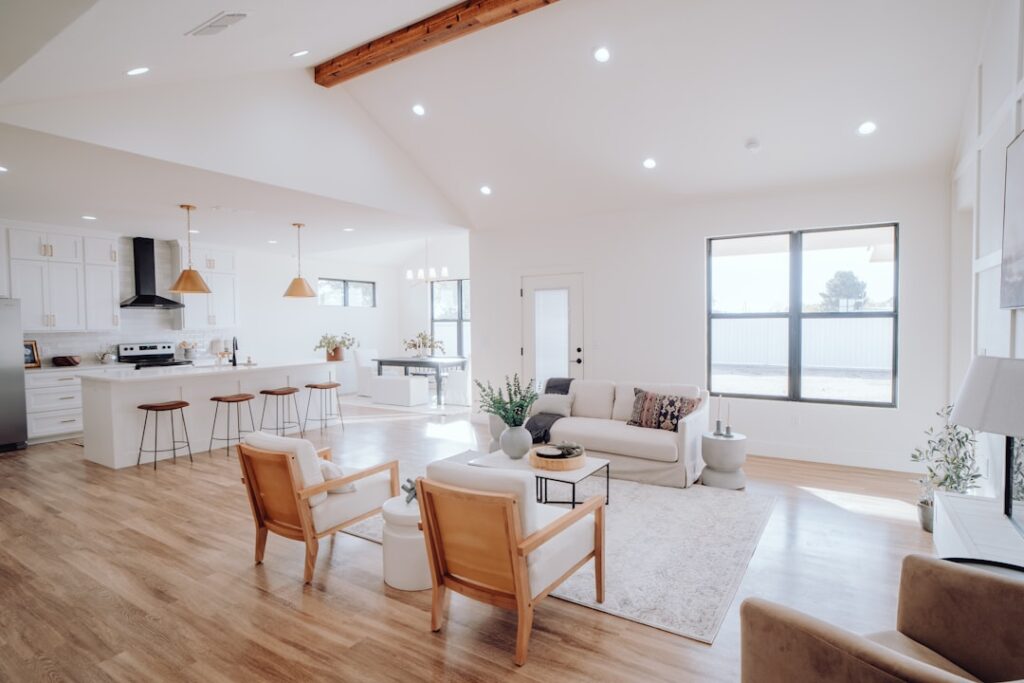
Joliet homes come with two flooring realities most buyers underestimate: humid Midwest summers and a whole lot of basement square footage. Choosing flooring in Joliet IL means planning for seasonal humidity swings, below-grade moisture, and the freeze-thaw cycle that comes with Will County winters. Pick materials suited to those conditions and you’ll avoid the cupping, mold, and cold-floor complaints that plague the wrong choices. This guide walks through what works locally, what it costs, and how to hire smart.
- How the Midwest Climate Shapes Your Options
- Best Materials for Joliet Homes
- Typical Joliet Price Ranges
- Basement Moisture: The Make-or-Break Detail
- How to Vet a Joliet Installer
- Winter Salt and Entry Protection
- Radiant Heat for Cold Floors
- Comparing Bids and Final Tips
- Room-by-Room Recommendations for Joliet Homes
- Timing Your Project Around the Seasons
How the Midwest Climate Shapes Your Options
Joliet sits in a humid continental zone — summers with dew points in the 60s and 70s, winters that dip well below freezing. Indoor relative humidity can swing from 55% in July to under 30% in January. Solid hardwood reacts to that range by expanding and contracting, so engineered wood and resilient flooring tend to perform more reliably here.
The bigger factor is moisture. Many Joliet homes have finished or partially finished basements, and below-grade concrete wicks moisture year-round. That single fact rules out solid hardwood and most laminate downstairs and points you toward waterproof options.
Best Materials for Joliet Homes
Match the material to the level of the house. What works in an upstairs bedroom can fail in a basement:
- Luxury vinyl plank (LVP/SPC): waterproof, basement-friendly, warm underfoot; the go-to for Joliet basements and kitchens
- Engineered hardwood: stable choice for main-floor living areas over the humidity range
- Porcelain tile: durable for entries and mudrooms that see snowmelt and road salt
- Carpet: still popular in bedrooms for warmth during cold winters
- Avoid solid hardwood and standard laminate below grade — moisture will destroy them
Typical Joliet Price Ranges
Pricing in the Joliet and broader Chicagoland market runs close to the national average, with labor a bit higher near the metro. Plan around these installed figures:
- LVP/SPC, installed: $4-$8 per sq ft
- Engineered hardwood, installed: $8-$14 per sq ft
- Porcelain tile, installed: $9-$16 per sq ft
- Carpet, installed: $3-$7 per sq ft
For a 1,000 sq ft basement finish in LVP, budget roughly $4,000-$8,000 installed. Add $1-$3 per sq ft if the slab needs leveling or moisture mitigation — common in older Joliet homes.
Basement Moisture: The Make-or-Break Detail
Below-grade installs live or die on moisture management. Before any flooring goes down, a good installer will test the slab’s moisture and recommend a vapor barrier if readings are high. SPC vinyl with an attached pad handles minor moisture and the temperature swing of an unheated basement better than WPC or laminate.
If your basement has ever shown dampness, address the source — grading, gutters, sump pump — before flooring. No surface product fixes an active water problem; it only hides it until the damage spreads.
How to Vet a Joliet Installer
Illinois doesn’t issue a statewide flooring-contractor license, so verification falls on you. Cover these bases before signing:
- Confirm general liability and workers’ comp insurance with certificates from the insurer
- Check for local business registration and a physical Joliet-area address
- Ask about basement and moisture-mitigation experience specifically
- Request three recent references in Joliet, Plainfield, or Shorewood
- Read Google and BBB reviews for recurring complaints, not isolated ones
Winter Salt and Entry Protection
Will County winters mean road salt, snowmelt, and grit tracked indoors for months. That combination is hard on flooring at entries and in mudrooms — salt is abrasive and corrosive, and standing snowmelt can damage wood and laminate. Porcelain tile or quality LVP at entry points handles this abuse far better than carpet or solid wood.
Protect your investment with walk-off mats inside and out, and clean salt residue promptly so it doesn’t dull or etch the finish. In mudrooms and laundry areas that see the worst of it, tile remains the most bulletproof choice, shrugging off water, salt, and grit that would wear other materials down.
Radiant Heat for Cold Floors
Cold floors are a real complaint in Joliet homes, especially over slabs and in finished basements. In-floor radiant heating is an increasingly popular upgrade that pairs beautifully with tile and works under many LVP products rated for it. Electric mat systems suit single-room retrofits like a bathroom, while hydronic systems make sense in new construction or a full basement finish.
Radiant heat won’t replace your furnace, but it transforms how a tile or LVP floor feels underfoot in January. If you’re already tearing out flooring, adding radiant heat to a frequently used cold room is far cheaper to do during the install than as a separate project later.
Comparing Bids and Final Tips
Always get three written, itemized bids. Each should break out tear-out and disposal, subfloor prep, moisture barrier, the flooring material, underlayment, transitions, and a separate labor warranty. Vague lump-sum quotes hide skipped prep — exactly the prep that matters most in a damp Midwest basement.
The middle bid is usually safest; a quote far below the others typically means thinner underlayment or no moisture mitigation.
Room-by-Room Recommendations for Joliet Homes
The smartest Joliet flooring plan goes room by room rather than choosing one material for the whole house. Different rooms face different challenges, and matching the floor to the room saves money and headaches:
- Basement: waterproof SPC vinyl over a vapor barrier; handles moisture and temperature swings
- Kitchen and baths: LVP or porcelain tile for spill and splash resistance
- Living and dining rooms: engineered hardwood for warmth and resale appeal
- Bedrooms: carpet for cozy warmth, or engineered wood for a cleaner look
- Mudroom and entry: porcelain tile to handle snow, salt, and grit
This mix puts durable, waterproof materials where moisture and traffic are highest and reserves wood and carpet for the drier, lower-traffic living spaces. It’s the approach experienced Chicagoland installers recommend most often.
Timing Your Project Around the Seasons
When you install can matter in the Midwest. Wood and laminate acclimate best when your home’s indoor humidity is near its annual average, so installing during the extreme dry of deep winter or the peak humidity of mid-summer can lead to more seasonal movement later. Spring and fall, when indoor conditions are more moderate, are often ideal windows for hardwood installs.
There’s a practical scheduling angle too. Many Joliet-area installers are busiest in late spring and summer, so booking in the shoulder seasons can mean better availability and sometimes better pricing. Done right, flooring in Joliet IL stands up to humid summers, frozen winters, and below-grade moisture for decades — choose waterproof LVP downstairs, engineered wood upstairs, and an insured local crew that tests your slab before laying a single plank.
Prefer to explore on your own?
See how new flooring looks in your actual room in seconds — free, no signup.
Try the free Floor Studio →

