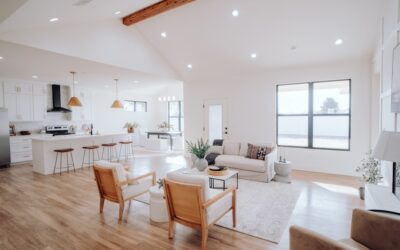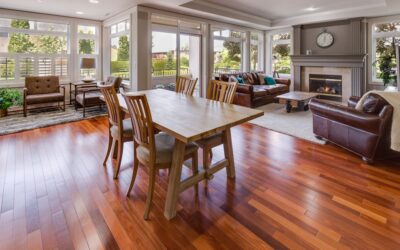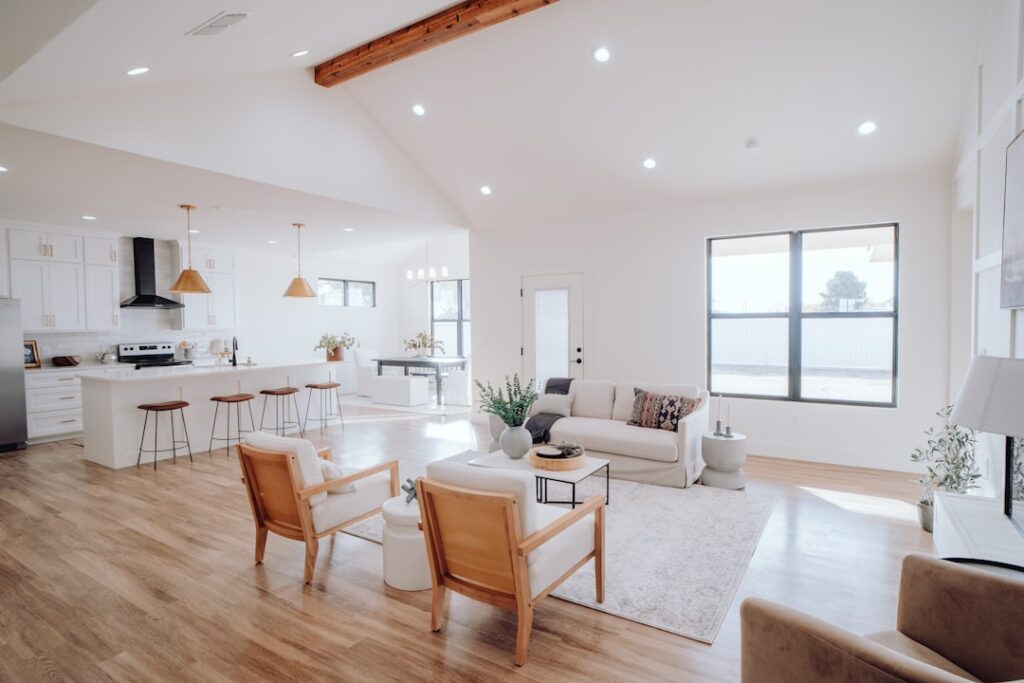
Kent, Washington, sits in the heart of the Puget Sound, where damp marine air and 36-42 inches of annual rainfall create a unique flooring environment most national buying guides miss entirely. Picking flooring Kent WA homeowners can actually live with means accounting for high subfloor humidity, the prevalence of slab-on-grade construction in newer subdivisions, and the resale expectations of a tight Seattle-metro housing market. After installing floors in homes from Lake Meridian to East Hill to West Hill, here is what works long-term in this climate and what to avoid.
- Climate Realities That Affect Material Choice
- Best Flooring Materials for Kent Homes
- Materials to Avoid in Kent
- Pricing Benchmarks for Kent Installs
- Vetting Local Kent Flooring Contractors
- Resale Considerations for Kent Homes
- Crawl Space Prep Before Hardwood Install
- Best Times to Buy and Install
- Bottom Line
Climate Realities That Affect Material Choice
The Kent climate creates three specific challenges for flooring.
Indoor humidity stays elevated year-round. Even in heated homes, winter relative humidity inside often sits at 50-65 percent compared with 25-35 percent in inland markets. This causes solid hardwood to expand seasonally more than the install allowance accommodates, leading to cupping in winter and gapping in summer.
Slab-on-grade homes in newer Kent subdivisions (built post-2000) frequently test at 4-7 pounds per 1,000 square feet of moisture vapor emission, well above the 3-pound threshold most adhesives tolerate. Calcium chloride testing or relative humidity probe testing before any glue-down install is non-negotiable.
Crawl space homes built between 1950-1990 in older Kent neighborhoods often have inadequate vapor barriers and inadequate ventilation, leading to elevated subfloor moisture content (16-22 percent measured with a Wagner moisture meter, versus the recommended 6-9 percent for hardwood install).
Best Flooring Materials for Kent Homes
Working with the climate rather than against it narrows the smart choices.
- SPC and rigid-core LVP: Completely waterproof and dimensionally stable. COREtec Plus 5-inch ($5-$7 per sq ft material), Karndean Korlok Select ($6-$8), and Mannington Adura Max ($4-$6) handle the humidity without seasonal movement.
- Engineered hardwood with 5-ply plywood core: More stable than solid hardwood in fluctuating humidity. Bruce, Mohawk, and Mannington offer engineered oak and hickory in the $7-$12 per sq ft material range.
- Porcelain tile: Inert to humidity changes. Daltile RevoTile and MSI offer wood-look planks at $3-$7 per sq ft material plus $7-$12 install.
- Carpet with synthetic backing: Polyester and triexta fibers (Mohawk SmartStrand, Shaw Bellera) resist mildew in damp environments better than natural-fiber alternatives.
Materials to Avoid in Kent
Three categories disappoint Kent homeowners with regularity.
Solid 3/4-inch hardwood over concrete: even with a 6 mil vapor barrier and 3/4-inch plywood subfloor, vapor migration from slab causes cupping within 2-3 years. Reserve solid hardwood for over-crawl-space or upper-floor installs in homes with controlled humidity.
Standard non-waterproof laminate: humidity exposure swells the MDF core at edges and seams. Pergo Outlast Plus and similar “waterproof” laminates work better but cost as much as quality LVP without the same durability.
Wool-blend natural fiber carpet: holds moisture and can develop mildew in homes without active dehumidification. Pure synthetic carpets perform much better.
Pricing Benchmarks for Kent Installs
Kent-area pricing tracks Seattle-metro rates, which run 10-20 percent above national averages.
- LVP installed: $5-$10 per sq ft installed for mid-tier; premium SPC hits $9-$14.
- Engineered hardwood installed: $10-$16 per sq ft for 3 mm wear layer; $14-$20 for 6 mm wear layer.
- Porcelain tile installed: $11-$18 per sq ft for standard formats; $15-$22 for large-format 12×24 or 24×48.
- Carpet installed: $4-$8 per sq ft for mid-grade with 6 lb pad.
- Refinish existing hardwood: $3.50-$5.50 per sq ft for sand and three coats of finish.
Subfloor prep for slab homes adds $1-$3 per sq ft for moisture mitigation (Bostik MVP4 or Mapei Eco Prim Grip), self-leveling underlayment, or both. Skip this and the install fails.
Vetting Local Kent Flooring Contractors
The greater Kent market hosts dozens of flooring contractors, from large operations like Great Floors and Carpet One affiliates to small independents and big-box chain installers. Use these criteria to vet any local provider.
Washington state contractor license (verify on lni.wa.gov). Active license, no open complaints, current bond and insurance.
NWFA membership and certifications for hardwood and engineered installs. Members commit to industry best practices.
Manufacturer training certificates from Shaw, Mohawk, COREtec, or Karndean. These carry weight on warranty claims.
References from jobs completed 2-4 years ago in the Puget Sound region. Visit one or two if possible. Look for cupping, gaps, edge lift, and trim quality.
Moisture testing protocol stated in writing. Reputable Kent contractors include calcium chloride or RH probe testing in every slab quote.
Resale Considerations for Kent Homes
The Kent housing market favors specific finish choices that move homes faster.
Buyers in the $500K-$800K range expect engineered hardwood or premium LVP throughout main living areas. Carpet in bedrooms is fine; carpet in living rooms or hallways drags listings.
Tile in kitchens and bathrooms still leads as a premium signal, but trends are shifting toward continuous LVP throughout main floors for visual cohesion.
Light to medium oak tones (greige, French white, light gray oak) outsell dark espresso and red oak by a wide margin in current listings. Stained finishes that match popular IKEA cabinet colors photograph well online.
Wide planks (7-9 inches) outsell narrow strip flooring (2-3 inches) in this market.
Crawl Space Prep Before Hardwood Install
Three steps protect a hardwood floor installed over an older Kent crawl space.
Install a 6 mil polyethylene vapor barrier over the entire crawl space floor, lapped 12 inches at seams and sealed with vapor barrier tape. This single $200-$400 fix dramatically reduces upward moisture migration.
Verify crawl space ventilation meets code (1 sq ft of vent per 150 sq ft of floor area, balanced on opposing walls). If undersized, add powered ventilation or convert to a conditioned crawl space.
Run a dehumidifier in the crawl space for 30-60 days before any hardwood install. Target 40-50 percent RH. Acclimate the hardwood material on the main floor for 7-14 days at the same RH the home will maintain.
Best Times to Buy and Install
Flooring contractors in Kent run slower from mid-January through late February and again in mid-August. Schedule installs in those windows for best pricing and shortest lead times.
Material pricing from major distributors typically updates in March and September. Locking in a quote before a price update can save 3-7 percent.
Avoid scheduling installs during major rain events (atmospheric river weeks in November-January). Materials staged at the home absorb moisture from open garages and entry mudrooms during heavy rain, complicating acclimation.
Bottom Line
Flooring Kent WA homeowners should default toward dimensionally stable products that ignore humidity swings: rigid-core LVP, engineered hardwood with deep wear layers, and porcelain tile. Hire NWFA-certified local installers who include moisture testing in every quote, and time the project for off-peak months to save money. The right combination of material and contractor delivers 20-25 year floors even in the wettest Puget Sound winters.
Prefer to explore on your own?
See how new flooring looks in your actual room in seconds — free, no signup.
Try the free Floor Studio →