Shopping for floors in Southern California comes with a unique set of considerations that no one in a colder, drier climate has to think about. Walking into a flooring store Los Angeles offers means navigating coastal humidity, seismic building codes, intense year-round sun, and some of the highest labor rates in the country. The right floor here balances looks, durability, and resilience against earthquakes and salt air. This guide explains what to prioritize, what installation actually costs in LA, and how to choose a retailer and installer worth your money.
- What Makes LA Flooring Different
- Best Flooring for Southern California Homes
- Seismic and Sun Considerations
- What Flooring Costs in Los Angeles
- How to Choose a Flooring Store
- Vetting the Installer
- Room-by-Room Strategy for LA Living
- Timeline and Permits
- Indoor-Outdoor Living and Sustainability
- Caring for Floors in the LA Climate
What Makes LA Flooring Different
Los Angeles spans many micro-climates, from humid coastal Santa Monica and Long Beach to dry inland valleys like the San Fernando Valley. Coastal homes deal with salt air and higher humidity, while inland areas see dry heat and big temperature swings. Seismic activity adds another layer: rigid materials like tile and stone can crack during ground movement, and homes flex more than in non-seismic regions. Year-round sun streaming through the large windows common in LA architecture also fades some floors over time. A good LA flooring choice accounts for all of these.
Best Flooring for Southern California Homes
Certain materials suit LA’s climate and building realities particularly well.
- Luxury vinyl plank (LVP): waterproof, flexible, and forgiving of minor structural movement. Great for coastal humidity and a strong value in a pricey labor market.
- Engineered hardwood: handles coastal humidity better than solid wood and delivers the warm, natural look LA buyers love.
- Porcelain tile with crack-isolation membrane: the membrane lets tile move independently of the subfloor, reducing seismic and settling cracks.
- Polished concrete: popular in modern LA homes, durable and low-maintenance.
Seismic and Sun Considerations
In earthquake country, flexibility is an asset. Floating floors like LVP and engineered wood ride out minor structural movement better than glued-down rigid materials. If you love tile or stone, insist on a crack-isolation or uncoupling membrane underneath, which lets the floor move independently and dramatically reduces cracking. For LA’s abundant sunlight, choose UV-resistant products, since direct sun through floor-to-ceiling glass can fade certain hardwoods and lower-grade vinyls over the years. Window film and treatments further protect the floor.
What Flooring Costs in Los Angeles
LA has some of the highest labor rates in the nation, which pushes installed prices well above the national average. Budget these installed ranges.
- Luxury vinyl plank: $5 to $10 per sq ft installed
- Engineered hardwood: $9 to $18 per sq ft installed
- Porcelain tile with membrane: $11 to $22 per sq ft installed
- Solid hardwood: $12 to $24 per sq ft installed
Material costs are similar to the rest of the country, but LA labor can run 30% to 50% higher. For a 1,500 sq ft project, plan on $8,000 to $33,000 depending on material. Getting several quotes matters more here than almost anywhere else.
How to Choose a Flooring Store
LA has a huge range of flooring retailers, from big-box stores to specialty showrooms to direct-import warehouses. Evaluate them on more than price.
- Look for a showroom with large samples you can see in natural light
- Confirm whether installation is in-house or subcontracted, and who warranties the labor
- Ask about lead times, since specialty and imported products can take weeks
- Check independent reviews and the BBB for complaint patterns
- Verify the store stands behind both product and installation warranties
A reputable store will let you take samples home to view under your own lighting and against your walls, which matters enormously given how LA’s bright light changes how a floor reads.
Vetting the Installer
In California, flooring contractors should hold a state license through the Contractors State License Board (CSLB), and you can verify a license number online before hiring. Beyond licensing, confirm liability insurance and workers’ compensation, get three written itemized bids, request recent local references, and for tile, confirm they use crack-isolation membrane. Be cautious of cash-only operators or bids dramatically below the rest, which often signal unlicensed work or skipped prep. The cheapest bid in LA frequently becomes the most expensive after a failed floor.
Room-by-Room Strategy for LA Living
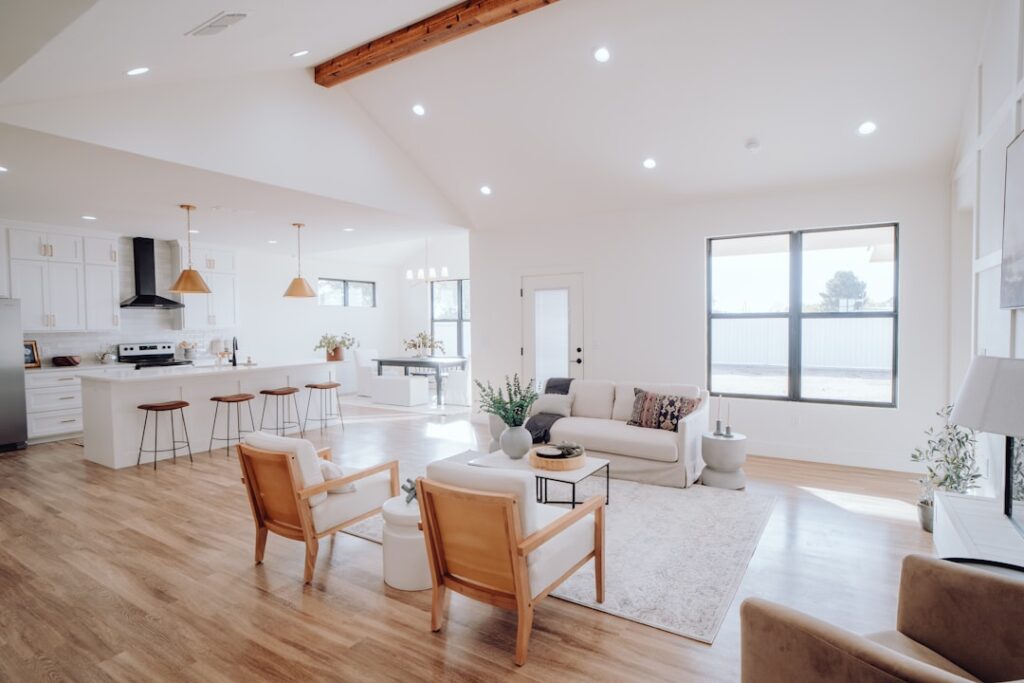
Match materials to how indoor-outdoor LA homes actually live. In open-plan living and dining areas with big windows, UV-stable engineered wood or premium LVP looks warm and handles the light. In kitchens and baths, waterproof LVP or membrane-backed porcelain handles spills and coastal humidity. For indoor-outdoor transitions and patios, choose porcelain or stone rated for the application so the look flows seamlessly from inside to the yard, a hallmark of Southern California design.
Timeline and Permits
A typical whole-home installation runs 3 to 8 days depending on size and prep, with tile taking longer for cure times. Most flooring replacement does not require a permit, but structural subfloor work or anything involving the foundation may, so confirm with your contractor. Plan for 48 hours of material acclimation in the home, especially for wood, so it adjusts to the local humidity before installation.
Indoor-Outdoor Living and Sustainability
Southern California’s signature indoor-outdoor lifestyle shapes flooring choices in ways other regions never consider. Many LA homeowners want a floor that reads continuously from the living room out to the patio, which favors large-format porcelain tile rated for both interior and exterior use. The state’s strong sustainability culture also drives demand for greener materials, so many LA stores stock bamboo, cork, FSC-certified hardwood, and low-VOC products. California’s strict CARB Phase 2 formaldehyde-emission standards already limit off-gassing in composite wood products sold here, but it is still worth asking for FloorScore or GREENGUARD Gold certification if indoor air quality is a priority for your household.
Caring for Floors in the LA Climate
Once installed, LA floors need climate-aware upkeep. The biggest enemy is sun: use window film, shades, or rugs to limit UV fading on wood and vinyl near the large windows common in local homes, and rotate area rugs occasionally so the floor ages evenly. In coastal areas, sweep up the fine, salty grit that drifts in, since it is abrasive and corrosive over time. Keep walk-off mats at indoor-outdoor transitions to trap sand from the patio and yard. For tile in indoor-outdoor zones, keep the grout sealed against moisture. With minimal but consistent care, a well-chosen LA floor stays beautiful for decades despite the sun and salt air.
The smart way to use a flooring store Los Angeles offers is to shop with the climate and seismic realities in mind: favor flexible, UV-stable, humidity-tolerant materials, demand crack-isolation under tile, verify the CSLB license of any installer, and view samples in LA’s bright natural light. Do that and you will land a floor that looks stunning and performs through everything Southern California throws at it.
Prefer to explore on your own?
See how new flooring looks in your actual room in seconds — free, no signup.
Try the free Floor Studio →