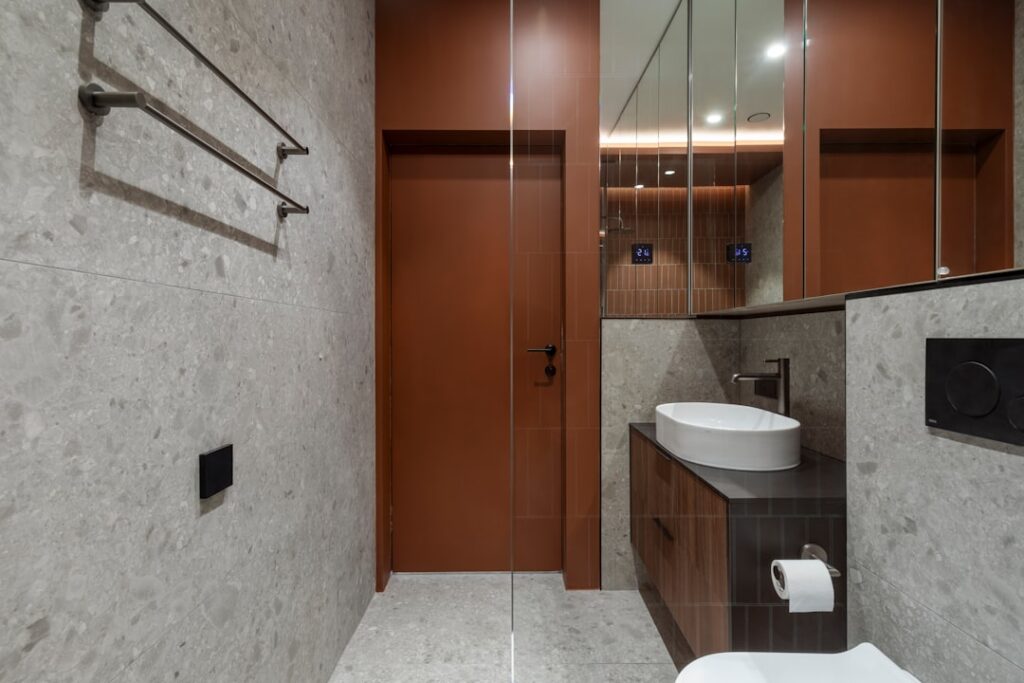
Walk through a mid-century home or a sleek modern build and you will notice the doors have no panels, no raised molding, just smooth flat faces. That is a flush interior door, and its minimalist simplicity has made it a staple of contemporary design and a workhorse in budget builds alike. The flat surface reads as clean and understated, but not all flush doors are created equal. The difference between a satisfying, solid-feeling door and a hollow rattling one comes down to what is hidden inside the slab. Here is what to know before you buy.
What Makes a Door Flush
A flush door has a completely smooth, flat surface on both sides, with no raised or recessed panels, moldings, or detailing. It is the opposite of a paneled door, which uses stiles, rails, and floating panels to create dimension. The face is a thin veneer or laminate skin stretched over an internal frame and core, giving the door its flat, uninterrupted plane.
That simplicity is the appeal. Flush doors suit modern, minimalist, Scandinavian, and mid-century styles where clean lines matter. They also cost less to manufacture than intricate paneled doors, which is why builders reach for them in volume. And the smooth face is easy to clean, with no panel grooves to collect dust.
The Core Is Everything
The single most important spec on a flush door is what fills the space between the two face skins. This core determines the door’s weight, sound blocking, durability, and how it feels to open and close.
- Hollow core: A honeycomb cardboard lattice inside a wood frame. Light, cheap, and the default in tract housing. Easy to hang but offers little sound insulation and dents easily.
- Solid core: Filled with an engineered wood composite or particleboard. Heavy, quiet, and substantial, feeling much like solid wood at a lower cost.
- Solid wood: Built entirely from lumber. The heaviest and most premium, with the best sound blocking, but prone to swelling with humidity.
The practical difference is dramatic. Knock on a hollow-core door and you hear a drum-like echo; knock on a solid-core and you get a dull thud. For bedrooms, bathrooms, and home offices where sound privacy matters, solid core is worth the upgrade. Hollow core is fine for closets and low-traffic spots where cost rules.
Face Materials and Finishes
The visible skin comes in a range of materials that dictate the final look and how you finish it.
- Primed hardboard or MDF: A smooth paint-ready surface, the most common and economical. Ready for two coats of paint.
- Wood veneer: A thin layer of real wood like birch, oak, or walnut, meant to be stained and sealed to show natural grain.
- Laminate: A durable printed surface that resists scuffs, common in commercial settings and high-traffic homes.
If you want a painted door, buy pre-primed MDF-faced slabs and finish them in a satin or semi-gloss enamel. For a natural wood look, choose a veneer door and confirm the grain runs consistently, since cheaper veneers can look flat or mismatched. A quality veneer, well stained, rivals the look of far pricier solid wood.
Sizing and Standard Dimensions
Interior doors come in standard sizes, which simplifies replacement. The typical height is 80 inches, the standard 6-foot-8 opening. Widths run in 2-inch increments:
- 24 inches: Closets and small spaces
- 28 and 30 inches: Bathrooms and secondary bedrooms
- 32 inches: Common bedroom width, and the minimum for wheelchair accessibility
- 36 inches: Wider passages and primary rooms
Standard interior door thickness is 1-3/8 inches, which matters because your hinges, latch, and handle set are all built for that dimension. Measure your existing door and the rough opening before buying. A slab-only purchase requires cutting hinge mortises and boring the latch yourself, while a pre-hung door comes already mounted in a frame with hinges installed, which is far easier for a first-timer.
Slab Versus Pre-Hung
This choice shapes the whole project. A slab is just the door itself, cheaper but requiring you to transfer or cut hinge locations and the handle bore, then hang it in the existing frame. It only works if your existing jamb is square and in good shape. A pre-hung door includes the slab already hinged into a new frame, so you set the whole unit into the rough opening, shim it plumb, and trim it out. Pre-hung costs more but guarantees a properly aligned door and is the better choice when the old frame is damaged or out of square.
Installation Basics
Hanging a slab in an existing frame follows a clear sequence.
- Transfer hinge locations from the old door to the new slab, or use the existing mortises as a template.
- Mortise the hinges with a chisel so they sit flush, then screw them to the slab.
- Bore the latch hole and edge hole for the handle set using a hole saw and spade bit if not pre-bored.
- Hang the door on the frame hinges and check the gap, an even 1/8 inch around the sides and top.
- Plane or shim as needed so the door swings freely and the latch catches cleanly.
A pre-hung install skips the mortising: you set the unit in the opening, shim behind each hinge until plumb and level, fasten through the jamb, and add casing. Either way, patience with the shimming is what produces a door that latches with a satisfying click instead of sticking or swinging on its own.
Where Flush Doors Shine and Fall Short
Flush doors excel where you want a clean, modern aesthetic, a budget-friendly option, or an easy-to-paint surface. They pair naturally with minimalist trim and contemporary hardware. Where they fall short is character; in a traditional or craftsman home, a flat door can look plain against detailed millwork, and a paneled or shaker door suits better. Hollow-core versions also disappoint anyone expecting real sound privacy, so match the core to the room’s needs.
Painting a Flush Door for a Flawless Finish
Because the surface is smooth and uninterrupted, a flush door shows every brush mark and roller texture, so finish technique matters more than on a busy paneled door. The pro approach is to remove the door, lay it flat across two sawhorses, and work in good light. Flat orientation lets the paint level out without drips and gives you a mirror-smooth result that a vertical door cannot match.
Prime any bare or repaired spots first, then apply paint with a high-density foam roller for the field and a quality brush only for the edges. A foam roller leaves the finest stipple, which levels nearly flat as it dries; a satin or semi-gloss enamel flows out best. Two thin coats beat one thick coat every time, sanding lightly between coats with fine paper knocks down any raised grain or dust nibs. This method turns an ordinary hollow-core door into one that looks factory-finished.
Soundproofing a Flush Door
If sound privacy is your goal, the door choice is only part of the equation. A solid-core flush door blocks far more noise than a hollow one, but sound also leaks around the gaps at the sides and under the door. To meaningfully quiet a room, pair a solid-core door with weatherstripping around the jamb and a door sweep or automatic bottom seal along the floor.
These seals close the air gaps that let sound sneak through, and together with the mass of a solid door they make a real difference for a home office, nursery, or media room. The upgrade is inexpensive, costing $20 to $40 in seals, and installs in under an hour. Homeowners often overlook it, replacing a hollow door with a solid one and wondering why they still hear the hallway; the gaps, not just the door core, were letting the sound through.
Final Recommendation
For most rooms where sound and solidity matter, buy a solid-core flush interior door in the standard 80-inch height and the width that matches your opening, choosing pre-primed MDF for paint or quality veneer for stain. Reserve hollow-core for closets and low-use spaces. Go pre-hung if your existing frame is rough, and take your time shimming for an even gap. That approach delivers the clean modern look flush doors are known for, with the substantial feel that makes a door pleasant to use every single day.