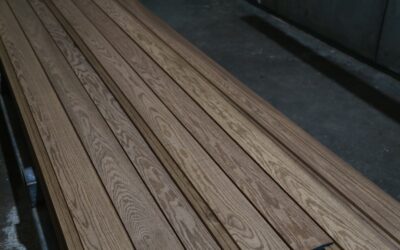
Walk into a designer showroom or scroll a European interiors feed and you keep seeing the same floor: wide, pale, softly textured oak boards that make a room feel calm and expensive. French oak vinyl plank flooring recreates that exact aesthetic in a waterproof, budget-friendly LVP, giving you the coveted chateau look without the price or fragility of real European white oak. The style is defined less by a single color than by a specific combination of plank width, muted tones, and pronounced natural grain.
- What “French Oak” Actually Means
- The Signature Aesthetic
- Why Choose Vinyl Over Real French Oak
- Choosing the Right Tone for Your Room
- What to Look for on the Spec Sheet
- Installation and Styling Tips
- Where the Look Works Best
- Maintenance and Longevity
- Buying Tips to Get the Authentic Look
- Is It Right for You
What “French Oak” Actually Means
True French oak refers to white oak grown in France, prized for its tight grain, warm undertones, and the way it takes a wire-brushed or fumed finish. In flooring, the look became iconic through wide, long planks laid in extended rows, often in a light greige, honey, or weathered-blond tone. Vinyl manufacturers reproduce this by printing high-resolution scans of real French oak boards onto the wear layer and embossing the surface to match the grain, a technique called embossed-in-register that aligns the texture you feel with the grain you see.
The Signature Aesthetic
Three elements make the French oak look read as authentic rather than generic wood-look vinyl.
- Wide planks: Genuine French oak floors favor 7- to 9-inch widths. Look for LVP in this range rather than narrow 5-inch boards.
- Muted, layered tones: Soft greige, weathered blond, pale honey, and smoked taupe rather than orange or yellow oak.
- Visible grain and texture: Wire-brushed, matte, low-sheen surfaces with open grain, knots, and subtle color variation plank to plank.
The overall effect is understated and light-reflecting, which makes small rooms feel larger and pairs effortlessly with both modern and traditional interiors.
Why Choose Vinyl Over Real French Oak
Authentic wide-plank French oak flooring runs $12 to $25 per square foot and demands careful humidity control, since wide solid boards move with the seasons. French oak vinyl delivers the visual with none of that stress.
- Waterproof: A rigid SPC or WPC core handles kitchens, baths, and basements where real oak cannot go.
- Affordable: Typically $3 to $6 per square foot, a fraction of solid oak.
- Dimensionally stable: Wide vinyl planks do not cup or gap with humidity swings the way wide solid boards do.
- Scratch resistant: A tough wear layer shrugs off pets and traffic that would dent soft oak.
Choosing the Right Tone for Your Room
The French oak palette spans cool to warm, and the right pick depends on your light and cabinetry. Cool greige and smoked tones lean contemporary and flatter white or gray cabinets, gray walls, and north-facing rooms with bluish light. Warmer honey and weathered-blond tones add coziness and work beautifully in south-facing spaces and alongside cream, sage, or natural wood accents. If you want the floor to feel timeless rather than trendy, a mid-tone weathered blond with gentle plank variation ages best.
What to Look for on the Spec Sheet
Not all wood-look vinyl earns the French oak name. Judge quality by the details that determine both looks and longevity.
- Wear layer: 12 mil for light residential, 20 mil or more for busy households with pets and kids.
- Plank size: 7 inches wide or more, 48 to 60 inches long, for the authentic wide-and-long proportion.
- Surface texture: Embossed-in-register wire-brushed texture rather than a flat printed sheen.
- Core: SPC (stone-plastic composite) for the firmest, most stable underfoot feel.
- Pattern repeat: More unique plank faces (look for 12 or more) means fewer obvious repeats across the floor.
Installation and Styling Tips
To sell the European look, run the planks along the longest sightline in the room and stagger the end joints randomly rather than in a regular step pattern, which mimics how real wide-plank floors are laid. A quality attached or separate underlayment softens the underfoot feel of the rigid core. Keep the palette calm around the floor: white or greige walls, matte black or aged-brass hardware, and minimal high-contrast rugs let the grain do the talking.
Where the Look Works Best
The French oak aesthetic is remarkably adaptable, which is part of why it has spread so far beyond period European homes. Its light, calm palette makes it a natural fit for open-plan living areas, where a continuous run of wide pale planks visually enlarges the space and ties a kitchen, dining, and living zone together. Because it is waterproof vinyl rather than solid wood, it goes places real French oak never could: kitchens with their spills, bathrooms with their humidity, and basements with their slab moisture.
Style-wise, it bridges eras effortlessly. In a modern farmhouse it reads warm and welcoming; in a contemporary space it feels serene and Scandinavian; in a transitional home it grounds the room without demanding attention. The one setting where it can underwhelm is a very dark, low-light room, where the pale tones can look flat and gray. In those spaces, choose a slightly warmer honey variant to keep the floor from feeling cold.
Maintenance and Longevity
One of the quiet joys of choosing vinyl over the real thing is how little the floor asks of you. Where genuine wide-plank oak needs humidity control, periodic refinishing, and careful protection from water, French oak vinyl just needs routine care.
- Daily: Sweep or dry-mop to keep grit from dulling the wear layer over time.
- Weekly: Damp-mop with a pH-neutral vinyl cleaner; skip wax and oil-based products that leave residue.
- Protection: Use felt pads under furniture and a mat at entries to catch abrasive grit.
- Sunlight: In very bright rooms, a UV-stable wear layer resists fading, though sheer curtains help protect any floor.
With basic care, a quality French oak LVP with a 20-mil wear layer readily lasts 15 to 25 years, holding its color and texture the whole time.
Buying Tips to Get the Authentic Look
To make sure your floor reads as genuine French oak rather than generic wood-look vinyl, order large samples and lay several planks together in your own light before committing, since a single plank never shows the true color range. Buy from the same production lot to keep tones consistent across the room, and add roughly 10 percent extra for cuts and future repairs. Prioritize width and texture over price: a 7-inch wire-brushed plank with a dozen unique faces will always look more convincing than a narrow, flat, repeating one. Those details are what separate a floor that whispers European elegance from one that merely hints at wood.
Is It Right for You
If you love the airy, high-end European aesthetic but want a floor that survives real life, french oak vinyl plank flooring is one of the smartest choices on the market. It captures the wide-plank proportion, the muted tones, and the tactile wire-brushed grain that define the style, while staying waterproof, stable, and affordable. Buy for width, texture, and wear layer, choose a tone that matches your light, and you get the chateau floor without the chateau budget.
Prefer to explore on your own?
See how new flooring looks in your actual room in seconds — free, no signup.
Try the free Floor Studio →