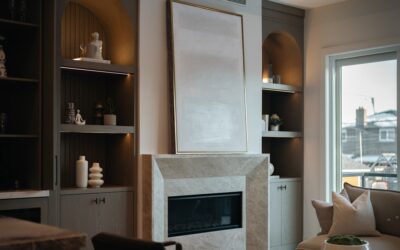
Designers love a gallery wall above bed because it transforms a blank focal area into the visual anchor of the entire room. Done well, the arrangement layers texture, color, and personal meaning above the headboard. Done badly, the same idea reads as cluttered, off-center, or, worst case, ends up crashing onto a sleeping head when a 3M strip fails at 2 a.m. The fix is a clear plan: width, height, spacing, and a hanging method that respects the weight involved.
Here is the full design and execution playbook, from layout templates to fastener specs, drawn from years of installing them in everything from studio apartments to primary suites.
Sizing the Arrangement to the Bed
The gallery should span roughly two-thirds of the headboard width. For a king bed (76 inches wide), aim for an arrangement 50 to 65 inches wide. For a queen (60 inches), aim for 40 to 50 inches. For a full or twin, 30 to 40 inches works. Extending wider than the bed makes the room feel chaotic; falling much shorter makes the wall feel empty.
Height-wise, the bottom edge of the lowest frame should sit 8 to 12 inches above the top of the headboard. Lower than 8 inches feels cramped and any tall headrest or sitting up will hit the frames. Higher than 12 inches creates a floating gap that disconnects the art from the bed.
Common Layout Patterns
Five layouts cover most successful gallery walls above beds. Pick the one that matches your art collection and your tolerance for asymmetry.
- Grid layout: Equal-sized frames arranged in a 2×3 or 3×3 grid with uniform 2 to 3 inch spacing, clean and architectural
- Salon style: Mixed sizes packed densely with varied spacing, traditional and collected look
- Linear row: Three to five frames in a single horizontal line, modern and calm
- Asymmetric cluster: Anchor with one large piece, surround with smaller works, organic feel
- Diptych or triptych: Two or three large pieces with the visual weight of one statement, most elegant for minimal bedrooms
The grid is the most forgiving layout for beginners because measurement errors are easier to spot and correct. Salon style is the most flexible but requires careful eye to keep visual weight balanced.
Frame Selection and Mix
The 80/20 rule of frames keeps a gallery wall cohesive: 80% of frames should share one common element (color, material, or finish) and 20% can break the pattern for visual interest. A wall of all black frames with one gold frame works. A wall of all wood frames with one matte black frame works. A wall of completely random frames does not.
For above-bed installs specifically, avoid heavy ornate frames over 5 pounds each. Their fall risk is real, and lighter alternatives have improved dramatically. The Ikea Ribba line, Pottery Barn Studio frames, and Framebridge custom options all stay under 4 pounds for typical 16 x 20 inch and smaller sizes.
Planning the Layout Before You Hang
Never drill the first hole until you have planned the layout on the floor. Lay a bedsheet on the floor the same width as your planned arrangement, place all the frames on it, and adjust spacing until it looks right. Photograph from directly above for reference.
Then transfer to the wall using kraft paper templates. Trace each frame on craft paper, cut out the templates, and tape them to the wall with painter’s tape. Mark hanger positions through the paper, then remove the paper and drill exactly where marked. This method prevents the 12-screw-hole disaster that ruins many DIY gallery walls.
Hanging Safety: Why Above-Bed Is Different
A gallery wall above a bed sits directly over a sleeping person. The fasteners must be rated well above the frame weight, and they must engage real wall material, not just drywall paper.
- For frames under 5 pounds: Drywall anchors rated for 25 pounds plus, like the EZ Ancor Twist-N-Lock 50, used with the included screws
- For frames 5 to 15 pounds: Toggle bolts rated for 50 pounds plus, or hit a stud directly with a 1-1/4 inch coarse drywall screw
- For frames over 15 pounds: Always hit a stud with a 2-1/2 inch wood screw and washer, or install a French cleat system
Avoid Command strips for anything above a bed. The adhesive is rated for the static load but fails over time as glue dries out, especially in temperature-cycled rooms. Mechanical fasteners are the only safe choice for the over-bed location.
Spacing and Visual Balance
Frame spacing reads consistent at 2 to 4 inches between frames for most arrangements. Tighter spacing (1 to 2 inches) suits dense salon-style walls. Wider spacing (4 to 6 inches) suits airy linear arrangements with a few statement pieces.
Within the arrangement, balance visual weight rather than physical size. A dark image carries more weight than a light image of the same dimensions. A heavy frame draws the eye more than a thin frame. Place the heaviest visual element slightly off-center, around 60% to one side of the overall arrangement, for the most dynamic composition.
What to Put in the Frames
Personal photos in matching mats and frames are the most popular bedroom choice and the most likely to fail visually because phone photos enlarged to 16×20 look pixelated. Use only photos shot at 12 megapixels or higher, professionally printed on Fuji Crystal Archive or Hahnemühle Photo Rag paper, not Walmart Photo Center prints.
Mix media for visual interest. A successful bedroom gallery often combines two or three of these: archival photographs, abstract paintings or prints, pressed botanicals, framed textiles, vintage maps, or letterpress posters. Avoid mixing in too many family photos with personal references; visitors find them less interesting than the homeowner does.
Color and Mood Coordination
For a calming bedroom, limit the gallery to a tight color palette of two to three tones. Black-and-white photography is the easiest path to a cohesive look. Soft botanicals in muted greens and creams work for traditional rooms. Abstract works in jewel tones add drama to modern spaces.
Match the dominant frame color to a piece of furniture in the room, like the headboard, nightstand, or lamp base. This tie pulls the gallery into the broader room design rather than letting it float visually.
Maintenance and Adjustment
Check frame positions every 6 months. Wall vibration from doors slamming, beds being made aggressively, or HVAC blowers gradually shifts frames out of level. A 12-inch torpedo level and 30 seconds of fingertip nudging is all the maintenance required.
Dust frames quarterly with a soft microfiber cloth. Avoid liquid cleaners directly on the glass, instead spray cleaner onto the cloth first. For frames with rabbet shadows or carved profiles, a small artist’s brush handles trapped dust without scratching.
Quick Project Timeline
- Week 1: Decide on layout style, source frames, choose art
- Day of install: Lay out on floor, create paper templates, mark wall, hang
- Total install time: 2 to 4 hours for a 6 to 9 frame arrangement
- Total budget: $200 to $600 for a mid-range setup, $600 to $2,000 for custom framed art
A well-planned gallery wall above bed elevates a bedroom in a way few other moves can match. Spend the time on layout planning, invest in safe fasteners, and the result will outlast the next three trend cycles.