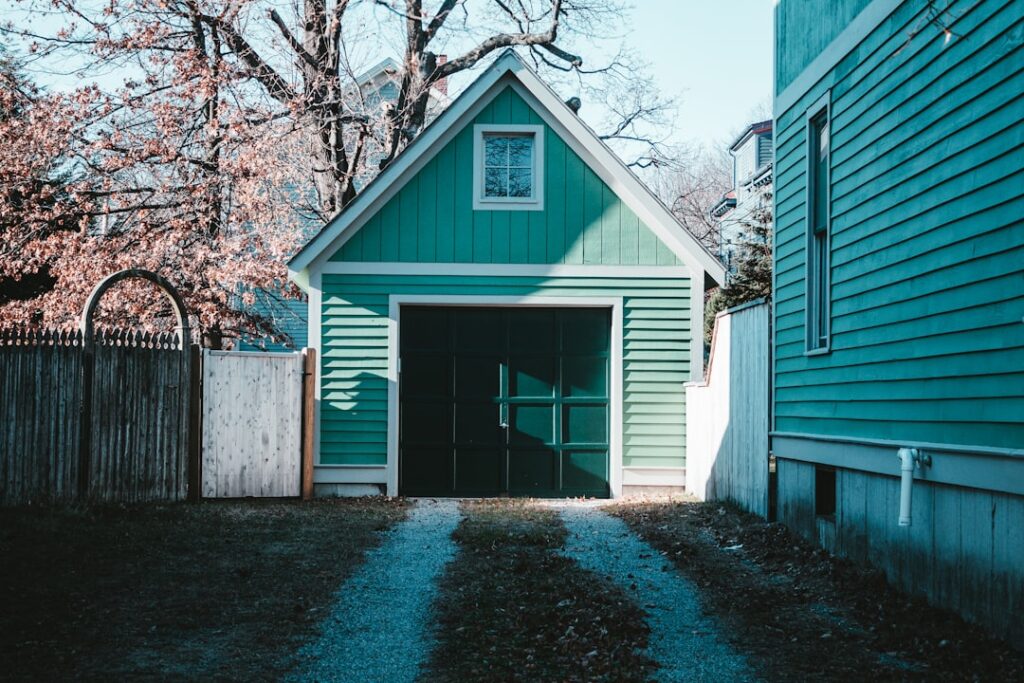
The garage is the one room where paint has to fight oil splatter, tire marks, road salt, and wild temperature swings, all while making a windowless box feel bright enough to work in. Choosing the right garage paint colors isn’t just about looks; it’s about picking shades that hide grime, bounce available light, and hold up to the abuse a garage dishes out. Whether you’re building a showroom-style space or just want the place to feel less like a cave, the color and the paint type both matter. Here’s how to get both right.
- Start With How You Use the Space
- Best Wall Colors for a Garage
- The Two-Tone Approach
- Best Garage Floor Colors
- Coordinating the Whole Space
- Choosing the Right Paint Type
- Prep Is Everything
- Accent Walls and Enthusiast Looks
- Ceilings, Doors, and Overlooked Surfaces
- How Long the Paint Will Last
- Lighting Changes Your Color
Start With How You Use the Space
Before picking a swatch, be honest about what your garage really is. A pure storage-and-parking garage can lean darker and more forgiving. A workshop, home gym, or hobby space needs to feel bright and clean so you can actually see what you’re doing. A garage that doubles as a bonus hangout can borrow interior colors for a more finished look. Your use case decides how much you prioritize light reflection versus dirt-hiding.
Keep resale in the back of your mind too. A tasteful, neutral garage reads as “well-maintained bonus space” to buyers, while a hot-pink or jet-black garage narrows your audience. Neutrals are the safe long-term play.
Best Wall Colors for a Garage
For walls, you’re balancing brightness against the reality of scuffs and handprints. These are the shades that consistently work:
- Light gray: The single most popular garage wall color, and for good reason. It reflects plenty of light, hides dust and minor marks far better than white, and pairs with any floor. Shades like Sherwin-Williams Repose Gray or Agreeable Gray are staples.
- Greige: A gray-beige blend that feels warmer than pure gray and still hides dirt. Great for garages you want to feel a bit more inviting.
- Soft white or off-white: Maximum brightness for a workshop, but it shows every scuff. Choose a slightly warm white and a scrubbable finish to fight the grime.
- Blue-gray or slate: A step up in personality that still reads professional. Popular in enthusiast garages paired with a gray floor.
- Beige or tan: Warm, forgiving, and excellent at hiding the dust that garages generate constantly.
Avoid pure bright white unless you’re chasing a clinical, gallery look, and steer clear of very dark walls in a garage without good lighting, since they’ll swallow what little light you have.
The Two-Tone Approach
A trick borrowed from commercial shops: paint the lower three to four feet of the walls a darker gray and the upper portion a lighter shade, divided by a simple chair-rail line. The darker lower band hides the inevitable scuffs from bikes, tools, and bumpers, while the lighter top keeps the room feeling open. It’s a small effort that makes a garage look intentionally designed rather than an afterthought.
Best Garage Floor Colors
The floor is where the biggest visual transformation happens, and epoxy or polyaspartic coatings dominate here. Color choice on the floor is really about hiding what falls on it:
- Medium gray with color flakes: The runaway favorite. Flake blends in gray, tan, and black hide dirt, dropped tools, and tire marks beautifully while adding traction. This is the safe, high-resale choice.
- Tan or sandstone: Warm and forgiving, hides dust well, and complements beige walls.
- Dark charcoal or black: Dramatic and showroom-worthy, but shows dust, salt residue, and lint quickly. Best for climate-controlled garages that stay clean.
- Blue or red flake accents: Fun for enthusiast spaces, but treat bold colors as accents in the flake blend rather than the whole floor.
Whatever color you pick for the floor, the flake system is your friend. Solid-color epoxy shows every speck; a multi-color flake broadcast disguises dirt and adds slip resistance you’ll appreciate in winter.
Coordinating the Whole Space
A garage looks pulled-together when the elements relate. A classic, foolproof combination is light gray walls, a medium-gray flake floor, and white trim, doors, and ceiling. The white ceiling and trim bounce light down, the gray walls stay clean-looking, and the flake floor hides everything. If you want more warmth, swap to greige walls and a tan floor.
Don’t forget the ceiling. A flat white ceiling is almost always right; it reflects light and makes the space feel taller. Painting the garage door interior the same white as the trim keeps the wall plane visually simple.
Choosing the Right Paint Type
Color is only half the battle in a garage; the paint’s formulation determines whether it survives. Match the product to the surface:
- Walls (drywall): Use a 100 percent acrylic latex in an eggshell or satin sheen. Satin is ideal because it wipes clean and resists moisture better than flat.
- Walls (bare concrete block or masonry): Prime with a masonry sealer first, then use a masonry or acrylic paint rated for the surface.
- Floors: Skip basic garage floor paint and use a two-part epoxy or a polyaspartic coating. They bond far better and resist hot tire pickup, oil, and chemicals.
- Trim and doors: Semi-gloss acrylic for durability and easy cleaning.
Sheen matters as much as color for durability. A higher sheen on walls and trim means you can scrub off grease and handprints instead of repainting.
Prep Is Everything
Even the best color fails over bad prep. For walls, patch holes, wipe off dust, and prime bare drywall or stained spots. For floors, the coating will only last if you clean, degrease, and etch or grind the concrete first, then confirm the slab is fully dry with a moisture test. Epoxy applied over a dirty or damp slab peels within a year, taking your color choice down with it.
Accent Walls and Enthusiast Looks
If a full gray-and-white garage feels too plain, an accent wall adds personality without overwhelming the space. The back wall behind a workbench is the natural spot; paint it a deep charcoal, navy, or even a brand color if you’re building a themed shop, and keep the remaining three walls light. The dark accent wall reads as intentional and gives tool pegboards and shelving a clean backdrop.
Serious enthusiasts often coordinate the garage around a theme, matching cabinet colors, a slatwall system, and floor flake to a favorite car or brand palette. Red-and-black, black-and-silver, and blue-and-gray combinations are perennial favorites. The key is restraint: pick two colors plus a neutral, and let the bold color live on cabinets, a single wall, or floor flake accents rather than every surface. A garage that commits fully to one loud color scheme is harder to sell and gets tiring to work in day after day.
Ceilings, Doors, and Overlooked Surfaces
The surfaces people forget are the ones that pull a garage together. The ceiling should almost always be flat white to reflect light downward and make the space feel taller; a dingy or bare ceiling drags down even a well-painted room. The interior of the garage door itself is often raw steel or faded; painting it the same white as the trim and ceiling keeps the wall plane clean and unified.
Don’t overlook the entry door into the house, window trim, and any exposed framing. Painting these in a consistent semi-gloss white ties the whole garage together and makes it easy to wipe grime off high-touch spots. A quick coat on the baseboard area or the bottom of the walls in a scrubbable satin pays off, since that’s where mops, bikes, and boots leave their marks.
How Long the Paint Will Last
Garages are hard on paint because of temperature swings and humidity. A properly prepped and primed drywall wall painted with quality acrylic satin will hold up 7 to 10 years before it needs a refresh. An epoxy or polyaspartic floor, done over correctly etched and dry concrete, lasts 10 to 20 years depending on traffic and whether you park hot tires on it daily. Cutting corners on prep is the single biggest reason garage finishes fail early, so the day you spend cleaning, patching, and priming is what buys you a decade of good looks.
Lighting Changes Your Color
One last factor: garages are usually lit by cool LED shop lights, which make grays and whites read cooler and can push warm beiges toward gray. Test your color under the actual bulbs you’ll use, and consider 4000K to 5000K “daylight” LEDs to keep colors true and the space bright. A warm 2700K bulb will make a crisp gray look muddy.
The winning formula for most homeowners is straightforward: light gray satin walls, a medium-gray flake epoxy floor, and clean white trim under bright daylight LEDs. It reflects light, hides the mess a garage inevitably makes, and looks intentional to anyone who walks in. Pick garage paint colors that fight grime and bounce light, back them with the right durable finishes, and prep properly, and your garage will look sharp for a decade instead of peeling by next winter.