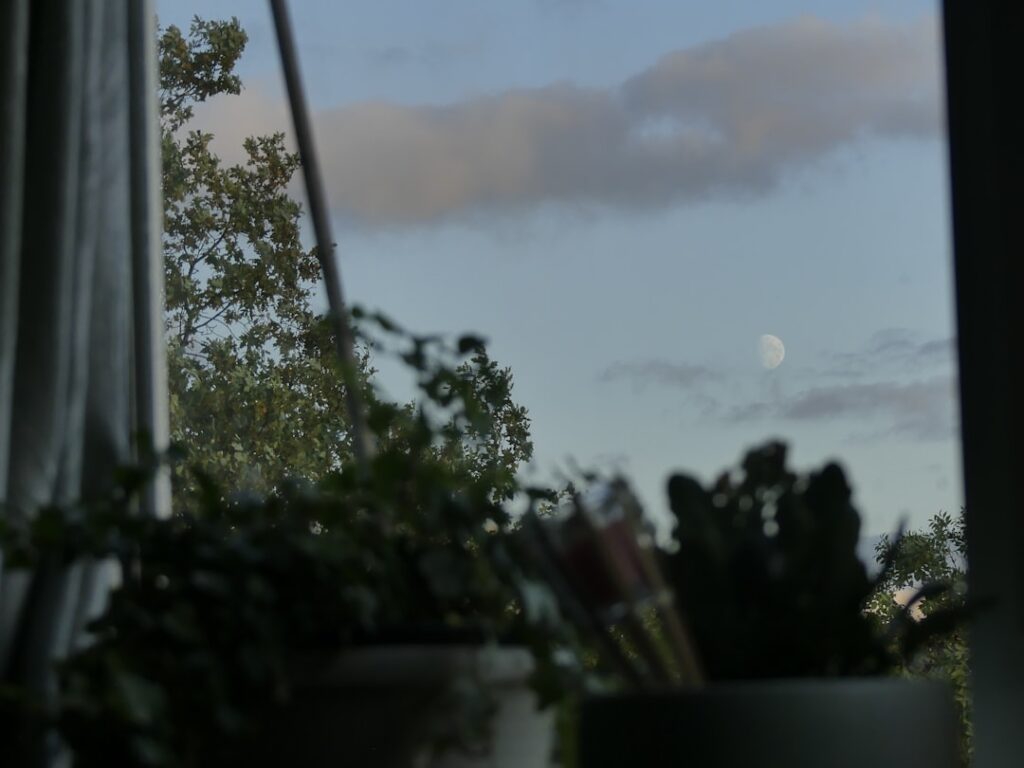
Long before soil thermometers and frost-date maps, farmers timed their planting by the sky, and the practice of gardening by the moon is one of the oldest continuous traditions in agriculture. The idea is simple: the moon’s phases and its position against the constellations guide when to sow, transplant, prune, and harvest. Some gardeners swear their seeds germinate faster and their crops store longer. Skeptics call it folklore. The honest answer sits in between, and knowing where the evidence is strong and where it is thin lets you use the method for what it is actually good for: a reliable, repeatable planting calendar.
- The Basic Idea Behind Lunar Gardening
- The Four Phases and What to Plant
- New Moon to First Quarter (Waxing)
- First Quarter to Full Moon (Waxing)
- Full Moon to Last Quarter (Waning)
- Last Quarter to New Moon (Waning)
- Does the Science Back It Up?
- Why It Still Works for Many Gardeners
- How to Try Moon Gardening Yourself
- Where the Moon Never Beats the Basics
- Signs, Constellations, and Biodynamics
- A Sample Month of Moon Planting
- The Verdict
The Basic Idea Behind Lunar Gardening
Moon gardening rests on two claimed forces. The first is gravitational pull. The same moon that raises ocean tides is said to pull soil moisture toward the surface around the new and full moons, giving seeds more water to swell and sprout. The second is moonlight. Increasing light between the new and full moon supposedly encourages leafy top growth, while waning light after the full moon shifts a plant’s energy toward roots.
Whether or not those mechanisms hold up, the framework produces a clear schedule. Instead of vague advice to plant in spring, you get specific windows tied to phases you can see in the sky. For a lot of gardeners, that structure is the real payoff, because a calendar you follow beats a perfect theory you ignore.
The Four Phases and What to Plant
Traditional moon gardening splits the roughly 29.5-day lunar cycle into two halves and four quarters, each assigned to different tasks.
New Moon to First Quarter (Waxing)
As the moon grows from dark to half-lit, plant above-ground crops that produce seeds outside the fruit, such as lettuce, spinach, cabbage, celery, and grains. Gravitational pull is said to be high and moonlight increasing, favoring balanced leaf and root growth. This is a strong window for starting greens and brassicas.
First Quarter to Full Moon (Waxing)
In the second quarter, plant above-ground crops that carry seeds inside the fruit, like tomatoes, peppers, squash, beans, and melons. Growing moonlight is believed to push vigorous top growth, and many gardeners consider the two or three days before the full moon the single best planting stretch of the month.
Full Moon to Last Quarter (Waning)
After the full moon, light decreases while moisture stays high, which tradition links to root development. This is the window for root crops and perennials: carrots, beets, onions, potatoes, and bulbs, plus dividing and transplanting established plants.
Last Quarter to New Moon (Waning)
The final quarter, with low light and low pull, is treated as a resting phase. Skip sowing and use the time for weeding, pruning, harvesting for storage, turning compost, and controlling pests. Many old almanacs call this the best time to harvest crops meant to be cured and stored.
Does the Science Back It Up?
Here is where I stay honest with clients. Controlled studies on lunar planting are mixed and mostly inconclusive. The moon’s gravitational effect on a thin film of soil moisture is real but extraordinarily small compared with the tides, which act on entire oceans. A garden bed is not an ocean, and the measurable pull on your seedbed is negligible.
A handful of studies have reported small differences in germination or growth aligned with lunar phase, while many others found no significant effect. Moonlight is bright enough to influence some flowering and nocturnal insect behavior, but the evidence that it meaningfully speeds vegetable growth is weak. In short, do not expect the moon to double your yields.
Why It Still Works for Many Gardeners
If the science is shaky, why do so many experienced growers stand by the method? A few practical reasons hold up better than the folklore.
- Consistency: Following a lunar calendar means you plant on a regular rhythm instead of whenever you get around to it, and regular attention improves any garden.
- Spreading out sowing: The phase system naturally staggers your plantings across the month, which spreads out your harvest.
- Seasonal timing: Because the method still respects frost dates and soil temperature, you are planting in reasonable windows anyway.
- Engagement: Gardeners who watch the moon tend to watch everything else more closely too, catching pests and dry soil early.
None of that requires the moon to have magical power. A structured, attentive gardener beats a haphazard one every time, and the lunar calendar supplies the structure.
How to Try Moon Gardening Yourself
If you want to test it, do so without abandoning the fundamentals that actually drive success. Start with your local last-frost date and USDA hardiness zone, then layer the lunar schedule on top only within the safe planting season. In zone 6, for example, you still wait until mid-May for tomatoes; you simply pick the waxing days within that window.
- Get a moon-phase calendar or almanac for your area, or use a free phase app.
- Sow leafy greens and grains during the waxing first quarter.
- Sow fruiting crops in the second quarter, ideally just before the full moon.
- Plant roots, bulbs, and perennials during the waning third quarter.
- Reserve the fourth quarter for weeding, pruning, and harvesting for storage.
Keep a simple garden journal noting what you planted, the phase, and how it performed. Over two or three seasons you will have your own data, which beats any online argument.
Where the Moon Never Beats the Basics
No lunar timing overrides the things that genuinely control plant health. Soil temperature has to be right; most warm-season seeds need soil above 60 degrees Fahrenheit to germinate well, and no phase of the moon changes that. Frost will kill a tomato planted three days before the full moon just as dead as one planted on a new moon.
Water, sunlight, drainage, and soil fertility do the real work. A raised bed with 6 to 8 hours of sun, loose compost-rich soil, and consistent watering will outproduce a neglected plot planted on the “perfect” lunar day every single time. Treat the moon as a scheduling tool, not a substitute for good horticulture.
Signs, Constellations, and Biodynamics
Beyond the four phases, more elaborate systems add the moon’s passage through the twelve zodiac constellations, assigning each to an element: earth signs for root crops, water signs for leafy growth, air signs for flowers, and fire signs for fruit and seed. Biodynamic gardening, developed in the 1920s, builds on this with its own planting calendar of root, leaf, flower, and fruit days. Followers plant lettuce on leaf days and carrots on root days.
This is where the practice moves furthest from measurable science and deepest into tradition. There is no credible evidence that a constellation the moon happens to pass in front of influences your carrots. That said, the calendars are internally consistent and, like the phase system, they impose a rhythm. If you enjoy the structure and the ritual, there is no harm in following it, provided you keep treating soil, water, and frost dates as the things that actually determine your results.
A Sample Month of Moon Planting
To see how it plays out, imagine a spring month in a mild zone. It looks something like this.
- Days 1 to 7 (new moon, waxing): Sow lettuce, spinach, kale, and other leafy greens; start cabbage and broccoli.
- Days 8 to 14 (first quarter to full): Plant tomatoes, peppers, beans, squash, and cucumbers; the days just before the full moon are prime.
- Days 15 to 21 (full moon, waning): Sow carrots, beets, radishes, and onions; divide perennials and transplant.
- Days 22 to 29 (last quarter, waning): Weed, prune, harvest for storage, turn compost, and rest the beds.
Follow that for a season and you naturally stagger your sowing, which spreads the harvest and keeps a steady rotation going in the beds. Whether the moon deserves the credit or not, the gardener who works this schedule tends to end up with a well-managed, productive plot.
The Verdict
Gardening by the moon is a tradition worth respecting and, for many people, worth practicing, as long as you understand what you are getting. The proven benefit is a disciplined, well-spaced planting rhythm that keeps you engaged with your garden. The claimed benefit, that lunar forces measurably boost growth, is largely unsupported by rigorous study. Use it as a calendar layered over solid frost-date and soil-temperature planning, keep notes, and enjoy the connection to a practice that has guided growers for thousands of years. If it makes you a more consistent gardener, it will make you a more successful one, moon or no moon.