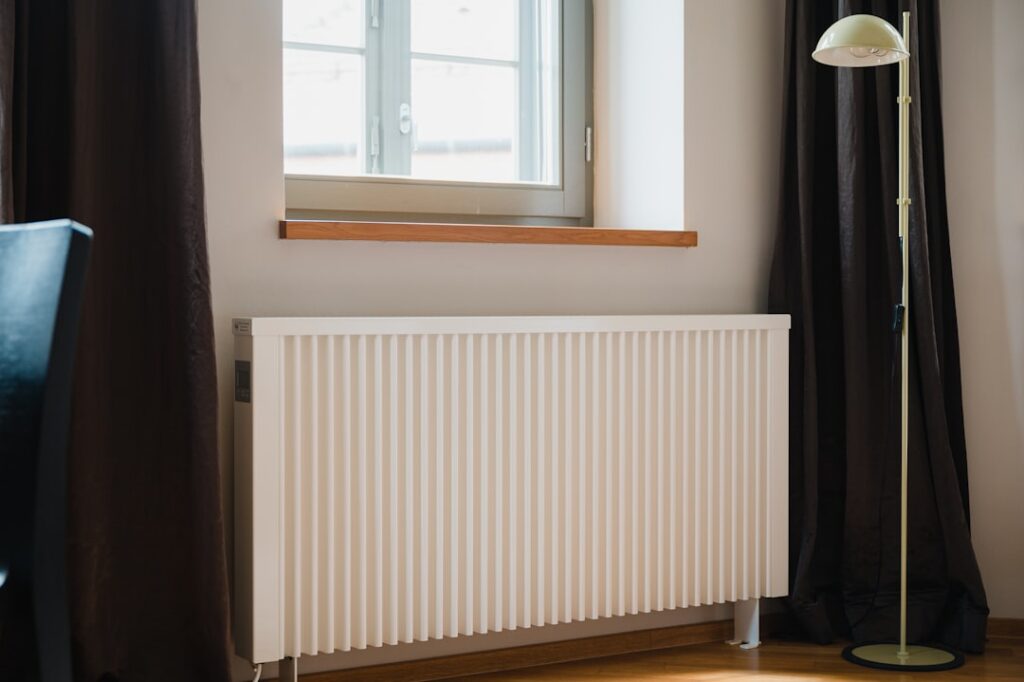
When people picture warm, comfortable rooms without the blast of forced air, they are often picturing gas baseboard heating. Technically this system is a gas-fired boiler paired with hydronic baseboard units, and it delivers some of the most even, draft-free warmth available in a home. If you are weighing a heating upgrade or trying to understand the system you already own, this guide covers how it works, what it costs, and whether it is the right choice for your house.
What Gas Baseboard Heating Really Means
The term causes some confusion because the baseboard units themselves do not burn gas. Instead, a central boiler fueled by natural gas or propane heats water to roughly 140 to 180 degrees Fahrenheit. A circulator pump pushes that hot water through pipes to finned baseboard units mounted along the walls of each room. The hot fins warm the surrounding air, which rises and circulates by convection. Cooled water returns to the boiler to be reheated, completing a closed loop. This is properly called a hydronic system, and the gas simply provides the heat source at the boiler.
This is fundamentally different from an electric baseboard heater, which generates heat right at the unit using resistance elements. With gas baseboard heating, one central appliance does the work and distributes warmth through water, which holds heat far longer than air does.
Why Homeowners Love It
Hydronic heat fed by a gas boiler has a devoted following for good reasons.
- Even, gentle warmth: Convection spreads heat smoothly across a room with no hot and cold blasts.
- Quiet comfort: There is no blower roaring on and off, just the faint sound of circulating water.
- No blown dust or allergens: Without forced air, dust and pollen are not pushed around your rooms.
- Lower fuel cost than electricity: Natural gas typically costs less per unit of heat than electric resistance heating.
- Zoned control: Different areas of the home can run on separate loops and thermostats for tailored comfort.
- Retained warmth: Water stays hot in the pipes and fins, so rooms hold their temperature after the boiler cycles off.
The Drawbacks to Weigh
No system is perfect, and gas baseboard heating has real limitations. It responds more slowly than forced air, so a cold room takes longer to reach a comfortable temperature. The baseboard units run along the base of your walls, which limits furniture placement and requires you to keep drapes and sofas clear for proper airflow. Installation of a new system is expensive because of the boiler, pumps, and piping involved. And because the system carries water, there is always some risk of leaks, and in unheated spaces the pipes can freeze if the system fails during a hard cold snap.
Real Costs to Expect
Costs vary widely by region and home size, but these ranges give you a realistic picture. A new gas boiler alone runs roughly $3,500 to $8,000 installed, with high-efficiency condensing models at the upper end. Adding hydronic baseboard units costs about $8 to $20 per linear foot for the hardware, plus labor. A full system installation in an average home, including boiler, piping, baseboards, and controls, commonly lands between $6,000 and $14,000.
Operating cost is where gas shines. Natural gas is usually one of the least expensive heating fuels available, so monthly winter bills tend to run lower than an equivalent all-electric baseboard setup. Propane costs more than natural gas but still often beats electric resistance heat. A modern condensing boiler operating at 90 percent or higher efficiency stretches every dollar of fuel further, which matters over a long cold season.
Installation and System Design
Designing a hydronic system is a job for a qualified heating contractor, but understanding the pieces helps you make good decisions. The key components include the following.
- The boiler: Sized to your home’s heat-loss calculation, not just its square footage.
- Circulator pumps: One or more pumps move water through the loops, often one per heating zone.
- Zone valves and thermostats: These let separate areas call for heat independently.
- Expansion tank: Absorbs the pressure change as water heats and expands.
- Baseboard units: The finned convectors that transfer heat into each room.
Proper sizing is critical. An oversized boiler short-cycles and wastes fuel, while an undersized one struggles on the coldest days. Insist on a load calculation rather than a rule-of-thumb estimate.
Maintenance That Keeps It Running
A gas boiler system is durable, often lasting 15 to 30 years, but it rewards regular attention. Schedule an annual professional service before each heating season to inspect the burner, check the flue, test safety controls, and confirm proper water pressure. Between visits, you can help by bleeding trapped air from the baseboard units when rooms heat unevenly, keeping the units clean and free of dust on the fins, and watching the boiler pressure gauge to make sure it stays in the normal range. Address any water stains or drips promptly, since a small leak in a hydronic system only gets worse.
Gas Baseboard Heating Versus the Alternatives
Compared with a forced-air gas furnace, hydronic baseboard heat is quieter and gentler but slower and cannot double as air conditioning or filtration. Compared with electric baseboard, it costs far more to install but usually much less to operate, making it a better long-term value in homes with access to natural gas. Compared with a modern heat pump, gas baseboard delivers reliable heat in extreme cold without efficiency loss, though a cold-climate heat pump can rival its operating cost while also providing cooling. The right answer depends on your fuel prices, climate, and whether you value the specific comfort that radiant-style hydronic heat provides.
Improving Efficiency and Comfort
Even a good hydronic system can be made more efficient and comfortable with a few targeted moves. Adding separate thermostats and zone valves so bedrooms, living areas, and basements heat independently lets you avoid warming rooms nobody is using, which is one of the simplest ways to cut fuel use. A programmable thermostat that lowers temperatures overnight and while the house is empty saves fuel without any loss of comfort, since the water in the pipes holds warmth and the boiler simply fires less often.
Keeping the baseboard units clean and unobstructed makes a real difference too. Dust packed into the fins insulates them and reduces heat transfer, so a seasonal vacuuming pays off. Just as important, never block the units with furniture, thick drapes, or wall-to-wall shelving, because convection depends on cool air entering the bottom and warm air escaping the top. If certain rooms lag behind, bleeding trapped air from the baseboards restores full circulation. Finally, upgrading an aging conventional boiler to a modern condensing model can lift efficiency into the 90 percent range, capturing heat that older units send up the flue. Combined, these steps let a gas baseboard system deliver its signature quiet, even warmth while keeping the fuel bill as low as possible.
Is Gas Baseboard Heating a Smart Choice?
For homeowners who prize quiet, even, allergen-free warmth and have access to affordable natural gas, gas baseboard heating remains an excellent and time-tested option. It costs more to install than electric alternatives, and it responds gradually rather than instantly, but its low operating cost, gentle comfort, and long service life make it a favorite in cold climates. If you already have a hydronic system, keep it well maintained and it will serve you for decades. If you are building or renovating, weigh the upfront investment against the years of comfortable, economical heat it can provide, and let a load calculation from a trusted contractor guide the final decision.