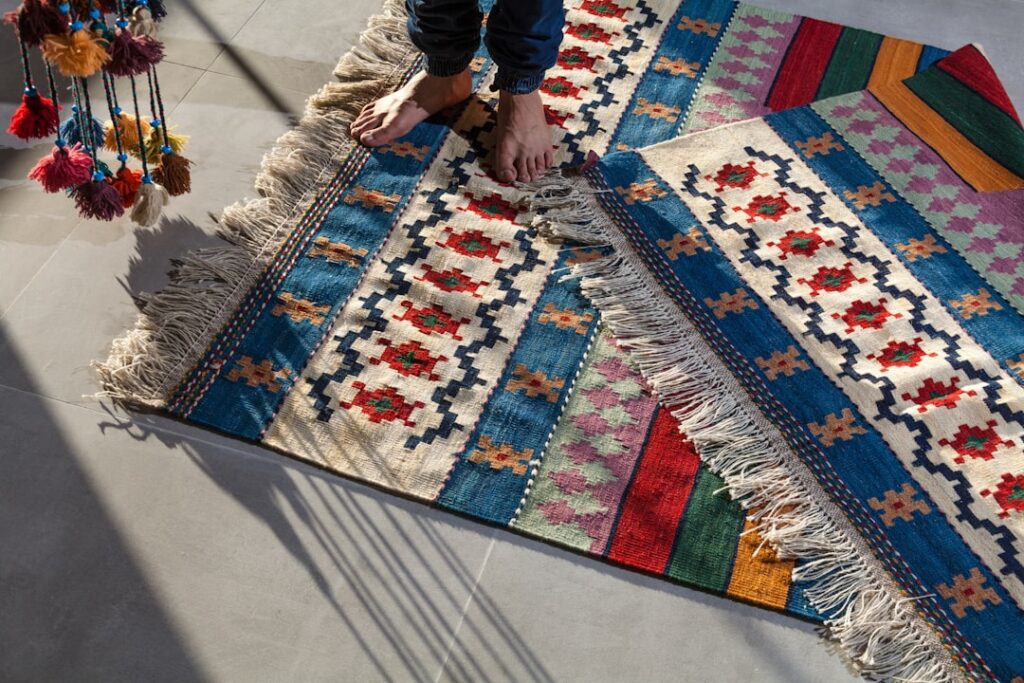
A geometric rug 8×10 combines the most popular area-rug size in American homes with a pattern language that instantly modernizes a room. At 8 feet by 10 feet, or 80 square feet, this is the standard living-room rug, big enough to unify a full seating group, and the crisp lines of a geometric design, think trellis, chevron, diamond lattice, or Moroccan tile, add movement and structure that a plain rug cannot.
Pattern and scale have to work together, though. An 8×10 is a serious footprint, and a bold geometric print will dominate whatever room it lands in, for better or worse. This guide covers where an 8-by-10 geometric rug fits, how to place your furniture on it, how much floor to leave exposed, and how to choose a pattern that flatters rather than fights your space.
Where an 8×10 Geometric Rug Fits Best
The 8-by-10 is the default living-room size for a reason: it comfortably grounds a sofa, coffee table, and a pair of chairs in most rooms measuring 11 by 13 feet up to 14 by 16 feet. Beyond the living room, an 8×10 geometric rug works well in:
- Dining rooms: under a table that seats six, with room for chairs to slide back.
- Primary bedrooms: centered under a queen or king bed.
- Open-plan great rooms: defining the lounge zone within a larger space.
- Home offices and studios: anchoring a desk-and-seating layout.
Orient the 10-foot length along the longest wall so the rug’s proportions mirror the room and the geometric pattern runs with the sightline.
Geometric Rug 8×10 in the Living Room
In the living room you have two solid placement strategies. The generous approach puts all four legs of the sofa and chairs on the rug, creating a fully unified island of seating; this works when the room is at least 12 by 15 feet. The more common approach in average rooms places the front legs of each seating piece on the rug, which visually connects the furniture while stretching the rug’s coverage.
For a standard 84-inch sofa with a coffee table and two accent chairs, an 8×10 with the 10-foot edge parallel to the sofa holds the coffee table entirely and catches the front legs of every seat. Leave 10 to 20 inches of exposed floor between the rug and the walls; in a 13-by-15-foot room, an 8×10 leaves about 18 inches on the short sides, a balanced frame. Because the pattern is busy, keep upholstery relatively calm so the rug reads as the star.
Geometric Rug 8×10 in the Dining Room
Dining rooms have one non-negotiable rule: the rug must be large enough that chairs stay on it even when pulled out. Diners slide chairs back 20 to 24 inches to sit down, so you need at least 24 inches of rug beyond every edge of the table. An 8×10 rug suits a rectangular table roughly 40 by 60 inches seating six; the 20-inch margin on all sides keeps the back chair legs on the rug so nothing catches on an edge.
Center the table under the rug and confirm the geometric pattern is symmetrical enough that the table does not visibly cut it off-balance. A large-scale lattice or diamond motif reads cleanly under a table; a tiny, dense pattern can disappear beneath the tabletop and lose its impact. For dining, choose a low-pile or flatweave geometric rug so chairs glide and crumbs vacuum out easily.
Geometric Rug 8×10 in the Bedroom
Under a bed, an 8×10 geometric rug creates a soft, framed foundation. Center a queen or king bed so the rug extends 18 to 24 inches beyond each side and the foot, giving you warm landing zones where you step out. A king mattress is 76 by 80 inches; on an 8-foot-wide (96-inch) rug, that leaves roughly 10 inches on each side plus whatever the frame adds, so slide the bed toward the headboard and let the rug spread out toward the foot.
Because much of the pattern hides beneath the bed, a geometric print in the bedroom shows mainly at the foot and along the sides, so pick a design whose border or repeat still reads well when partially covered. Larger-scale geometrics tend to survive this cropping better than intricate small repeats.
How Much Floor to Leave Exposed
The exposed-floor border is what keeps an 8×10 from looking like wall-to-wall carpet. Aim for 8 to 24 inches of bare floor between the rug and the walls, with 12 to 18 inches being the reliable sweet spot in most rooms. Measure your room, subtract the 8-by-10 footprint, and divide the remainder per side to preview the frame before you buy.
In a 12-by-14-foot room, an 8×10 leaves 24 inches total across the short dimension and 48 across the long, or 12 and 24 inches per side, both within range. If your room is smaller than about 11 by 13 feet, consider a 6×9 instead so the border does not shrink below 8 inches and crowd the baseboards.
Choosing the Right Geometric Pattern and Scale
Pattern scale should match room size. In a large, open room, a big, high-contrast geometric like an oversized Moroccan trellis or wide chevron holds its own and adds drama. In a smaller or busier room, a subtler tone-on-tone diamond or a low-contrast lattice adds texture without overwhelming. A few guidelines:
- Pair a bold geometric rug with solid or lightly textured furniture to avoid pattern clash.
- Pull one or two rug colors into your pillows or art to tie the scheme together.
- Choose durable wool or polypropylene for high-traffic living and dining rooms; save plush piles for bedrooms.
- Always use a rug pad to add cushion, prevent slipping, and extend the rug’s life.
Tape out an 8-by-10 rectangle and set your furniture inside it before ordering, and confirm the true measured size, since handmade geometrics can run slightly off nominal.
Common Mistakes and Care Tips
The most frequent misstep with a bold geometric is pairing it with equally busy furniture and drapery, which creates visual noise that tires the eye. Let the rug lead and keep the surrounding pieces quiet. Another error is buying a pattern whose scale fights the room: a tiny repeat looks fussy in a large space, while an oversized motif can overwhelm a small one. Directional patterns like chevron also need to be oriented deliberately, running along the room’s length rather than cutting awkwardly across it.
For care, rotate the rug 180 degrees once or twice a year so foot traffic and sunlight wear it evenly and the pattern does not fade unevenly on one side. Vacuum regularly to keep the crisp lines looking sharp, and blot spills immediately rather than rubbing, which can blur the pattern edges on a printed rug. A quality pad underneath prevents the geometric from shifting and keeps the lines square to the room.
Final Thoughts
A geometric rug 8×10 delivers the best of both worlds: the versatile, room-anchoring size that fits most living rooms, dining rooms, and bedrooms, plus a pattern that brings instant structure and personality. Orient the 10-foot length along your longest wall, follow the front-legs-on or all-legs-on rule for seating, keep 24 inches of rug beyond a dining table, and hold a 12-to-18-inch exposed-floor border. Match the pattern scale to your room, calm the surrounding furniture, and this rug will pull the whole space together.