A glass backsplash transforms an ordinary kitchen wall into a luminous, light-reflecting surface that feels both modern and timeless. Glass has been gaining ground as a premium backsplash material for over a decade, and the range of options available in 2026 — from tiny iridescent mosaics to seamless back-painted panels — gives homeowners more creative control than ever before.
- Types of Glass Backsplash
- Glass Mosaic Tile
- Glass Subway Tile
- Back-Painted Glass Panels
- Textured and 3D Glass Tile
- Recycled Glass Tile
- Pros and Cons
- Cost Breakdown
- Kitchen Design Ideas
- Installation Guide
- Grout Options for Glass Tile
- Cleaning and Maintenance
- Glass vs Ceramic Tile
- Frequently Asked Questions
With more than 30 years in the flooring and surface installation business, we have seen firsthand how glass backsplashes elevate kitchens of every size and style. This guide walks you through every type of glass backsplash, realistic cost expectations, installation considerations, and design strategies that actually work.
Types of Glass Backsplash
Not all glass backsplashes are the same. The type you choose affects the look, installation complexity, and price significantly.
Glass Mosaic Tile
Small glass tiles — typically 1×1 inch or 2×2 inch — mounted on a mesh backing sheet. Mosaics come in solid colors, blends, and iridescent finishes that shift color depending on the light. They are the most popular glass backsplash format because they offer rich visual texture and are available at a wide range of price points. Expect to pay $5 to $30 per square foot for materials.
Glass Subway Tile
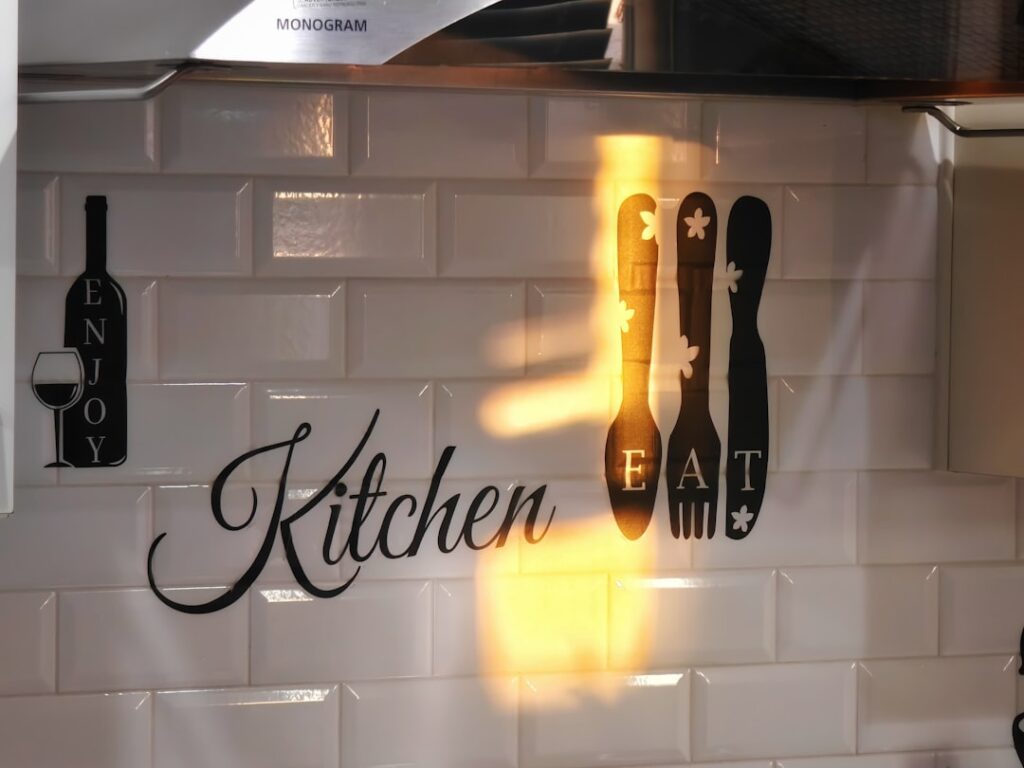
Standard 3×6 or 4×12 glass tiles installed in a traditional brick-lay, herringbone, or stacked pattern. Glass subway tile has a sleeker, more refined appearance than ceramic subway tile due to its reflective surface and depth of color. Material cost runs $8 to $25 per square foot.
Back-Painted Glass Panels
Large sheets of tempered glass with color applied to the back surface, then mounted flat against the wall. This creates a completely seamless, grout-free backsplash with a glossy, ultra-modern finish. Back-painted glass panels are fabricated to your exact measurements and cost $40 to $100 per square foot installed.
Textured and 3D Glass Tile
Tiles with molded or carved surfaces that catch and scatter light in unique ways. These include wave patterns, geometric reliefs, and frosted textures. They function as a statement feature and typically cost $15 to $45 per square foot.
Recycled Glass Tile
Made from post-consumer recycled glass, these tiles have a slightly irregular texture and subtle variations that add organic character. They appeal to eco-conscious homeowners and range from $8 to $20 per square foot.
Pros and Cons
A glass backsplash offers compelling advantages, but it is not perfect for every situation. Here is an honest assessment.
Advantages
- Light reflection — Glass bounces light around the kitchen, making small or dark spaces feel larger and brighter.
- Non-porous surface — Glass does not absorb stains, odors, or bacteria, making it one of the most hygienic backsplash materials available.
- Color consistency — Unlike natural stone, glass tile delivers uniform color batch to batch.
- Easy to clean — A damp cloth or glass cleaner is all you need. No sealing required.
- Vast design options — Available in virtually any color, size, finish, and pattern.
Disadvantages
- Shows imperfections — Because glass is transparent or translucent, any unevenness in the wall or adhesive application will be visible. Wall prep must be meticulous.
- Higher installation skill required — Cutting glass tile requires a wet saw with a diamond blade. Mistakes are harder to fix than with ceramic.
- Cost — Premium glass tile and back-painted panels cost more than standard ceramic.
- Scratching potential — While durable under normal use, abrasive scrubbing can leave micro-scratches on glass surfaces over time.
- Grout maintenance — The reflective surface of glass makes grout lines more prominent, so grout condition matters more aesthetically.
Cost Breakdown
Here is what a glass backsplash costs in 2026 for a standard 30-square-foot kitchen backsplash:
- Glass mosaic tile — $5 to $30/sq ft materials; $15 to $45/sq ft installed
- Glass subway tile — $8 to $25/sq ft materials; $18 to $40/sq ft installed
- Back-painted glass panel — $40 to $100/sq ft installed (includes fabrication and mounting)
- Textured/3D glass tile — $15 to $45/sq ft materials; $25 to $60/sq ft installed
- Recycled glass tile — $8 to $20/sq ft materials; $18 to $35/sq ft installed
Total project cost ranges from $450 for a basic DIY glass mosaic installation to $3,000 or more for a professionally installed back-painted glass panel backsplash. Labor typically adds $8 to $15 per square foot for tile and significantly more for custom panel fabrication and mounting.
Kitchen Design Ideas
A glass backsplash adapts to nearly any kitchen style. Here are the approaches we see working best:
White kitchen with blue glass mosaic — A classic pairing that adds color without overwhelming the space. Ocean blue, sky blue, and aqua mosaics work particularly well with white cabinetry and marble or quartz countertops.
Neutral kitchen with gray glass subway tile — Gray glass tile in a herringbone or brick-lay pattern adds subtle sophistication to a neutral palette. The reflective quality of the glass keeps the look from feeling flat.
Bold accent with emerald or teal glass — Jewel-toned glass tile creates a stunning focal point in contemporary kitchens. Pair it with matte black or dark wood cabinetry for maximum impact.
Seamless modern with back-painted glass — A single sheet of back-painted glass in white, gray, or black creates an uninterrupted surface that defines minimalist design. This approach works best in modern and contemporary kitchens.
Mixed mosaic feature wall — Combine glass tiles in multiple sizes, shapes, and complementary colors to create an artistic mosaic behind the range. Treat it as the kitchen’s signature design element.
Mirrored glass for small kitchens — Mirrored or metallic glass tile visually doubles the perceived depth of a small kitchen, making it an effective design trick for apartments and galley layouts.
Installation Guide
Installing a glass backsplash requires more precision than standard ceramic tile. Here are the critical steps:
Wall Preparation
The wall must be perfectly smooth and flat. Glass is unforgiving — any bump or valley behind the tile will show through. Skim-coat the wall with joint compound if needed, then sand it smooth and prime with a quality bonding primer.
Adhesive Selection
Use a white, non-modified thinset mortar specifically rated for glass tile. Gray thinset can show through transparent or translucent glass and alter the color. Some manufacturers recommend specific adhesives — always check the product documentation.
Cutting
Cut glass tile with a wet saw fitted with a diamond blade designed for glass. Score-and-snap methods work on some glass tiles but risk chipping. For curves and outlet openings, use a rotary tool with a diamond bit.
Setting the Tile
Apply thinset to the wall with a 3/16-inch V-notch trowel, then flatten the ridges to prevent them from showing through the glass. Press tiles firmly into place without sliding them, which can push adhesive into the grout joints. Work in small sections to keep the adhesive fresh.
Grouting
Use unsanded grout for glass tile with grout joints smaller than 1/8 inch. Sanded grout can scratch the glass surface. Apply grout with a rubber float at a 45-degree angle and clean the surface promptly with a damp sponge.
Grout Options for Glass Tile
Grout selection matters more with glass tile than with ceramic because the reflective surface draws attention to every grout line.
Unsanded grout — The standard choice for glass tile with narrow joints. It applies smoothly and will not scratch the tile surface.
Epoxy grout — Resists stains, mildew, and discoloration far better than cement-based grout. It is more expensive and harder to work with, but the long-term maintenance savings are significant. We recommend epoxy grout for all glass backsplash installations.
Urethane grout — Pre-mixed and stain-resistant, urethane grout is easier to apply than epoxy and offers similar durability. It is an excellent middle ground between cement and epoxy options.
Color choice — Match the grout to the tile color for a seamless look, or choose a contrasting color to highlight the tile pattern. White grout with colored glass tile creates a clean, defined grid. Matching grout creates a more unified surface.
Cleaning and Maintenance
One of the biggest advantages of a glass backsplash is how easy it is to maintain. Glass is non-porous, so it resists stains, mold, and bacteria without any sealing.
- Daily cleaning — Wipe with a damp microfiber cloth. For grease, use a mild dish soap solution.
- Deep cleaning — Spray with a standard glass cleaner and wipe clean. Avoid abrasive pads or powders that can scratch the surface.
- Grout maintenance — Clean grout lines with a soft brush and baking soda paste if discoloration appears. Seal cement-based grout annually. Epoxy and urethane grouts do not require sealing.
- Avoid — Harsh chemical cleaners, steel wool, and abrasive scouring pads.
Glass vs Ceramic Tile
Many homeowners debate between glass and ceramic for their backsplash. Here is a direct comparison:
- Appearance — Glass has a luminous, depth-of-color quality that ceramic cannot match. Ceramic offers a broader range of textures and finishes including matte and rustic options.
- Durability — Both are highly durable. Ceramic is less prone to chipping on edges, while glass is more stain-resistant.
- Cost — Ceramic is generally cheaper, starting at $1 to $5 per square foot versus $5 to $30 for glass.
- Installation — Ceramic is more forgiving for DIY installation. Glass requires more precise wall prep and careful adhesive application.
- Maintenance — Glass is slightly easier to clean due to its perfectly smooth, non-porous surface.
Choose glass when light reflection, color depth, and a modern aesthetic are priorities. Choose ceramic when budget, DIY-friendliness, and texture variety matter more.
Frequently Asked Questions
Is a glass backsplash more expensive than tile?
Glass mosaic and subway tile typically cost more than basic ceramic tile but overlap in price with porcelain and natural stone. Back-painted glass panels are the most expensive option. For a standard kitchen backsplash, expect to pay $450 to $1,500 for glass tile installed, compared to $250 to $700 for ceramic.
Does glass backsplash crack easily?
Tempered glass used in backsplash panels and quality glass tile is quite resilient under normal kitchen conditions. Cracking from impact is possible but uncommon. The bigger risk is chipping during installation, which is why professional installation is recommended for glass tile projects.
Can you install a glass backsplash over existing tile?
It is possible if the existing tile is flat, well-adhered, and the added thickness will not interfere with outlets, switches, or cabinet alignment. However, we generally recommend removing old tile for the best results, especially with glass, which requires a perfectly smooth substrate.
How long does a glass backsplash last?
A properly installed glass backsplash lasts 20 to 30 years or more. Glass itself does not degrade, fade, or stain. The limiting factor is usually the grout and adhesive, which may need attention after 15 to 20 years depending on the products used.
Is glass backsplash outdated?
Glass backsplashes are not outdated. The tiny, multi-colored mosaic blends that were trendy in the early 2010s have fallen out of favor, but solid-color glass subway tile, large-format glass tile, and back-painted glass panels remain current and popular in 2026. Choosing classic colors and simple patterns keeps the look timeless.
Prefer to explore on your own?
See how new flooring looks in your actual room in seconds — free, no signup.
Try the free Floor Studio →