The sliding barn door solved a real problem long before it became a design trend: it saves the floor space that a swinging door wastes. A glass barn door takes that space-saving slide and adds something a solid wood slab never can, which is light. By letting daylight pass between rooms, it keeps a home office, pantry, or ensuite from feeling like a sealed box while still defining the space and offering privacy where you want it. I have hung dozens of these, and they deliver more visual payoff per dollar than almost any other door upgrade.
Why Choose Glass Over Solid Wood
A traditional solid barn door blocks light completely, which can leave an interior room dim and cave-like. Glass changes that equation entirely. It borrows light from adjacent rooms, making both spaces feel brighter and more open, a huge advantage for windowless offices, closets, and bathrooms.
Glass also reads as more modern and upscale. Where a rustic wood door leans farmhouse, a glass barn door in a sleek metal frame suits contemporary, industrial, and transitional interiors. It becomes an architectural feature rather than just a way to close off a room, and it makes small spaces feel considerably larger.
Glass Types and Privacy Levels
The single most important choice is the glass itself, because it dictates how much you see through and how much privacy you get. Match the glass to the room’s function.
- Clear glass: maximum light and full visibility, best for offices and pantries where privacy is not a concern
- Frosted or satin-etched: passes light while obscuring detail, the most popular choice for bathrooms and bedrooms
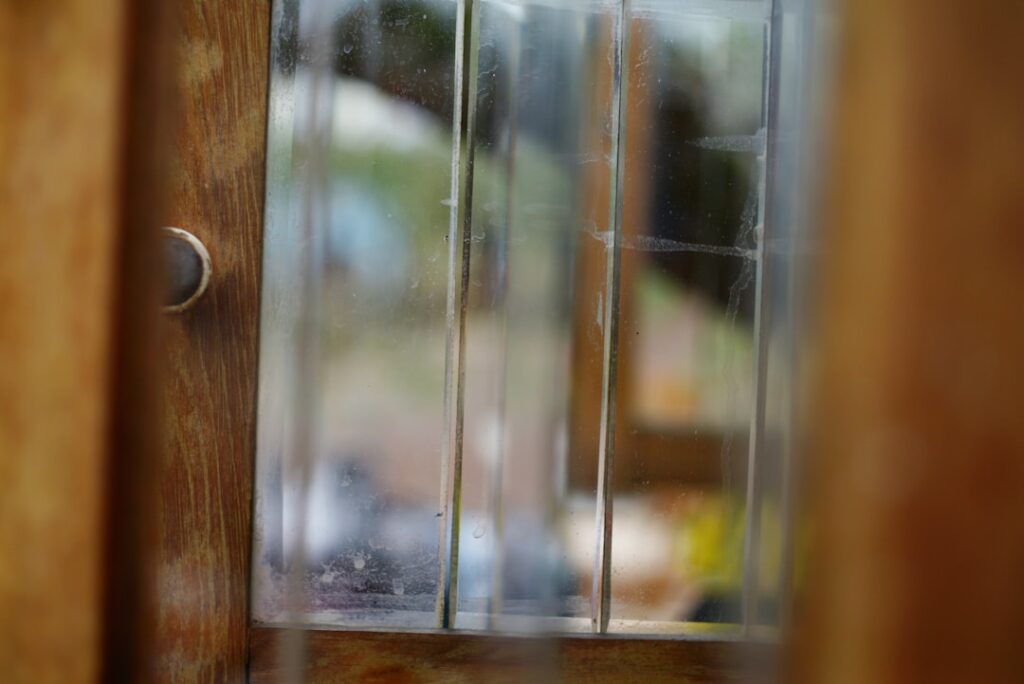
- Seedy or reeded glass: textured vertical lines that distort the view for a stylish, semi-private look
- Tinted or smoked: darker glass for a dramatic, industrial feel with partial privacy
- Frosted with clear border: a design-forward option that frames the panel
For a primary bathroom or bedroom, frosted or reeded glass is the sweet spot, delivering brightness without putting the room on display. Reserve clear glass for spaces where you genuinely want to see through.
Safety Glass Is Non-Negotiable
This is not a place to cut corners. Any interior glass door should use tempered safety glass, which is heat-treated to be far stronger than standard glass and to shatter into small, dull cubes rather than dangerous shards if it ever breaks.
Reputable manufacturers use tempered glass as standard, and many building codes require it for doors. Verify the small etched stamp in a corner that certifies the glass as tempered before you buy, especially from budget online sellers. A frameless slab that is not tempered is a genuine hazard in a home with kids.
Framed vs Frameless Designs
Glass barn doors come in two broad styles, and the choice sets the whole aesthetic.
Framed Glass Doors
A metal or wood frame surrounds the glass panel, often in a grid of panes reminiscent of steel factory windows. Black aluminum frames are especially popular for the industrial or modern-farmhouse look. The frame adds durability and a defined edge, and grid patterns hide fingerprints better than clear frameless glass.
Frameless Glass Doors
A single tempered slab with polished edges and no surrounding frame gives the cleanest, most minimal appearance. Frameless doors feel high-end and let the most light through, but they show smudges and require the hardware to mount directly through drilled holes in the glass.
Choosing the Hardware and Track
The rolling hardware is both functional and a major visual element. A glass door is heavier than a hollow wood one, so the track and rollers must be rated for the weight, typically 150 to 200 pounds for a standard panel.
- Track finish: matte black is the most requested, with brushed nickel and bronze also common
- Roller style: exposed industrial wheels for an intentional look, or a top-mount concealed track for minimalism
- Soft-close dampers: worth adding so the heavy glass door glides to a gentle stop instead of slamming
- Floor guide: essential to keep the bottom of the door from swinging into the wall
Spend a little more on a soft-close kit. On a heavy glass panel it prevents both noise and the stress that slamming puts on the glass and hardware over time.
What It Costs
Pricing spans a wide range depending on glass type, frame, and hardware quality. Here is what to budget:
- Budget kits: $300 to $600 for a basic frosted slab with standard hardware, often from online retailers
- Mid-range: $600 to $1,200 for a framed industrial-grid door with quality track and soft-close
- Premium custom: $1,200 to $2,500 or more for custom sizing, specialty glass, and designer hardware
- Professional installation: $150 to $400 on top if you do not hang it yourself
A framed 36-by-84-inch door with black hardware in the $700 to $900 range hits the sweet spot of style and durability for most homes.
Best Rooms for a Glass Barn Door
Not every opening benefits equally from glass. The doors earn their keep most in spaces that are otherwise dark or where you want the illusion of more room. A windowless home office is the classic case, since a frosted glass door borrows light from the hallway while still muffling sound for calls.
- Home offices: light and a sense of openness without sacrificing a quiet, defined workspace
- Primary bathrooms and ensuites: frosted or reeded glass keeps the room bright while preserving privacy
- Pantries and laundry rooms: clear glass makes it easy to see inside and adds a designer touch
- Closets and dressing areas: a mirror or frosted panel doubles as a functional surface
- Room dividers: separating a bedroom from a sitting area while keeping both feeling connected
Avoid glass barn doors where you need full sound isolation or complete blackout, such as a media room or a nursery, since the glass and the gaps around a sliding door let both light and noise pass.
Managing Privacy and Sound
One honest limitation of any barn door, glass or wood, is that it slides across the face of the wall rather than sealing into a jamb. That leaves a small gap on all sides, so barn doors are never fully soundproof or lightproof. For a bathroom, this usually is not a problem, but set expectations accordingly.
You can improve both privacy and sound by choosing a door slightly wider and taller than the opening, so it overlaps the frame by at least two inches on every side. Adding a soft rubber jamb seal or a brush strip along the edges reduces the gap further. For daytime privacy in a bathroom, frosted or reeded glass paired with generous overlap gives a very comfortable result even if it is not a true acoustic seal.
Installation Basics
Hanging a glass barn door is a manageable DIY project, but the weight demands solid mounting. The mounting board and track must anchor into wall studs or a securely fastened backer, never drywall alone.
- Mount a hardwood backer board across the studs above the opening if the track spans between studs
- Locate and mark every stud, then attach the track with the heavy-duty lag bolts provided, checking it dead level
- Attach the roller hangers to the glass panel or its frame per the instructions, never overtightening against glass
- Lift the door onto the track with a helper, since the panel is heavy and awkward
- Install the floor guide and adjust the rollers so the door hangs plumb and slides smoothly
A level track is everything. If it slopes even slightly, the heavy door will roll open or closed on its own. Take your time leveling and mount into solid framing.
Cleaning and Maintenance
The one trade-off of glass is that it shows fingerprints and water spots in a way solid wood never does. Keep a bottle of streak-free glass cleaner and a microfiber cloth handy, and plan to wipe the door down weekly in a busy household. Frosted and reeded glass hide smudges far better than clear panels, another reason they suit high-traffic bathrooms.
The hardware needs occasional attention too. Every few months, check that the roller bolts and the wall-mounted track lags are still snug, since the repeated weight of a heavy panel can gradually loosen fasteners. A drop of dry silicone lubricant on the rollers keeps the door gliding quietly. Wipe the track clean of dust so nothing grinds under the wheels. With that light upkeep, your glass barn door will glide effortlessly and brighten the space for years.