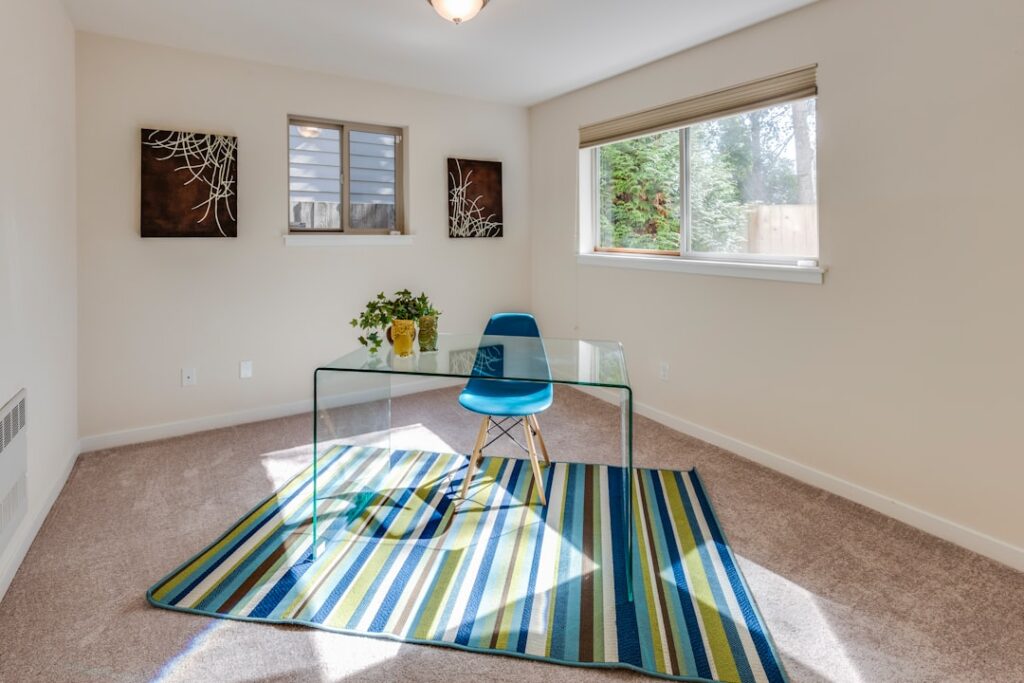
If your office chair drags, dents, or refuses to roll across the carpet, a glass chair mat for carpet may be the upgrade you have been looking for. Unlike the flimsy plastic mats that crack, curl, and develop permanent dimples within a year, tempered glass mats stay perfectly flat, support heavy chairs and people, and let your casters glide with almost no resistance. They cost more upfront, but for many home offices they end up being the last chair mat you ever buy.
This guide walks you through how glass mats perform over carpet, how to choose the right size and thickness, the real trade-offs to weigh, and roughly what you should expect to spend so you can decide whether the investment makes sense for your workspace.
Why Choose Glass Over Plastic on Carpet?
Plastic and vinyl chair mats rely on gripper cleats on the underside to anchor into carpet pile. Those cleats work for a while, but the mat itself flexes under your weight, so your chair sinks slightly and you have to push harder to move. Over months, the plastic compresses, cracks at stress points, and loses its grip.
Glass behaves completely differently. Because tempered glass is rigid, it does not flex into the carpet at all. Your chair rolls on a hard, level surface regardless of how plush the carpet underneath is. That rigidity is the single biggest advantage on carpet, where soft, thick pile is exactly what makes plastic mats fail. A glass mat also resists scratching, will not yellow with age, and wipes clean with a damp cloth.
How a Glass Mat Works on Different Carpet Types
One of the appealing things about glass is that carpet thickness barely matters. A plastic mat designed for low pile will bottom out on a plush carpet, but a glass mat simply rests on top and stays flat no matter what is beneath it.
- Low and medium pile: The mat sits flush and stable, ideal performance with no wobble.
- Plush or high pile: Glass still works well, though you may feel a very slight give around the edges; a thicker mat helps.
- Commercial loop carpet: Excellent, since the firm surface gives the glass a stable base.
Because the mat is heavy and rigid, it generally stays put through its own weight without cleats digging into the fibers, which also means it will not damage the carpet underneath the way aggressive gripper teeth sometimes can.
Choosing the Right Size
Size is where most buyers either overspend or end up frustrated. Measure your usable area, then map it to how you actually move during the day.
- Measure your chair’s range: Roll your chair to its farthest forward and backward positions and note the footprint.
- Add a margin: Leave at least 6 to 8 inches of mat beyond your widest reach so casters never roll off the edge.
- Match it to your desk: A common home-office size runs around 36 by 46 inches, while larger executive setups often use 44 by 50 inches or bigger.
If you have an L-shaped desk or move between two work zones, look for the larger rectangular sizes rather than trying to make a small mat stretch. Running off the edge repeatedly is the fastest way to chip an edge or scratch the floor beyond it.
Thickness, Tempering, and Weight Ratings
Not all glass mats are equal, and the specs that matter most are tempering and thickness. Always confirm the mat is made from tempered (not annealed) glass. Tempered glass is heat-treated to be several times stronger than ordinary glass, and if it ever does break, it crumbles into small blunt pieces rather than dangerous shards.
Thickness typically ranges from about 1/4 inch on lighter mats to around 5/16 or 3/8 inch on premium models. Thicker glass carries higher weight ratings, and many quality mats advertise support well above 1,000 pounds of static load. For heavier chairs, standing-desk stools, or larger users, lean toward the thicker options. Also look for polished or beveled edges, which are smoother to the touch and far less likely to chip than a raw cut edge.
Pros and Cons to Weigh
A glass chair mat is a strong choice, but it is not the right answer for everyone. Here is an honest breakdown.
- Pros: Stays perfectly flat for years, glides smoothly on any carpet pile, supports heavy loads, resists scratches and stains, looks sleek, and wipes clean easily.
- Cons: Heavy and awkward to move or ship, higher upfront cost, can feel cold and hard underfoot, and a glossy surface may show fingerprints or smudges.
The weight cuts both ways. It keeps the mat from sliding, but it also means repositioning is a two-hand job, and you will want a clear path when you first lay it down. If you rearrange your office frequently, factor that in.
Installation and Daily Care
Setup is refreshingly simple. Clear the area, vacuum the carpet so no debris gets trapped underneath, and lay the mat flat in your work zone with help, since a large pane is heavy and unwieldy for one person. There are no cleats to press in and no flattening period the way curled plastic mats require.
For maintenance, wipe the surface with a soft cloth and a little glass cleaner or mild soap and water. Avoid abrasive pads that could dull the finish. Some mats include small anti-slip pads or a frosted underside for extra grip; if yours slides on a very low-pile or commercial carpet, adhesive grip dots placed at the corners solve it. Lift periodically to vacuum the carpet beneath and keep moisture from being trapped.
What Does a Glass Chair Mat Cost?
Expect to pay considerably more than for plastic, but for a product that can last a decade or more. As a general estimate, a standard-size glass chair mat for carpet typically runs from around $100 to $250, with smaller or thinner models occasionally dipping lower and large, thick, premium-edged mats climbing past $300. Treat these as ballpark ranges, since size, thickness, edge finish, and brand all move the price.
When you compare that against replacing a $40 plastic mat every year or two, the math often favors glass for anyone who spends long hours at a desk. Buy the right size the first time, confirm it is tempered, and you will have a stable, smooth-rolling surface that outlasts nearly every other accessory in your home office.