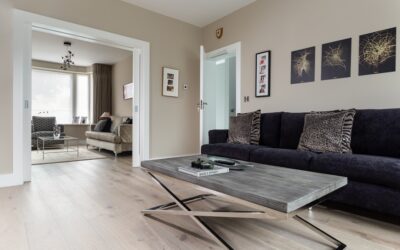
Walk into a showroom and the floor that stops you dead is almost always the shiny one. Glossy laminate throws back light like polished stone or freshly waxed hardwood, and that mirror-like surface is the whole reason people fall for it. But high-shine flooring is a commitment, not just a color choice. After two decades of installing and troubleshooting these floors, I can tell you the finish that dazzles under showroom lights behaves very differently in a house full of kids, dogs, and morning sunlight.
- What High-Gloss Laminate Actually Is
- The Real Pros and Cons of Glossy Laminate
- Understanding AC Ratings Before You Buy
- Best Rooms for a High-Shine Floor
- Top Brands and What They Cost
- Cleaning and Maintaining Glossy Laminate
- Installation Tips for a Flawless Shine
- Glossy vs Matte and Satin: Choosing Your Finish
- The Bottom Line on Glossy Laminate
This guide walks you through exactly what high-gloss laminate is, where it shines (literally), where it fails, what the good brands cost, and how to keep it looking sharp. By the end you’ll know whether that gleaming plank belongs in your home or on someone else’s Pinterest board.
What High-Gloss Laminate Actually Is
Laminate flooring is a layered product: a wear layer on top, a printed decorative film below it, a high-density fiberboard (HDF) core, and a stabilizing backer. The gloss level is set almost entirely by that top wear layer. A high-gloss plank uses a smooth, clear melamine or aluminum-oxide coating pressed flat, so light reflects in a single sharp direction instead of scattering.
Manufacturers measure this on a gloss-unit (GU) scale read at a 60-degree angle. Matte floors sit around 5-15 GU, satin around 20-40 GU, and true high-gloss runs 70 GU and up. A “piano finish” plank can hit 85-90 GU, which is why it looks wet. That optical smoothness is the appeal and, as you’ll see, the headache.
The Real Pros and Cons of Glossy Laminate
I never sell a high-shine floor without walking a homeowner through both columns. Here’s the honest ledger after seeing hundreds of installs age.
The advantages
- Light amplification. A glossy plank bounces daylight around, making a 10-by-12 room feel noticeably bigger and brighter. It’s a genuine trick for dim hallways and basements.
- Luxe appearance. High-gloss reads as high-dollar. It mimics French-polished hardwood or polished marble at a fraction of the price.
- Stain resistance. The dense, sealed top layer wipes clean fast. Spilled wine or juice sits on the surface instead of soaking in.
- Color depth. Gloss makes dark browns richer and grays deeper, adding a wet-look dimension matte finishes can’t touch.
The drawbacks
- It shows everything. Dust, pet hair, footprints, and streaks are ruthlessly visible on a shiny surface. Plan on daily dry-mopping in a busy household.
- Scratches read louder. A scratch that would vanish on matte oak stands out as a dull line against the reflective plane.
- It can be slick. High-gloss laminate is more slippery than textured finishes, especially in socks or when wet. Skip it at the top of stairs.
- Glare. Under direct sun or a bank of pot lights, that same reflectivity turns into eye-straining hot spots.
Understanding AC Ratings Before You Buy
The single most useful spec on a laminate box is the AC rating (Abrasion Class), a durability scale from AC1 to AC5. It’s set by the European EN 13329 standard and it tells you how much traffic the wear layer survives.
- AC1-AC2: light residential, bedrooms and closets only.
- AC3: the residential sweet spot, good for living rooms, kitchens, and hallways.
- AC4: heavy residential and light commercial, worth the small premium in a home with pets.
- AC5: commercial grade, overkill for most houses but bombproof.
For glossy laminate I push homeowners toward AC4 minimum. Because scratches are so visible on a shiny surface, you want the toughest wear layer you can afford. A cheap AC3 gloss plank looks stunning for a year and tired by year three.
Best Rooms for a High-Shine Floor
Placement makes or breaks this product. Glossy laminate performs beautifully in formal living rooms, dining rooms, and low-traffic entry foyers where the drama pays off and grit stays low. It’s a natural in a home theater or a wine room where controlled lighting flatters the finish.
Where I steer people away: mudrooms, busy kitchens, and any home with three dogs. Sand and pet claws are the enemy of a reflective surface. Bathrooms are a hard no for standard laminate regardless of finish, since the HDF core swells if water reaches the seams. If you love the look but live hard, consider a satin finish for the trafficked zones and reserve gloss for a showcase room.
Top Brands and What They Cost
Not all shine is equal. These are the lines I trust for consistent gloss and honest AC ratings.
- Kronotex (Germany) runs several genuine high-gloss collections with AC4-AC5 cores. Expect $2.00-$3.50 per square foot and excellent scratch resistance for the price.
- Quick-Step offers glossy and semi-gloss looks in its Perspective and Majestic ranges with tight-locking Uniclic joints. Figure $2.50-$4.50 per square foot.
- Pergo leans toward satin and matte now, but its higher-end TimberCraft and Outlast+ lines include shinier options with strong warranties. Budget $2.75-$5.00 per square foot.
- Kronotex, Krono Original, and Falquon also make dedicated “piano finish” gloss planks for buyers who want maximum wet-look shine.
Across the board, expect glossy laminate to run $1.50 to $5.00 per square foot for material. Budget imports sit at the bottom; German-made AC5 piano-finish planks top the range. Add $2-$4 per square foot for professional installation, plus underlayment at $0.30-$0.60 if it isn’t pre-attached.
Cleaning and Maintaining Glossy Laminate
The shine is only as good as your maintenance routine, and glossy laminate is unforgiving of shortcuts. Dry-dust or use a microfiber dust mop daily to lift grit before it scratches. For deeper cleaning, use a barely damp microfiber mop and a laminate-specific cleaner or a splash of white vinegar in a gallon of water.
Never wet-mop, never use wax or oil soaps, and skip steam mops entirely. Excess water seeps into seams and swells the HDF core, while wax builds a hazy film that dulls the finish permanently. To fight streaking, buff the floor dry with a clean microfiber cloth after damp-mopping, and place walk-off mats at every entry to trap sand. Felt pads under furniture legs and a strict no-shoes rule will do more for a shiny floor’s lifespan than any product on the shelf.
Installation Tips for a Flawless Shine
Glossy planks magnify any flaw in the subfloor because the reflective surface reveals every dip and hump. Level the subfloor to within 3/16 inch over 10 feet before you start. Acclimate the boxes flat in the room for 48 hours at 60-75°F so the planks stabilize.
Leave a 1/4- to 3/8-inch expansion gap around every wall and fixed object, because laminate floats and moves with humidity. Stagger end joints at least 8-12 inches for strength and a natural look. Work with clean hands and a soft tapping block wrapped in cloth, since the glossy face scratches easily during install. Keep a damp cloth handy to wipe fingerprints as you go, and save the protective visibility of the shine by not sliding boxes or tools across finished sections.
Glossy vs Matte and Satin: Choosing Your Finish
The finish debate comes down to lifestyle, not looks. Matte laminate (5-15 GU) hides dust, scratches, and footprints better than any other option, which is why it dominates high-traffic and pet-heavy homes. Satin (20-40 GU) is the diplomatic middle: a soft, low-luster sheen that reads refined without broadcasting every crumb.
High-gloss delivers the most dramatic, high-end look and the biggest light payoff, but it demands the most upkeep and the toughest AC rating. My rule of thumb: choose gloss for showcase rooms and adults-only spaces, satin for everyday living areas, and matte for chaos zones. If you cannot commit to daily dust control, do not buy the shiniest plank in the store no matter how good it looks under the fluorescents.
The Bottom Line on Glossy Laminate
Glossy laminate is one of the best-value ways to bring a polished, luxury look into a home, delivering light, depth, and drama for $1.50 to $5.00 per square foot. The trade-off is maintenance: shiny surfaces reveal dust, footprints, and scratches that matte finishes forgive. Buy AC4 or better, keep it in the right rooms, dust it daily, and skip the wax and steam mop. Do that, and a high-gloss floor will hold its showroom shine for a decade or more. Match the finish to how you actually live, and glossy laminate rewards you with a floor that turns heads every time the light hits it.
Prefer to explore on your own?
See how new flooring looks in your actual room in seconds — free, no signup.
Try the free Floor Studio →