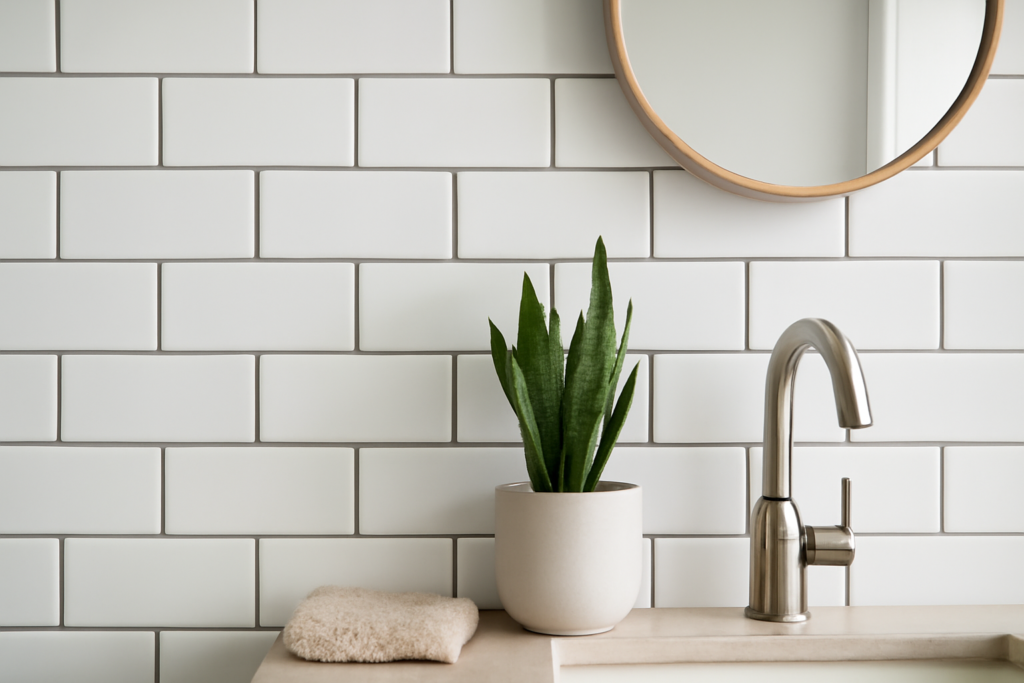
White grout looks stunning in the showroom and turns dingy within a year of real life. That single fact is why so many homeowners and tile setters quietly default to gray grout, which hides dirt, foot traffic, and the inevitable grime that white grout broadcasts to the world. But gray is not a compromise color; the right shade frames your tile, adds subtle definition, and ties a whole room together. From soft silver to deep charcoal, this guide covers how to choose the right gray, pair it with tile, and keep it looking sharp for years.
- Why Gray Grout Is So Popular
- Choosing the Right Shade of Gray
- Pairing Gray Grout With Tile
- Contrast vs. Blend: Which Should You Choose?
- Sanded vs. Unsanded Grout
- Keeping Gray Grout Clean
- Will Gray Grout Fade or Discolor?
- Gray Grout in Different Rooms
- Matching Grout to Your Long-Term Plans
- Final Word
Why Gray Grout Is So Popular
The practical appeal is obvious: gray hides dirt far better than white. Grout lines sit in the lowest part of a tiled surface, collecting mop water, foot traffic grime, and splatter. White shows every bit of it, while a mid-gray disguises the daily soil and stays looking clean between deep cleans.
Beyond practicality, gray is design-flexible. It is a true neutral that works with warm and cool color schemes, modern and traditional styles. It can either blend quietly with the tile or provide gentle contrast that highlights the tile’s shape. That versatility, plus the low maintenance, is why gray has become the default grout for kitchens, bathrooms, and entryways.
Choosing the Right Shade of Gray
Gray grout runs a wide range, and the shade dramatically changes the look. Think of it on a spectrum from barely-there to bold.
- Light gray / silver: Soft and subtle. Keeps a clean, airy feel close to white but with far better dirt resistance. Great with white and light tiles.
- Medium gray: The most versatile and forgiving. Provides gentle definition without harsh contrast, and hides soil well. A safe default for most tile.
- Dark gray / charcoal: Bold and graphic. Frames each tile with strong contrast for a modern, intentional look. Stunning with white subway tile, but it shows every alignment imperfection.
A reliable rule: if you want the tile pattern to stand out, go darker for contrast; if you want a seamless, calm surface, choose a gray close to the tile color.
Pairing Gray Grout With Tile
The grout-to-tile relationship sets the whole mood. A few combinations consistently work.
White subway tile with medium or dark gray grout is a modern classic, defining the brick pattern and reading crisp and contemporary. Gray tile with a matching gray grout creates a smooth, monolithic look that makes a small space feel larger. Marble-look and natural stone tiles pair beautifully with a soft gray that echoes their veining without competing. And for wood-look or warm-toned tile, a warmer greige-gray keeps the palette cohesive rather than introducing a cold note.
Contrast vs. Blend: Which Should You Choose?
This decision shapes how busy the surface feels. High contrast, like white tile with charcoal grout, turns the grid itself into a design feature. It looks intentional and graphic, but it also spotlights any tile that is slightly out of line, so it demands precise installation.
A low-contrast, blended look, where grout closely matches the tile, downplays the grid and emphasizes the tile’s color and texture. It is more forgiving of minor layout imperfections and creates a calmer, more expansive feel. For large-format tile, blending tends to look cleaner; for classic patterns like herringbone or subway, contrast often celebrates the pattern.
Sanded vs. Unsanded Grout
Color is only half the decision. The grout type depends on your grout line width, not the shade.
- Sanded grout: Contains sand for strength; use it for grout lines wider than about 1/8 inch. Standard for floors and most wall tile.
- Unsanded grout: Smoother, for narrow lines 1/8 inch and under, and gentler on polished or scratch-prone surfaces like glass and some marble.
- Epoxy grout: Highly stain- and water-resistant, ideal for showers and backsplashes, though harder to work with and more expensive. Available in gray shades and a strong choice where staining is a concern.
Match the type to your tile and joint width, then choose your gray shade within that type.
Keeping Gray Grout Clean
Gray hides dirt, but it is not maintenance-free. Sealing is the most important step for cement-based grout. A penetrating grout sealer applied after the grout cures, and reapplied periodically, keeps stains and moisture from soaking in. Epoxy grout does not need sealing.
For routine cleaning, warm water and a mild pH-neutral cleaner with a stiff brush handle most grime. Avoid harsh acidic cleaners on cement grout, which can erode it over time. For deeper cleaning, a paste of baking soda and water scrubbed into the lines lifts embedded dirt. Promptly wiping spills in kitchens and squeegeeing shower walls reduces buildup dramatically.
Will Gray Grout Fade or Discolor?
Quality grout that is properly mixed and sealed holds its color well. Problems usually come from inconsistent mixing, water added during cleanup, or skipping the sealer, which can leave grout looking blotchy or lighten over time. Using a grout colorant or a quality pre-mixed grout helps ensure even color.
If existing gray grout has dulled or stained badly, a grout refresh, either a colorant pen for small areas or a full color seal for larger surfaces, restores a uniform look without re-grouting. Charcoal grout in particular benefits from sealing to keep its depth and prevent uneven fading.
Gray Grout in Different Rooms
Where the tile lives should influence your gray. In a bathroom or shower, moisture and soap scum are constant, so a medium or darker gray hides residue between cleanings, and epoxy or a well-sealed cement grout resists staining and mildew. On a kitchen backsplash, gray grout disguises cooking splatter behind the stove far better than white, which is why it has become a default for busy kitchens.
On floors, especially entryways and mudrooms, gray grout is almost a necessity, since floor grout takes the brunt of tracked-in dirt. A mid-to-dark gray on a tile floor keeps the lines looking clean long after white grout would have turned gray on its own anyway. For large-format floor tile, a closely matched gray minimizes the grid and makes the floor feel expansive.
Matching Grout to Your Long-Term Plans
Think beyond the install day. Trend-driven, high-contrast pairings like white tile with charcoal grout look striking now but are more committal, since the grout becomes a defining feature of the room. A medium gray is the safer long-term neutral that will not feel dated and adapts as you change wall colors, cabinets, and decor around it.
Also consider resale and repair. A common, mid-range gray is easy to match if you ever need to patch or re-grout a section, whereas an unusual custom shade can be hard to replicate years later. When in doubt, a versatile medium gray gives you the dirt-hiding benefits with the most flexibility down the road.
Final Word
Gray grout earns its popularity honestly: it hides dirt, suits nearly every tile and style, and looks polished from light silver to deep charcoal. Decide whether you want the grout to blend or contrast, pick a shade to match that goal, choose sanded, unsanded, or epoxy based on your joint width, and seal cement grout to protect it. Maintain it with gentle cleaners and quick spill cleanup, and your tile will keep its crisp, intentional look for many years.